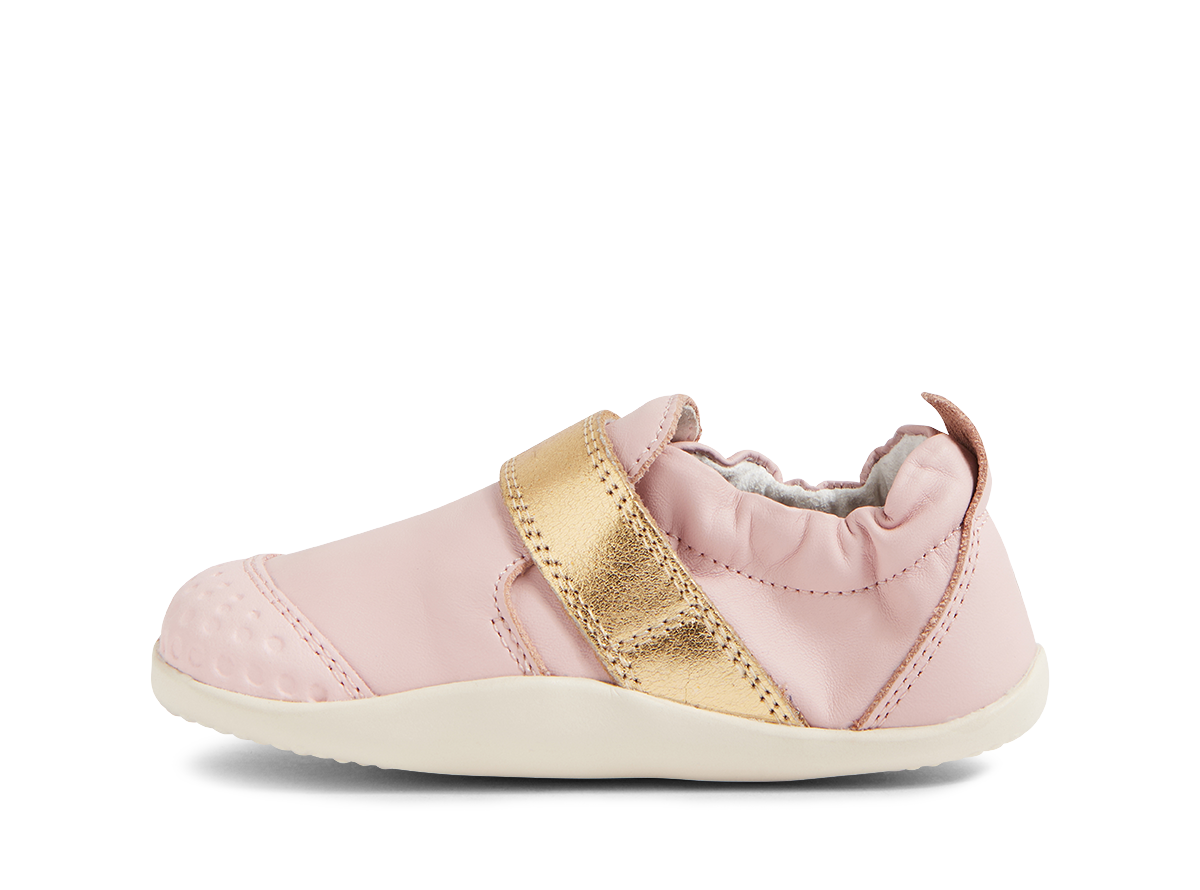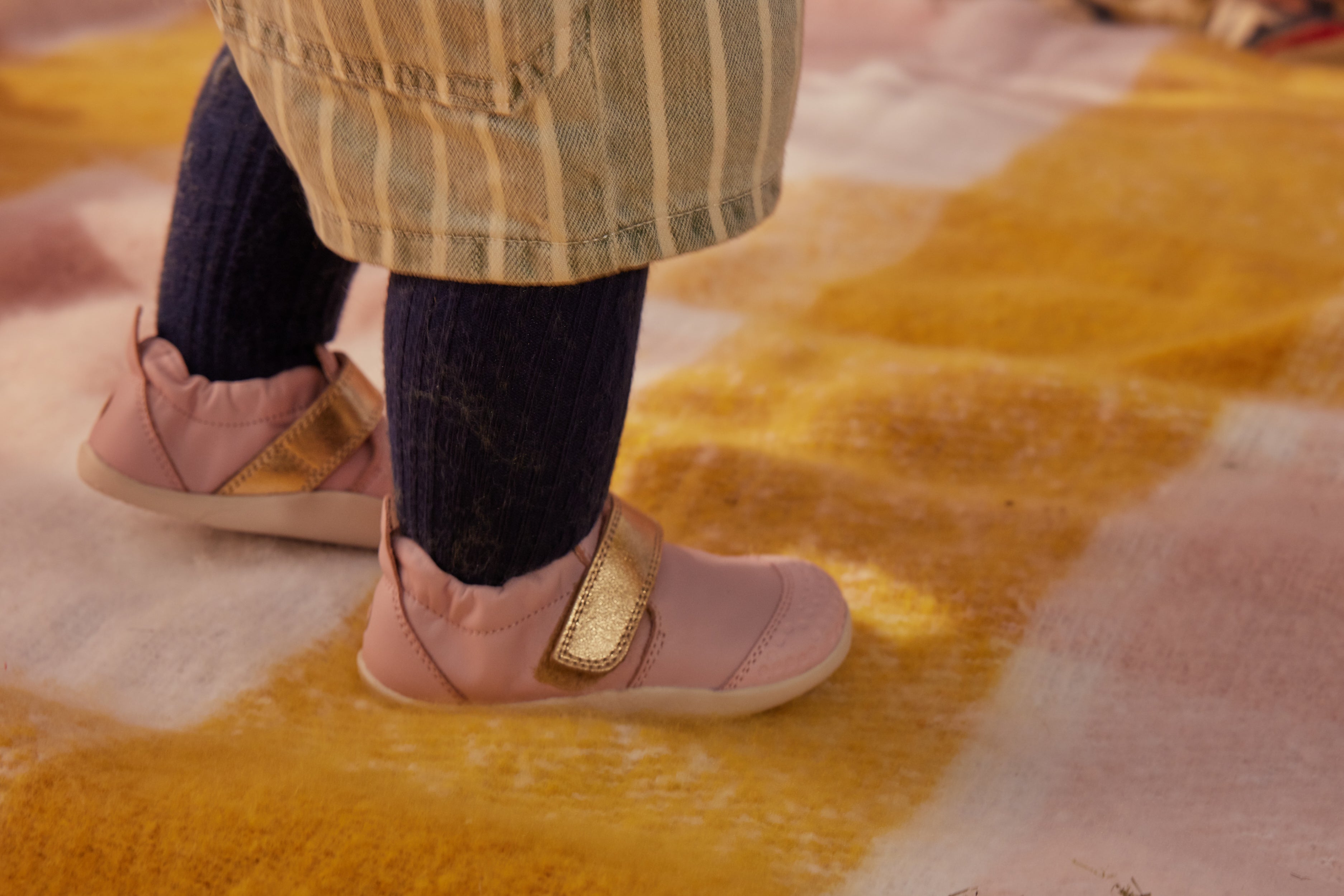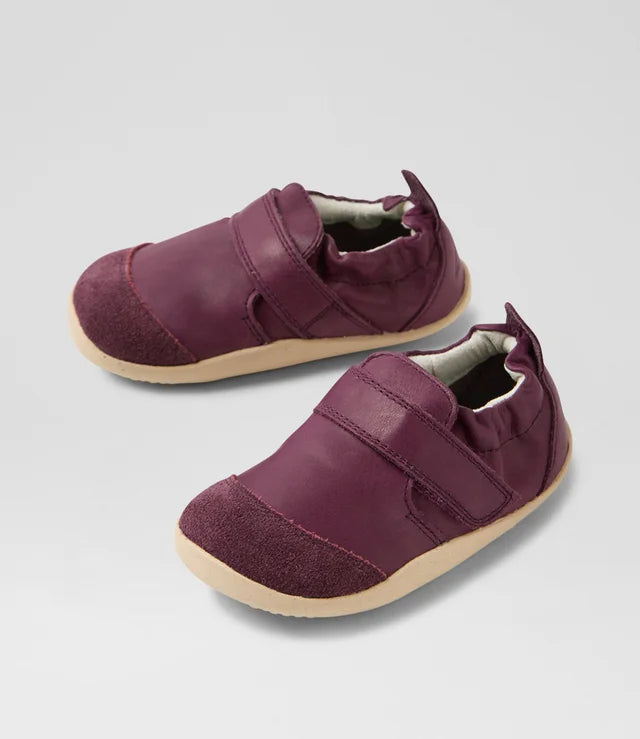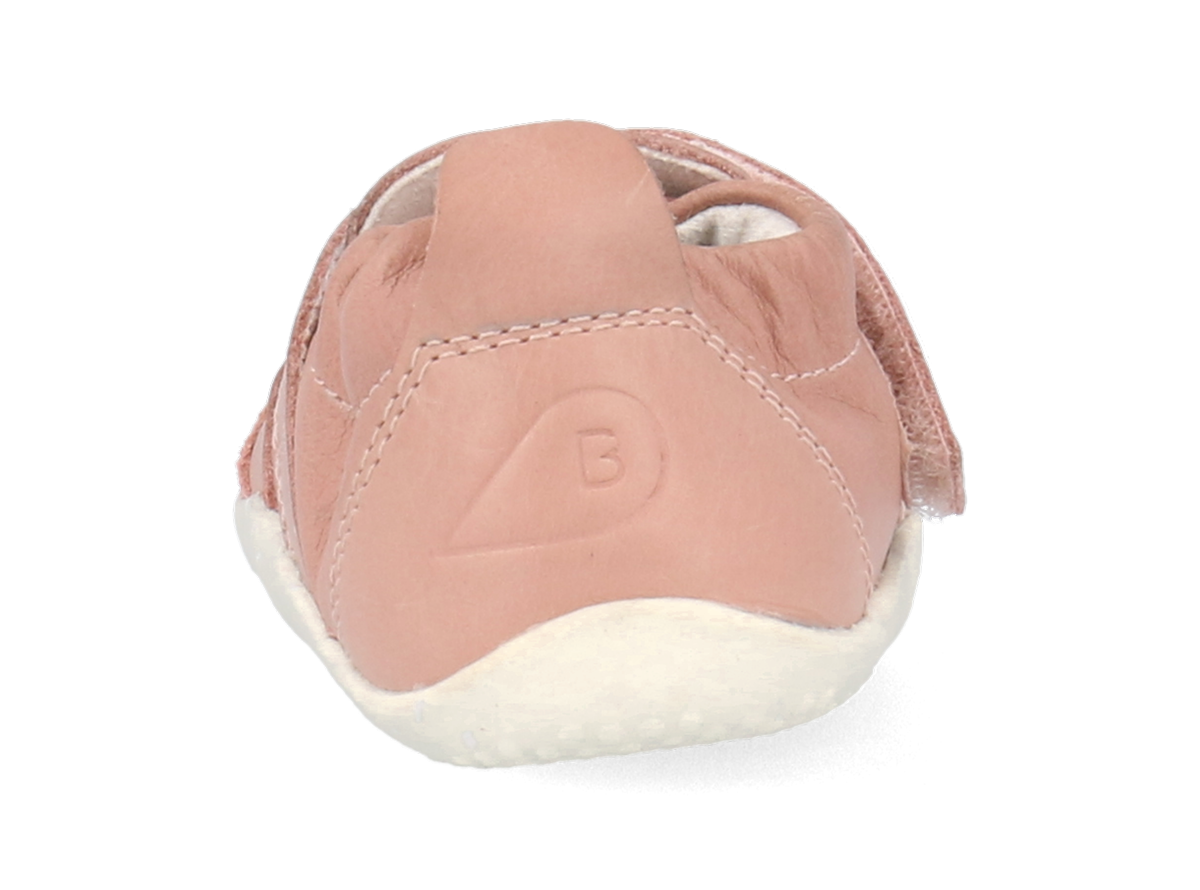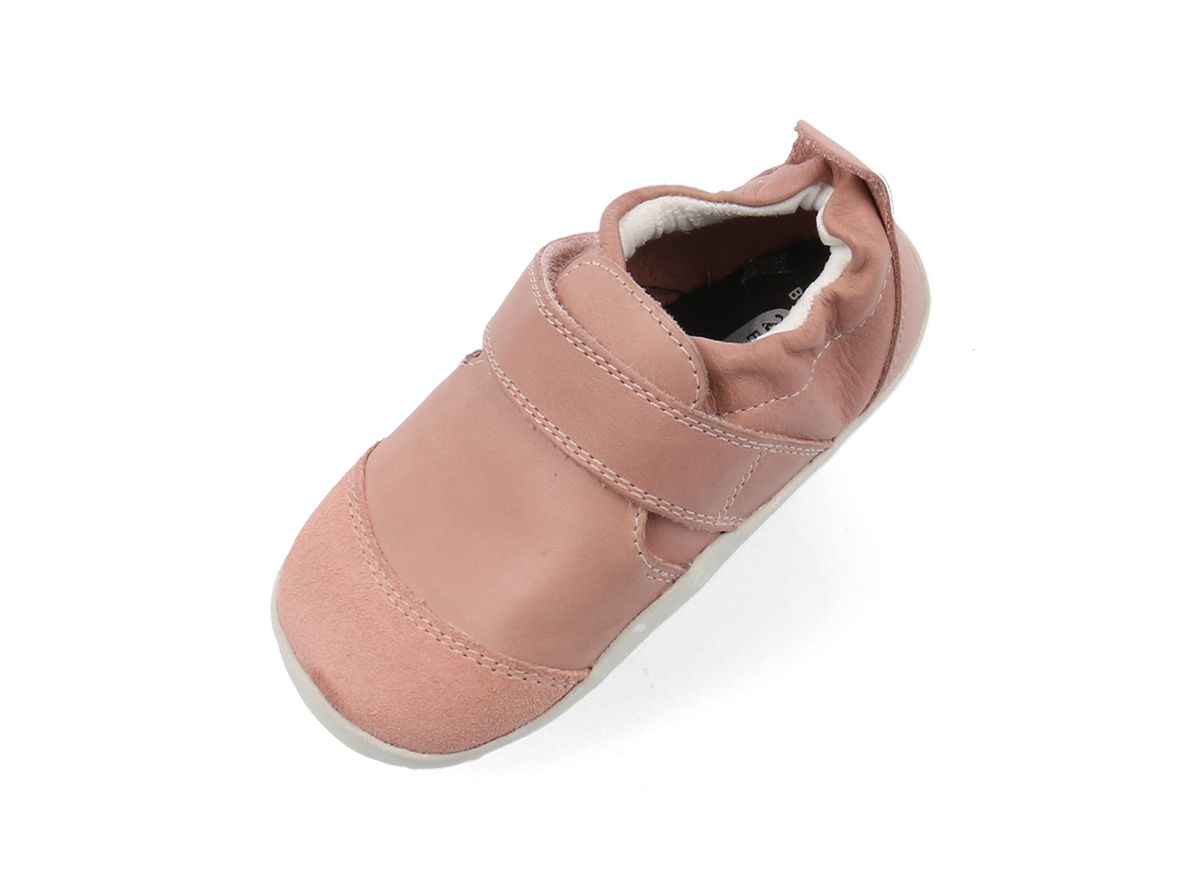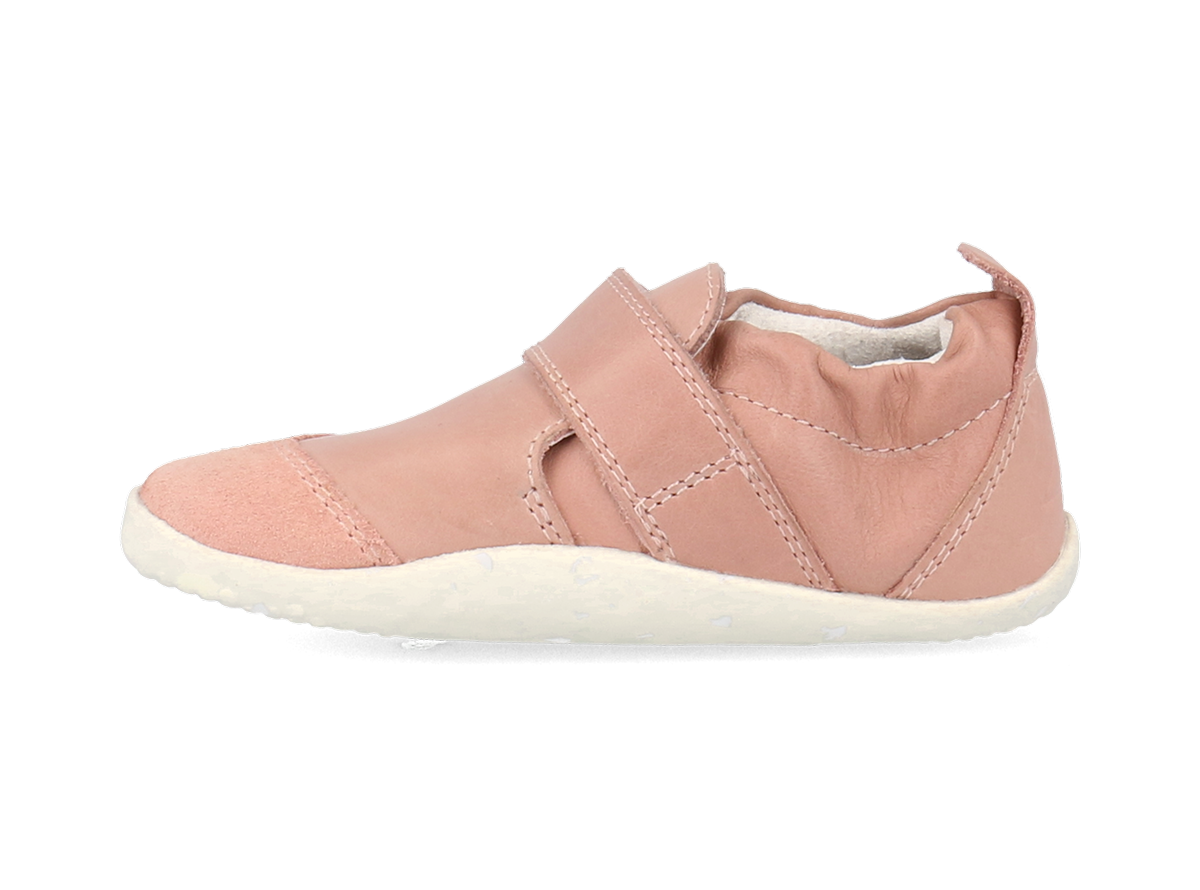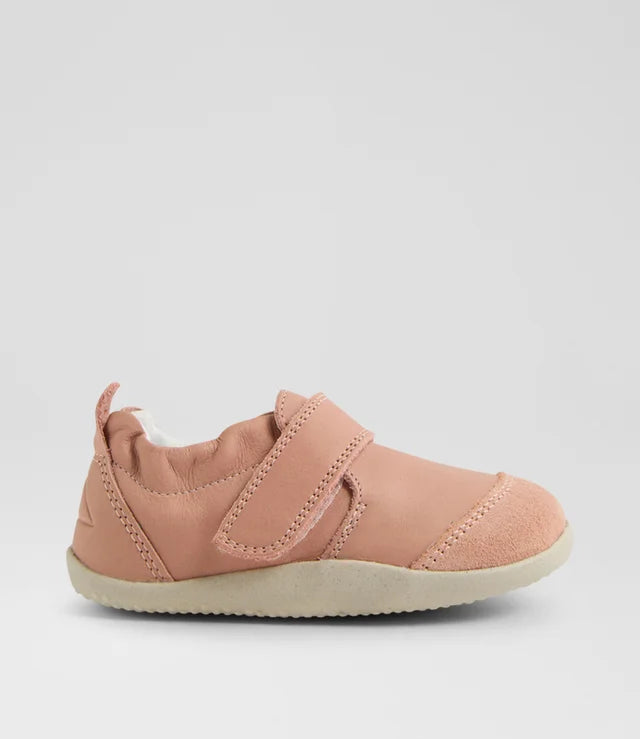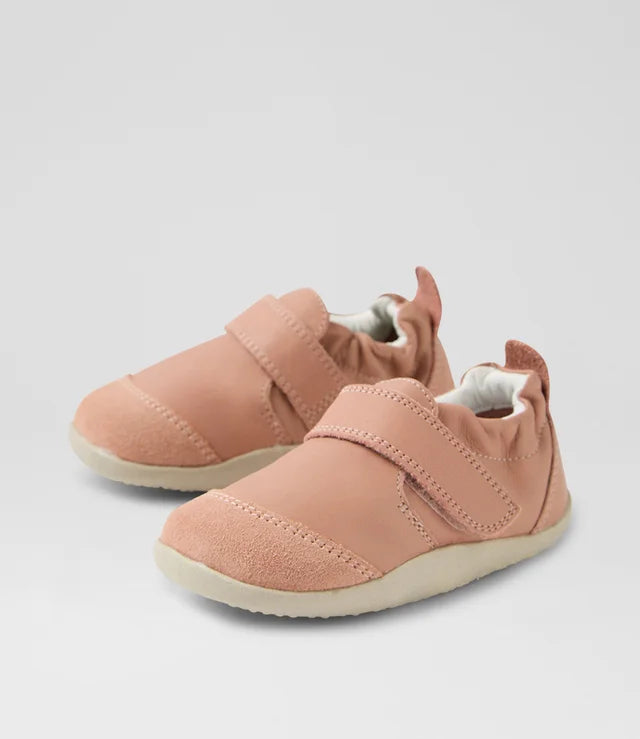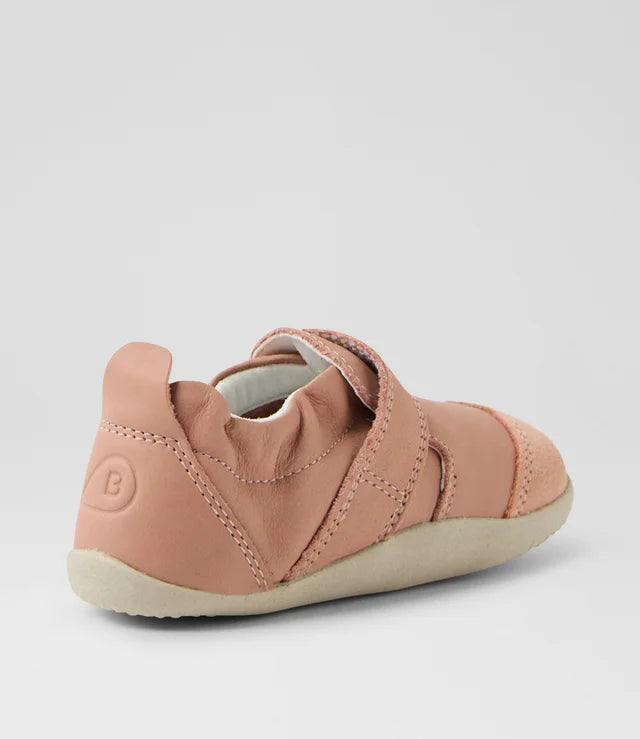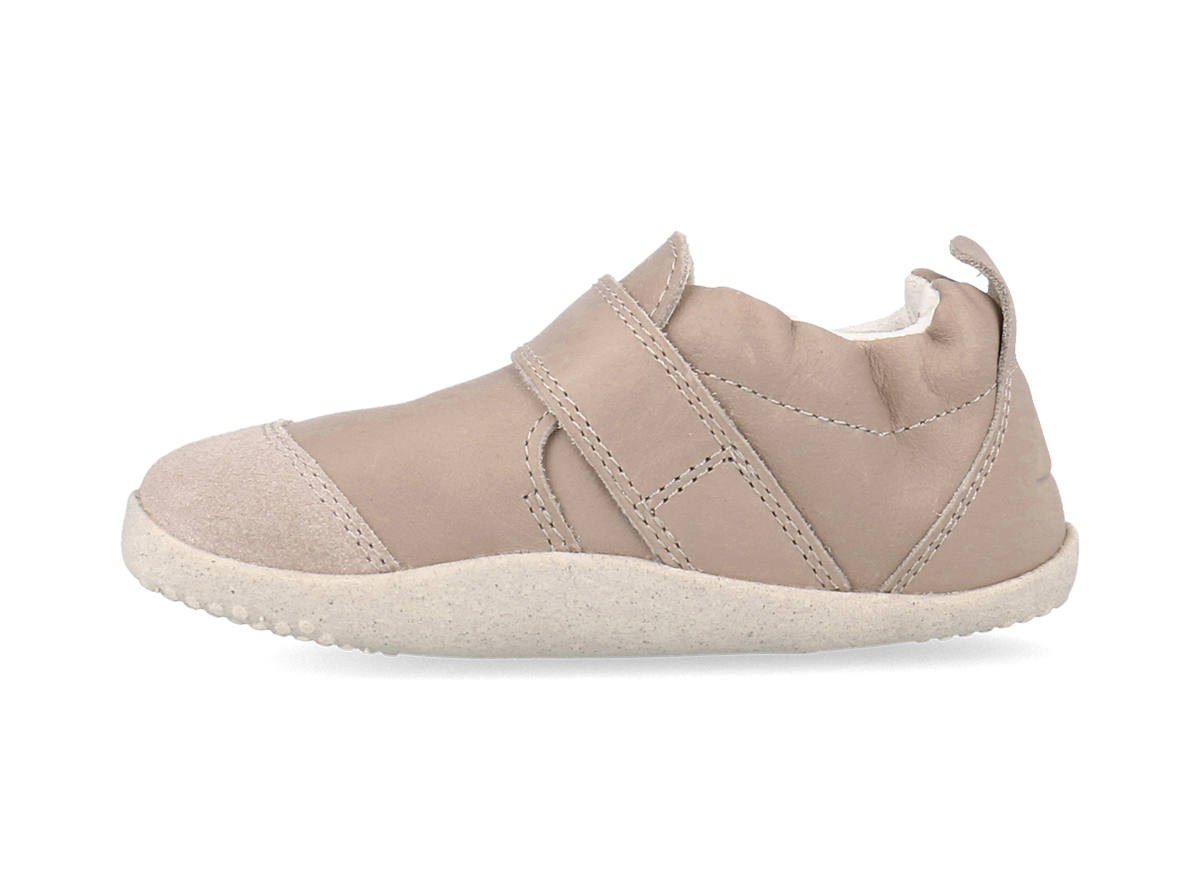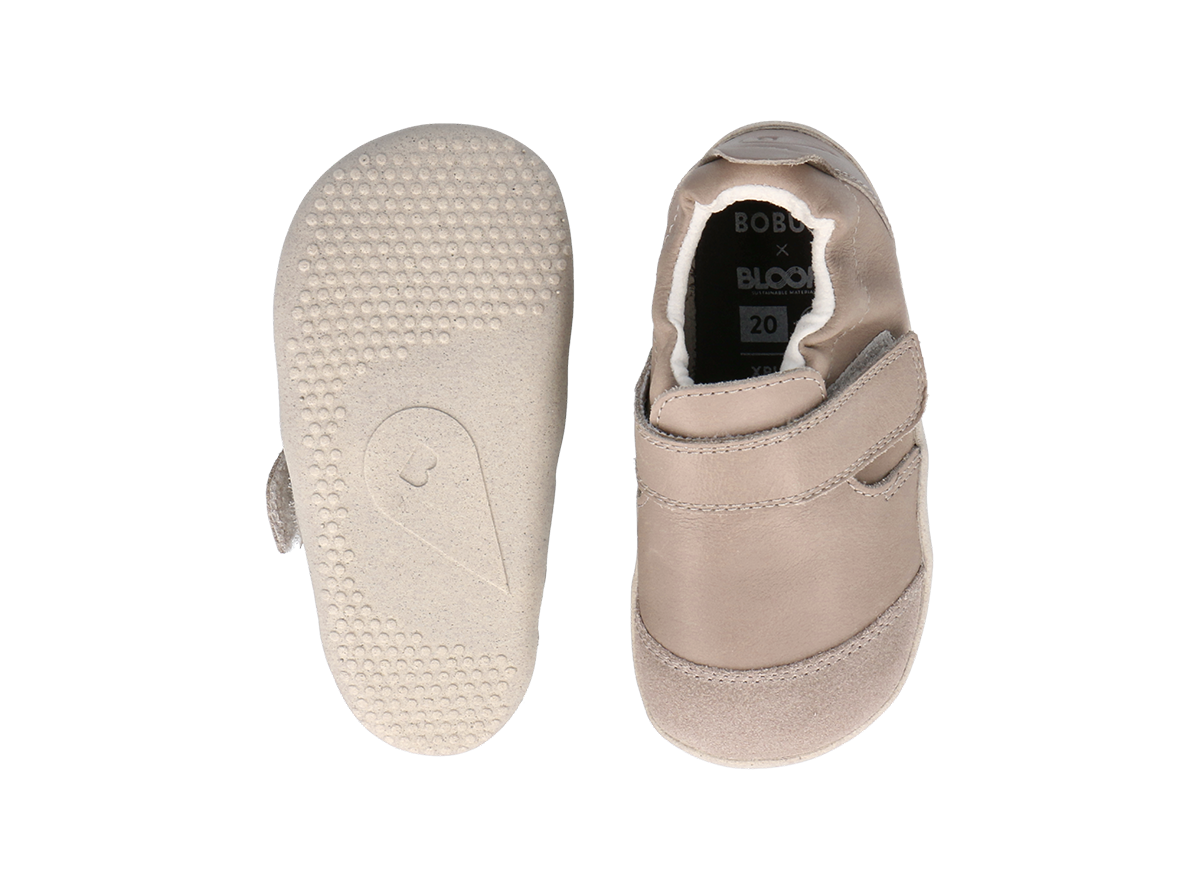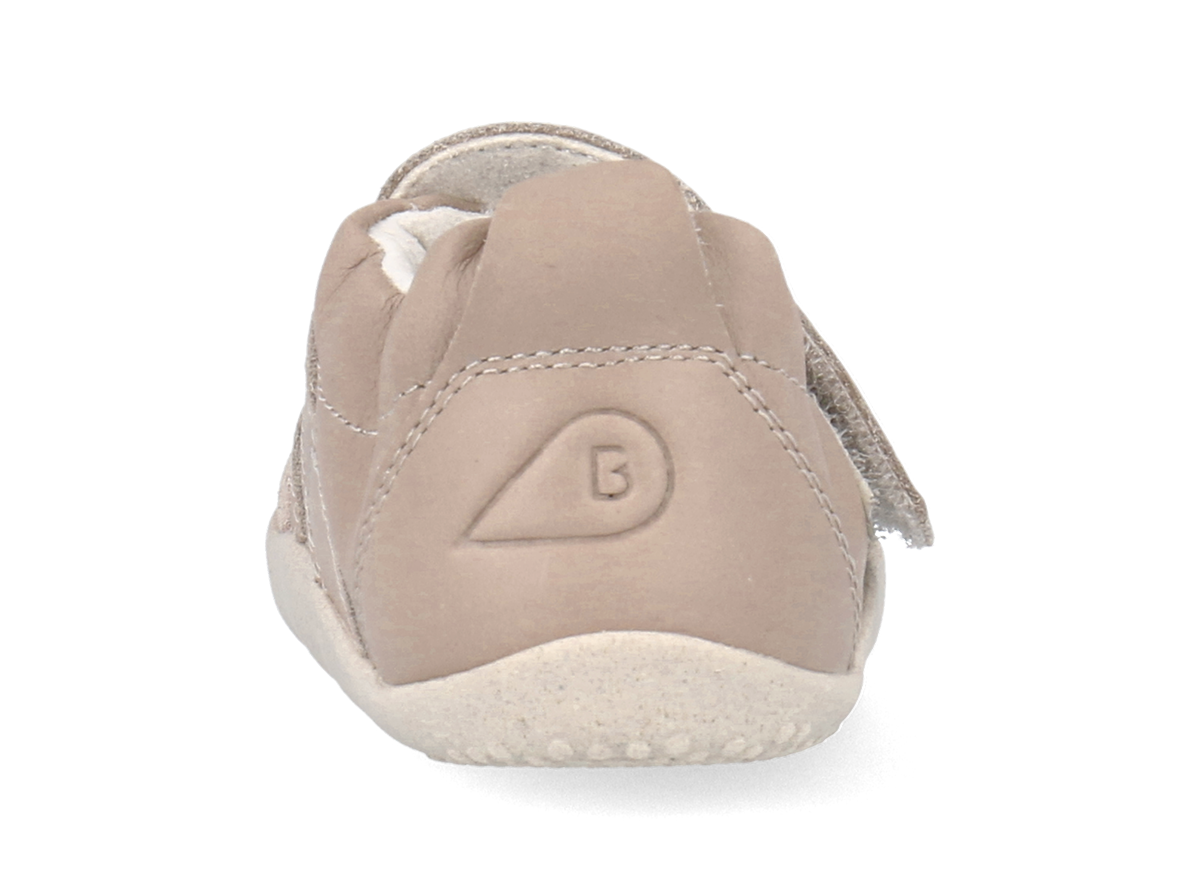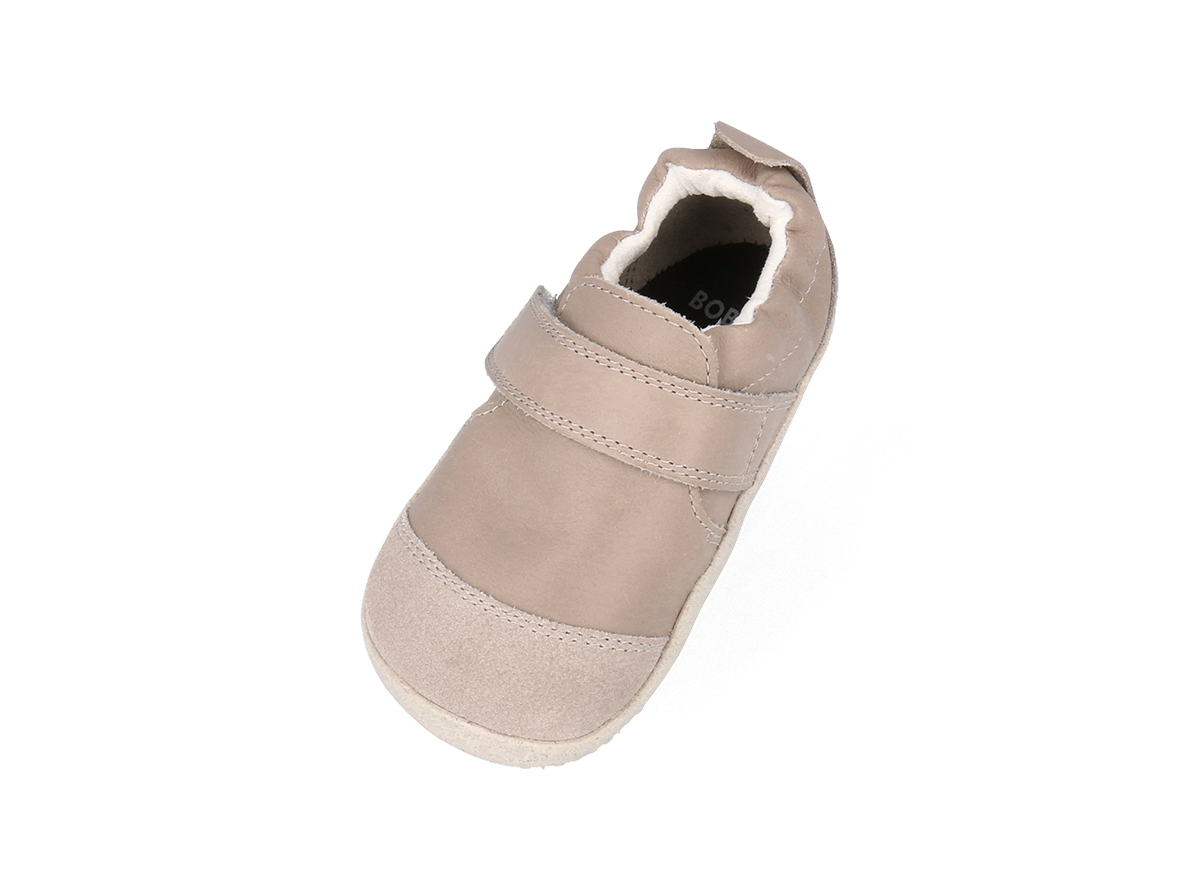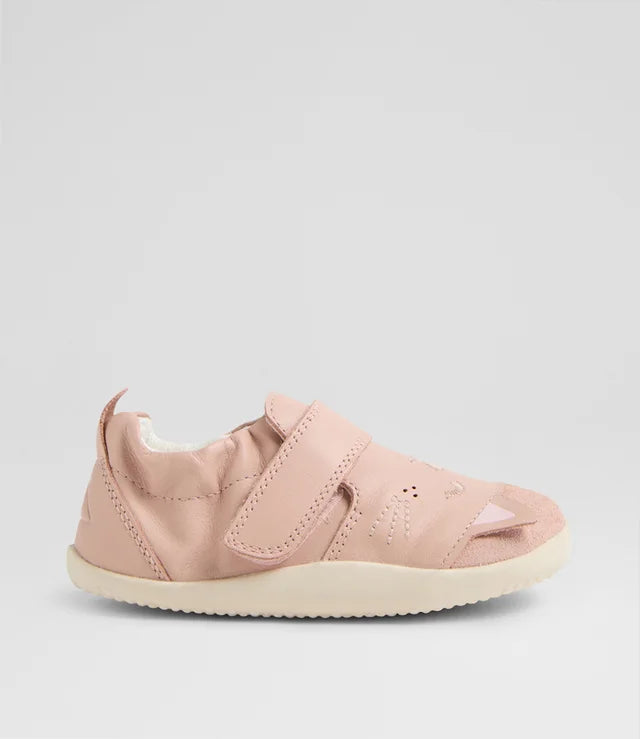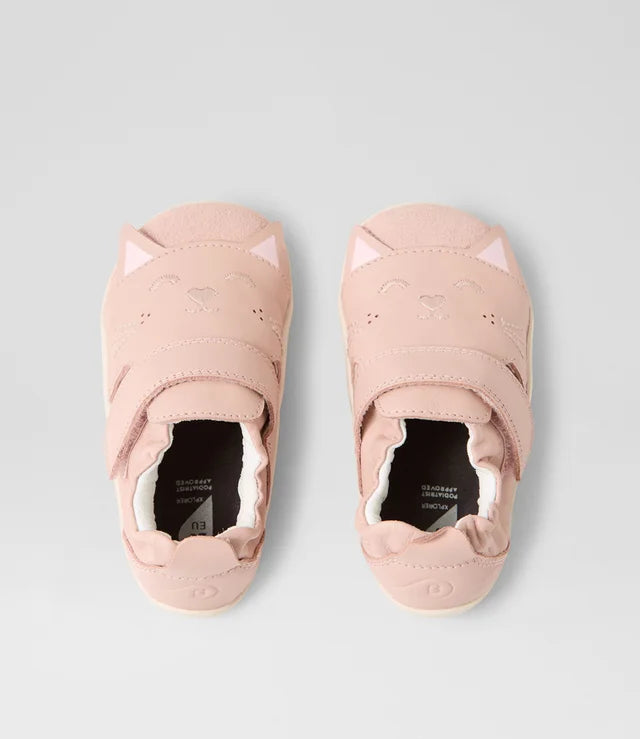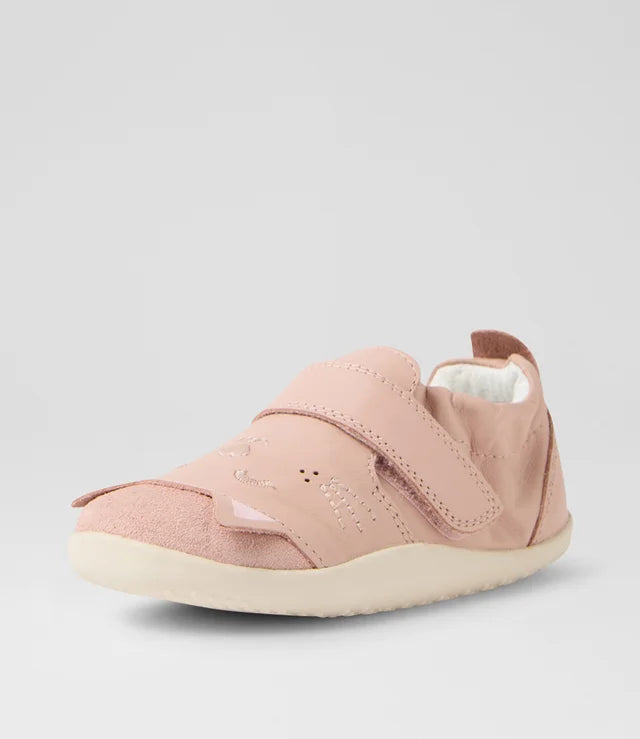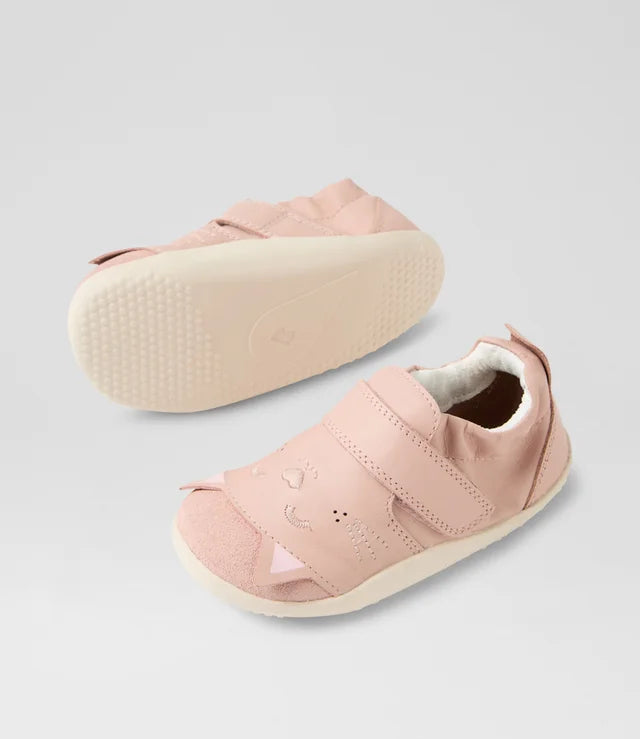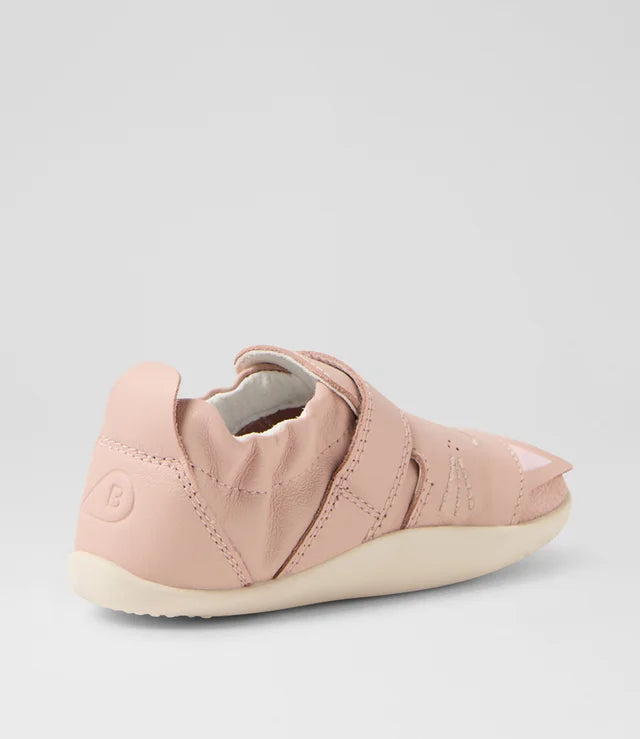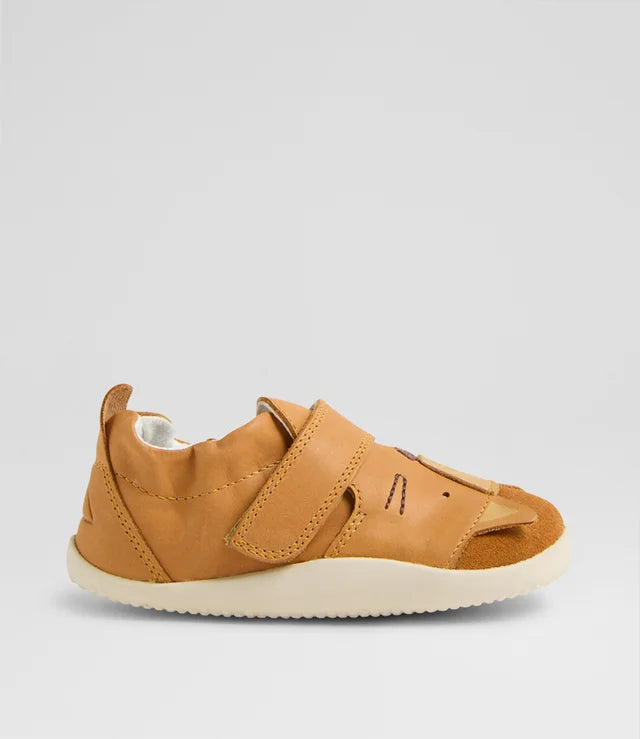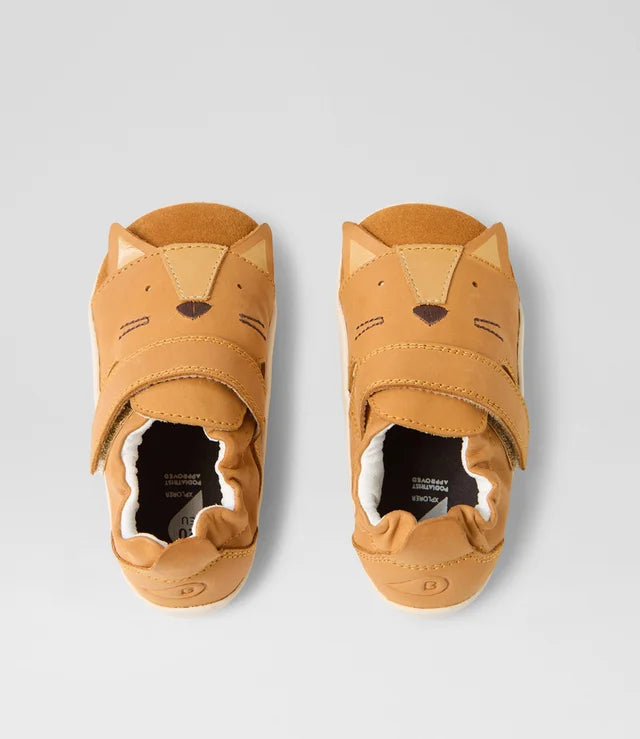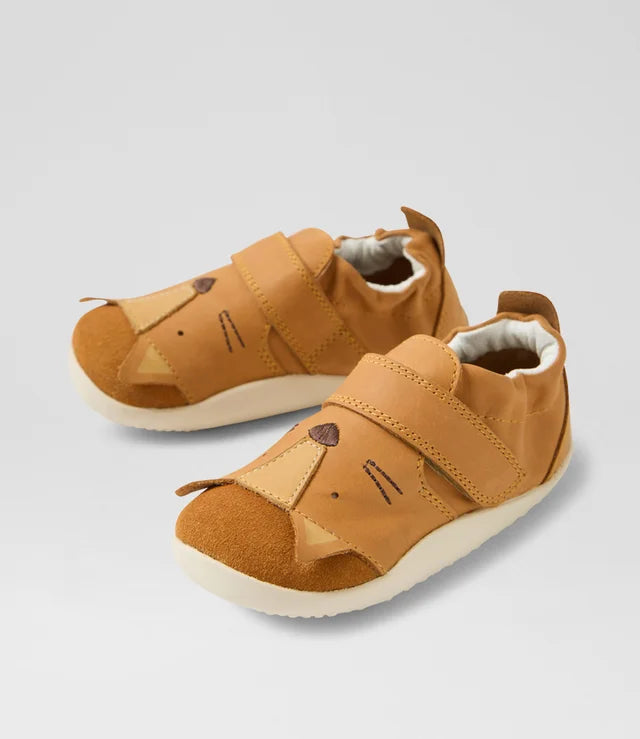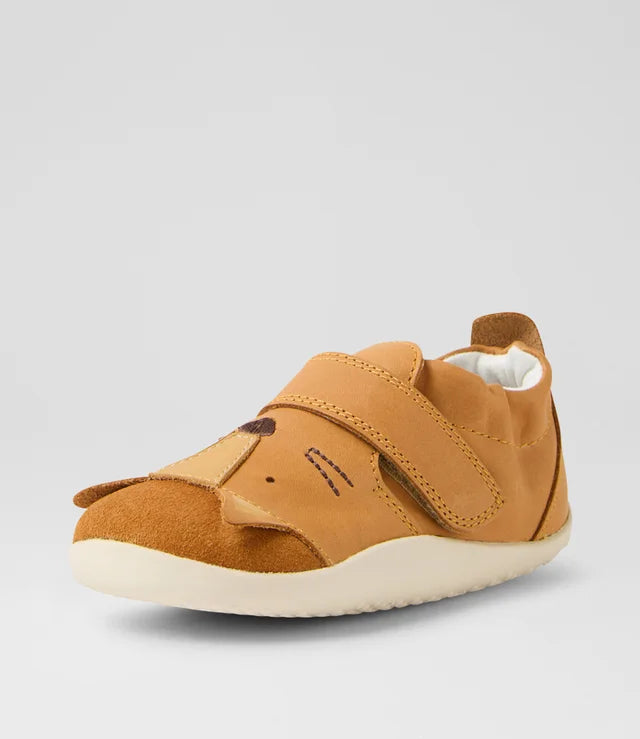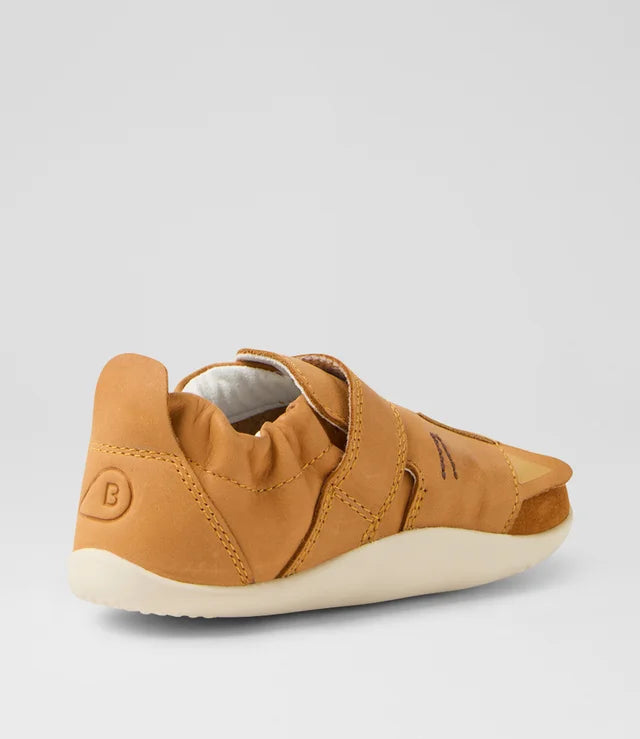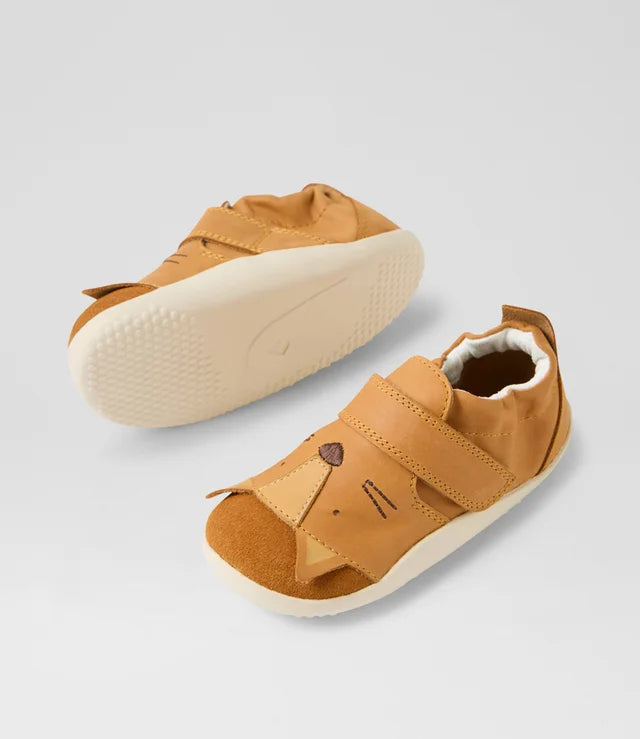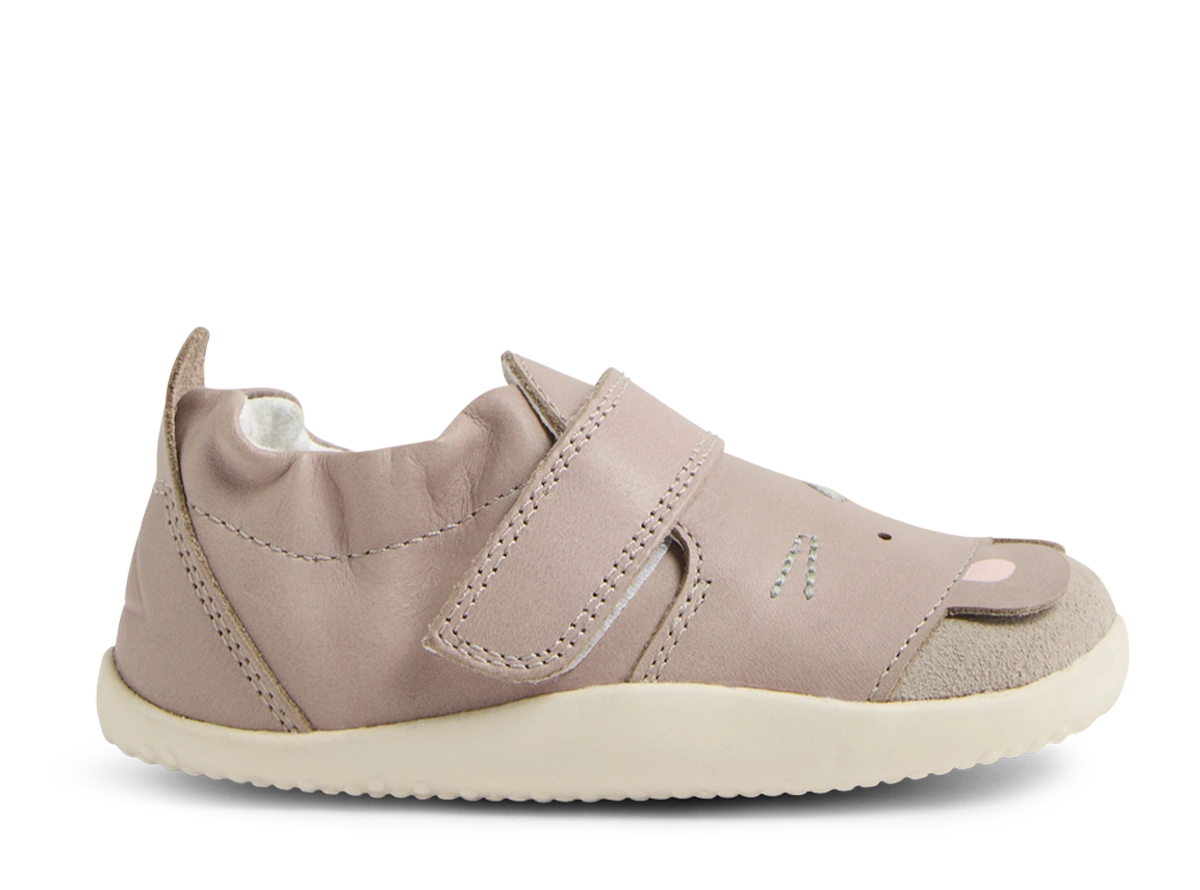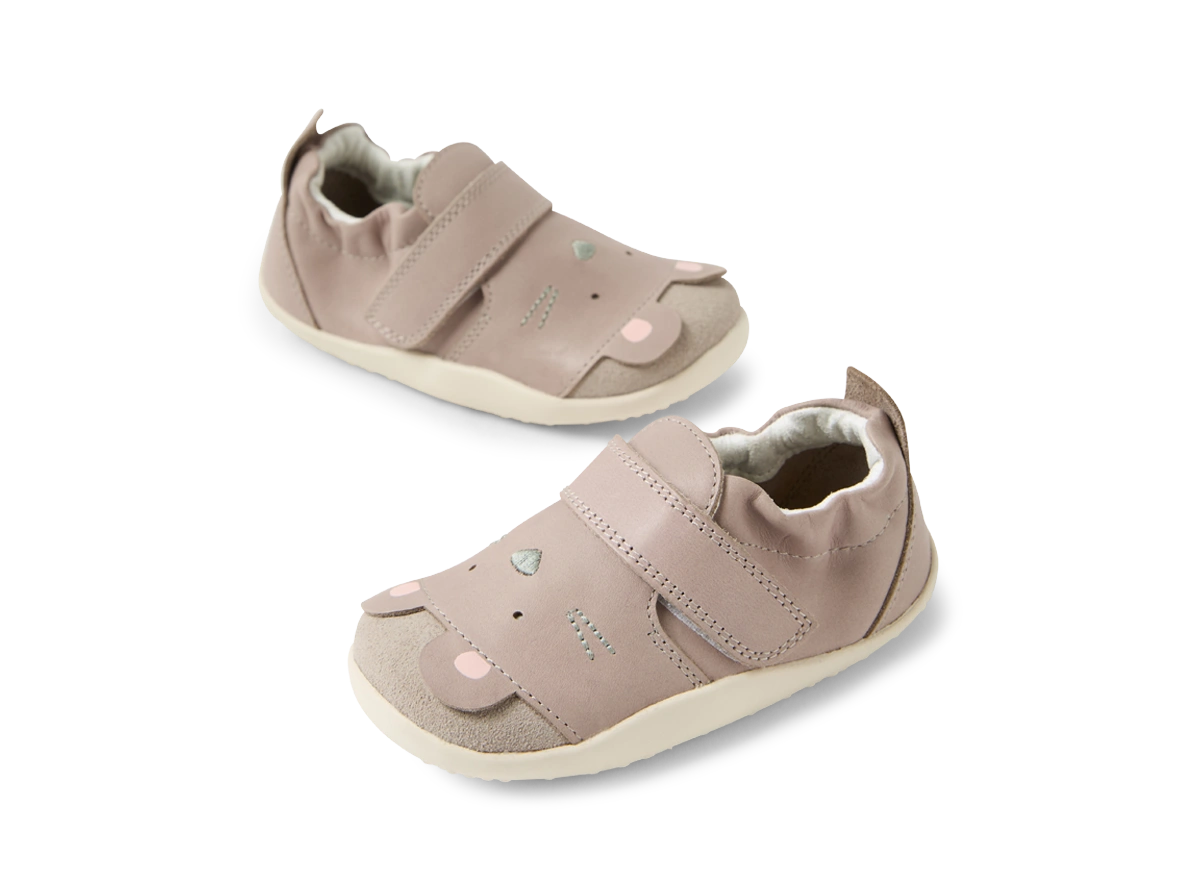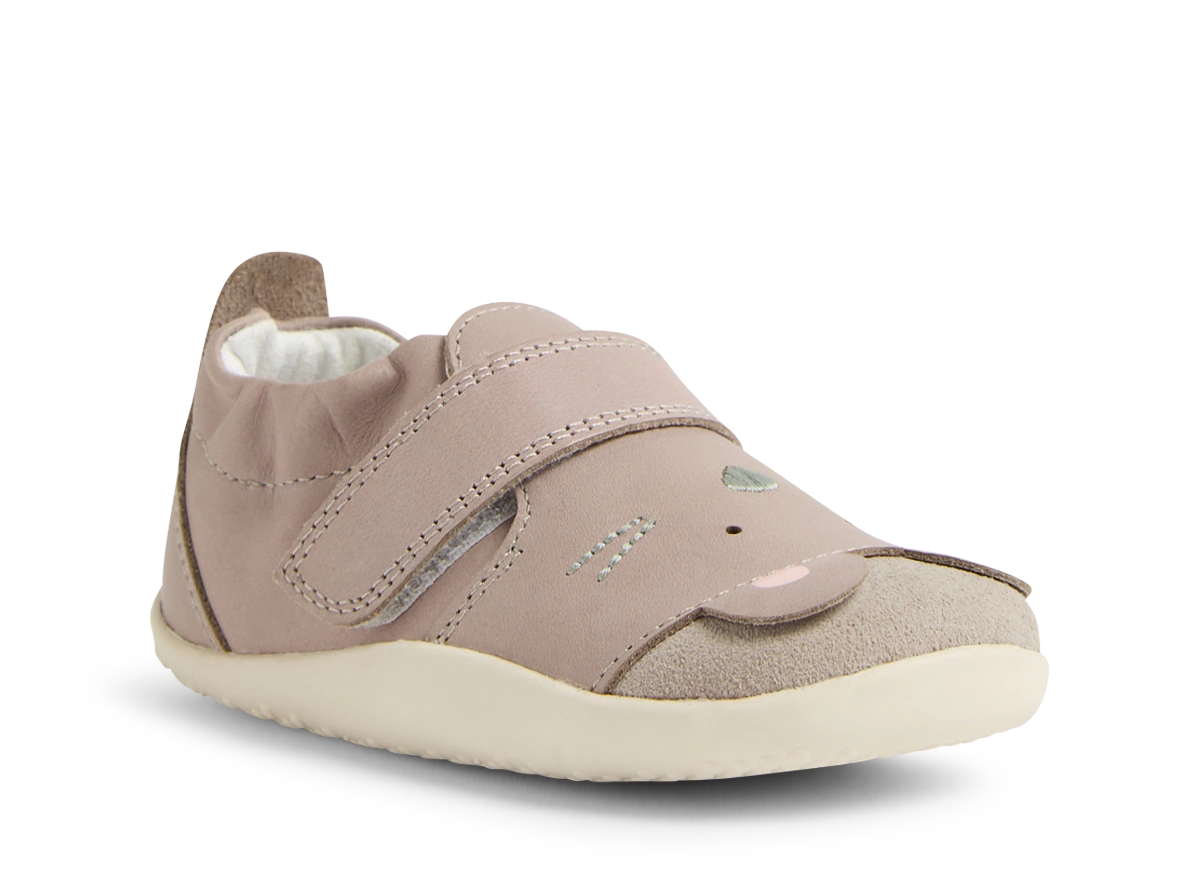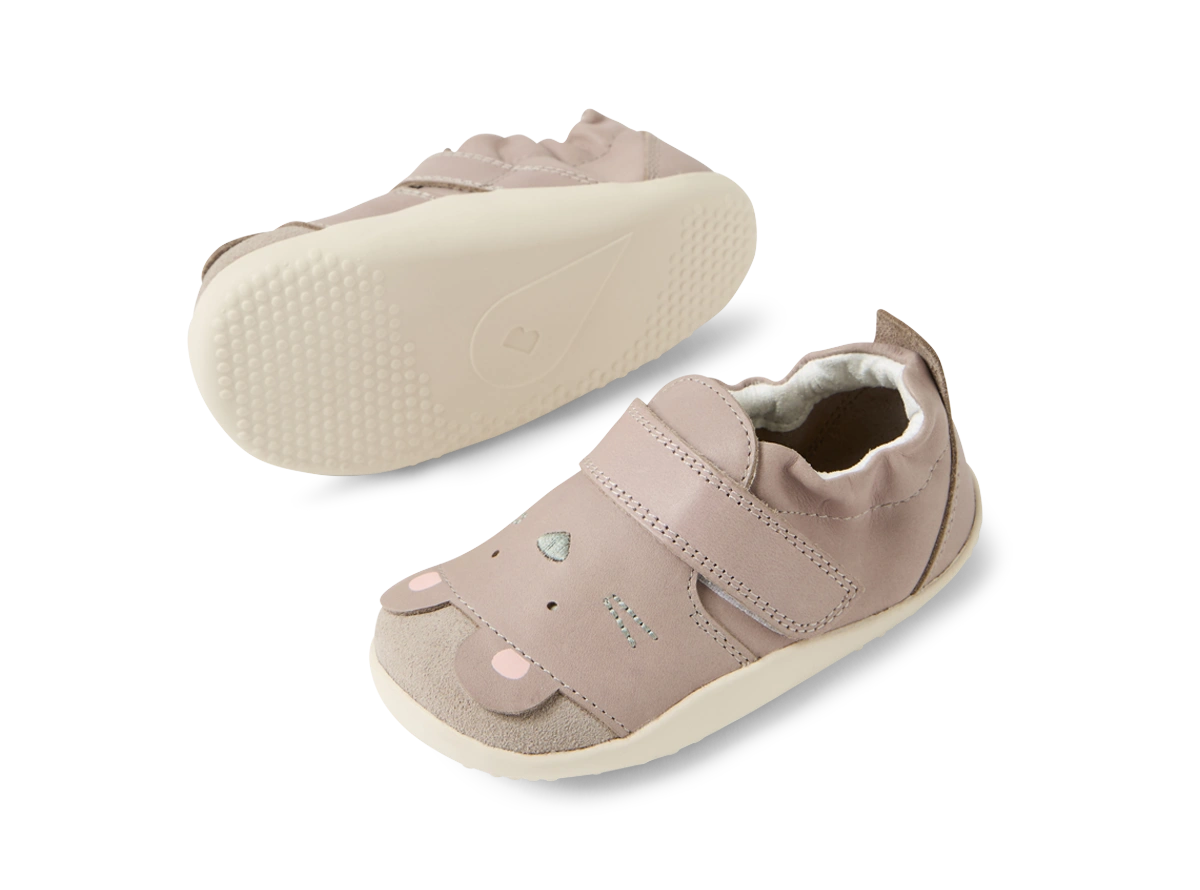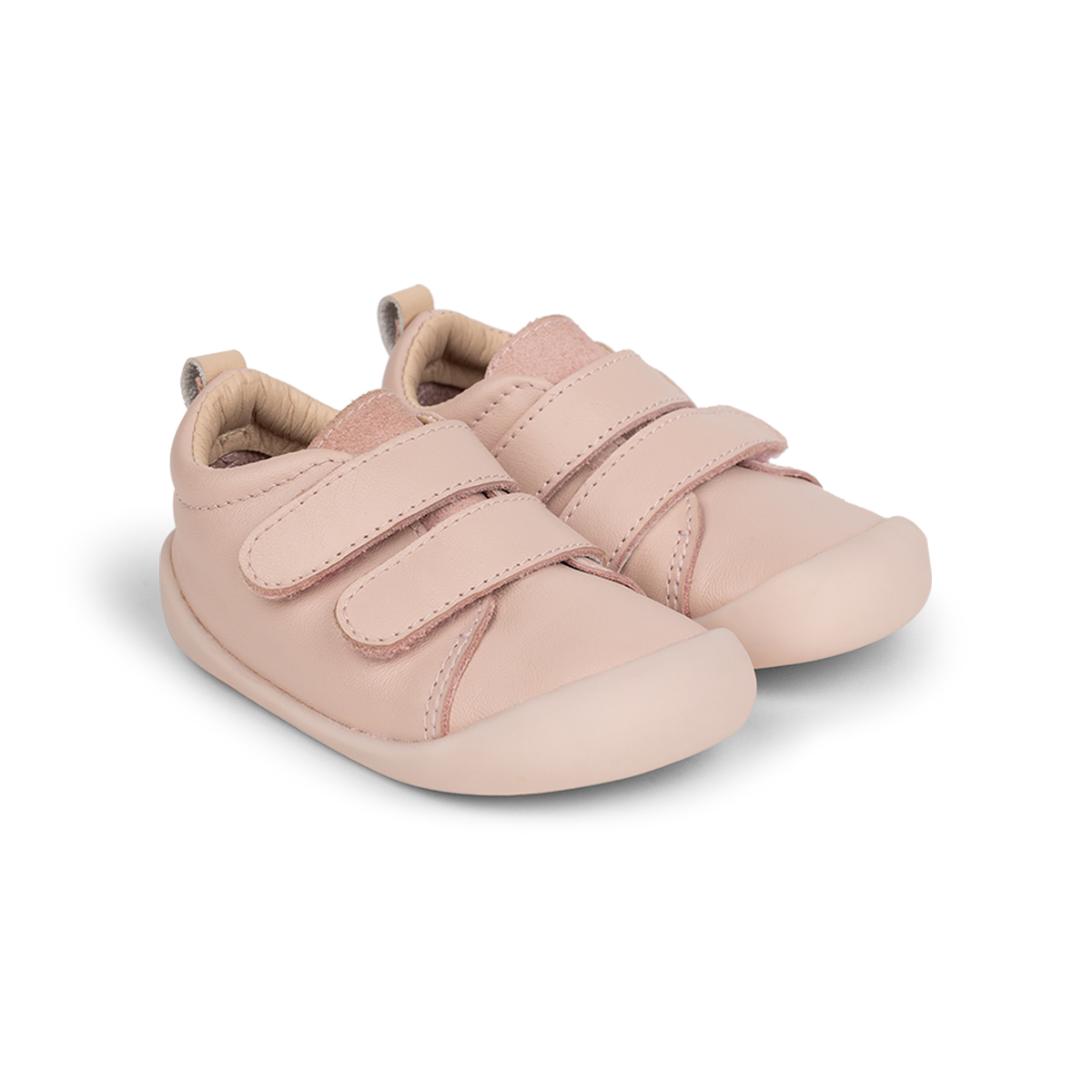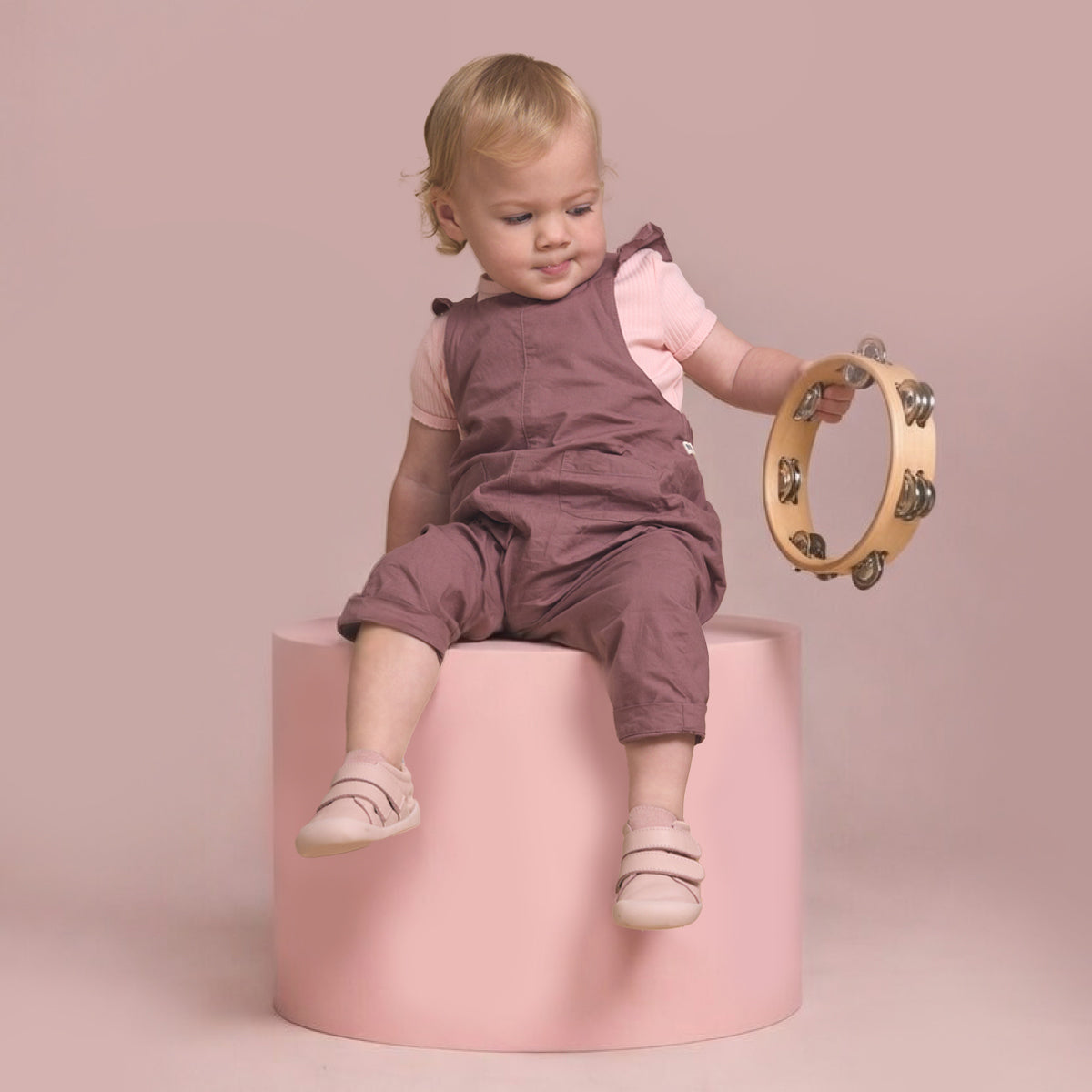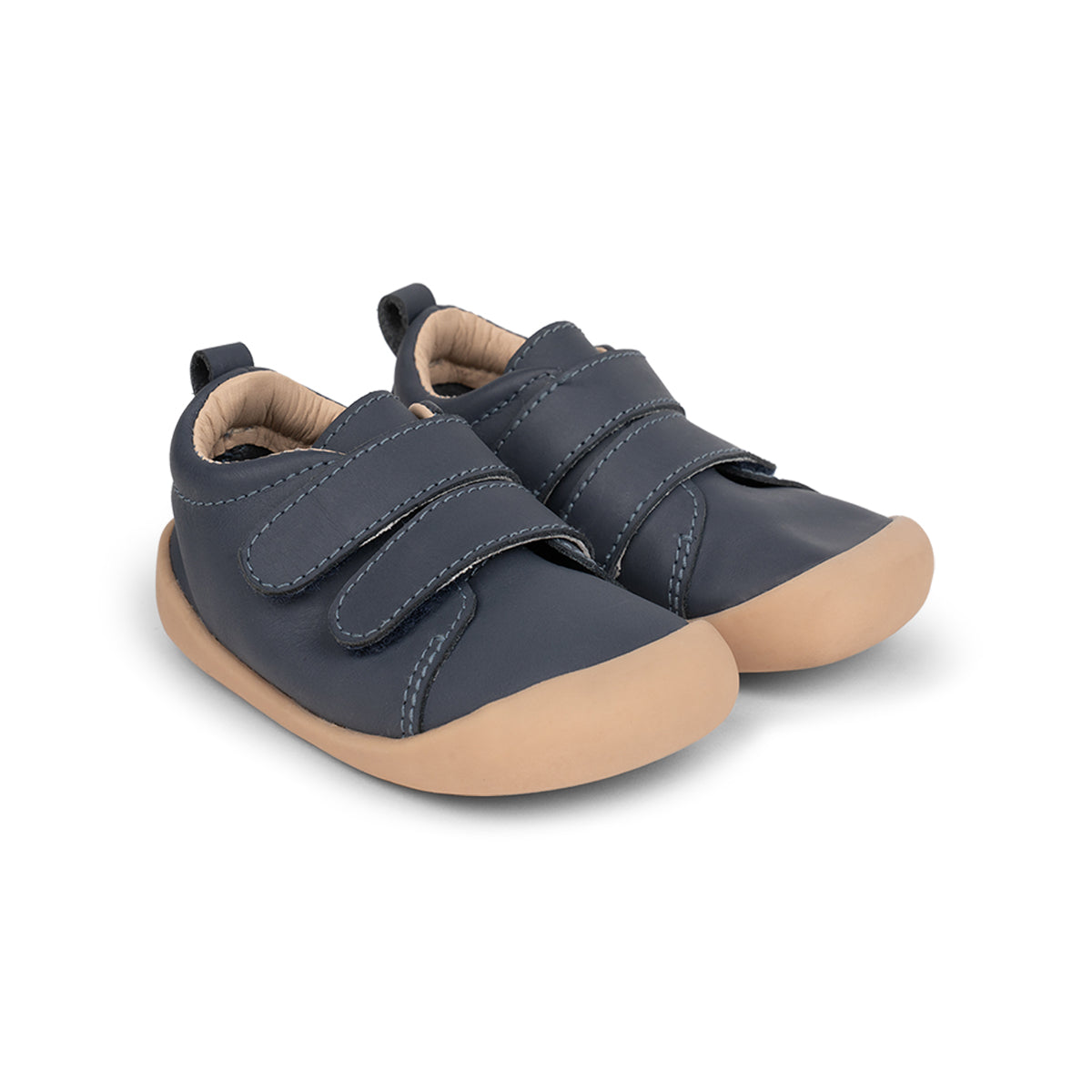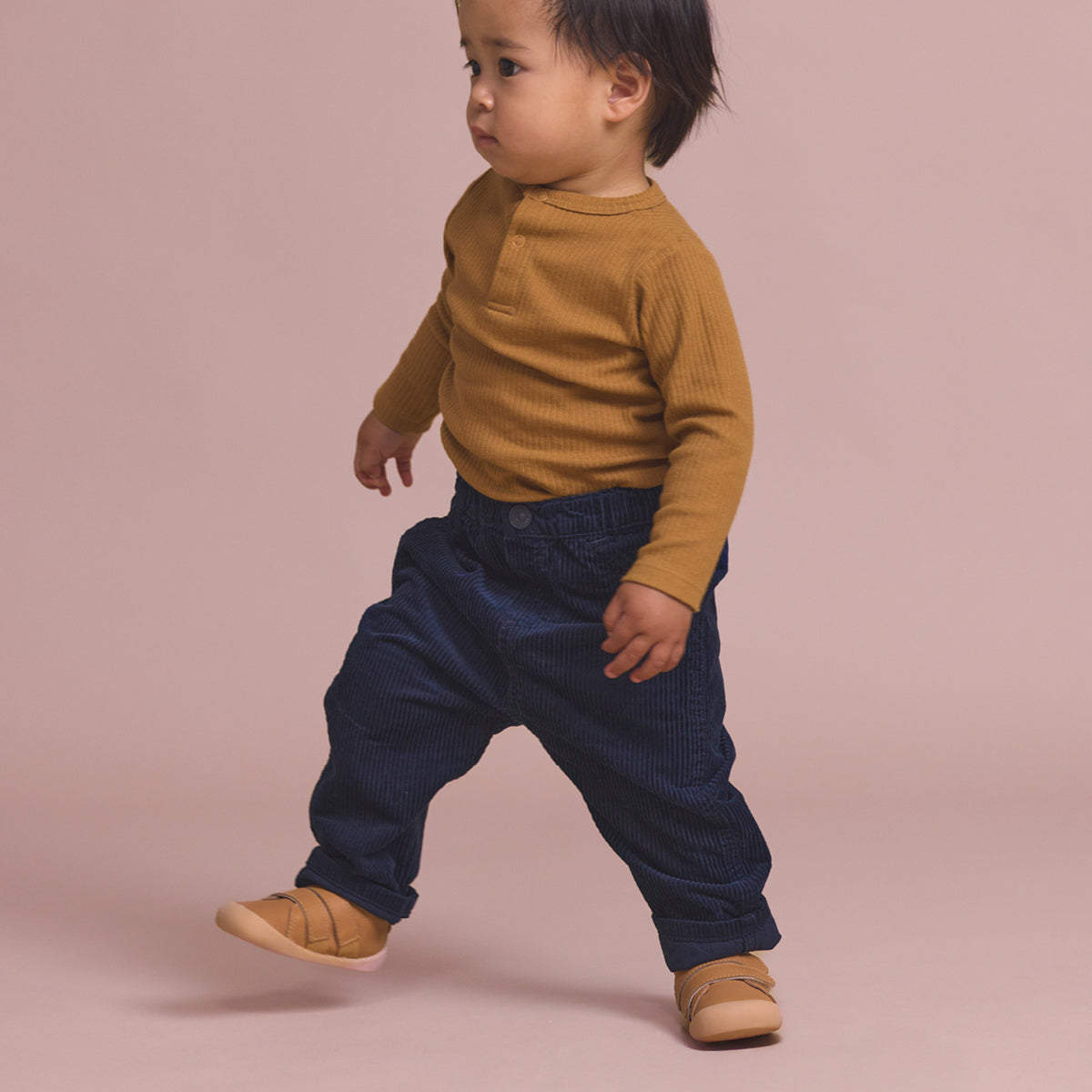

First shoes are a big milestone. They're also one of those purchases where it's really easy to go by looks (little shoes are cute) and end up with something that's not quite right for little feet that are still figuring everything out.
After more than 22 years of fitting children's footwear at Junior, here's what we know matters most when you're choosing that very first pair.
1. Fit over look
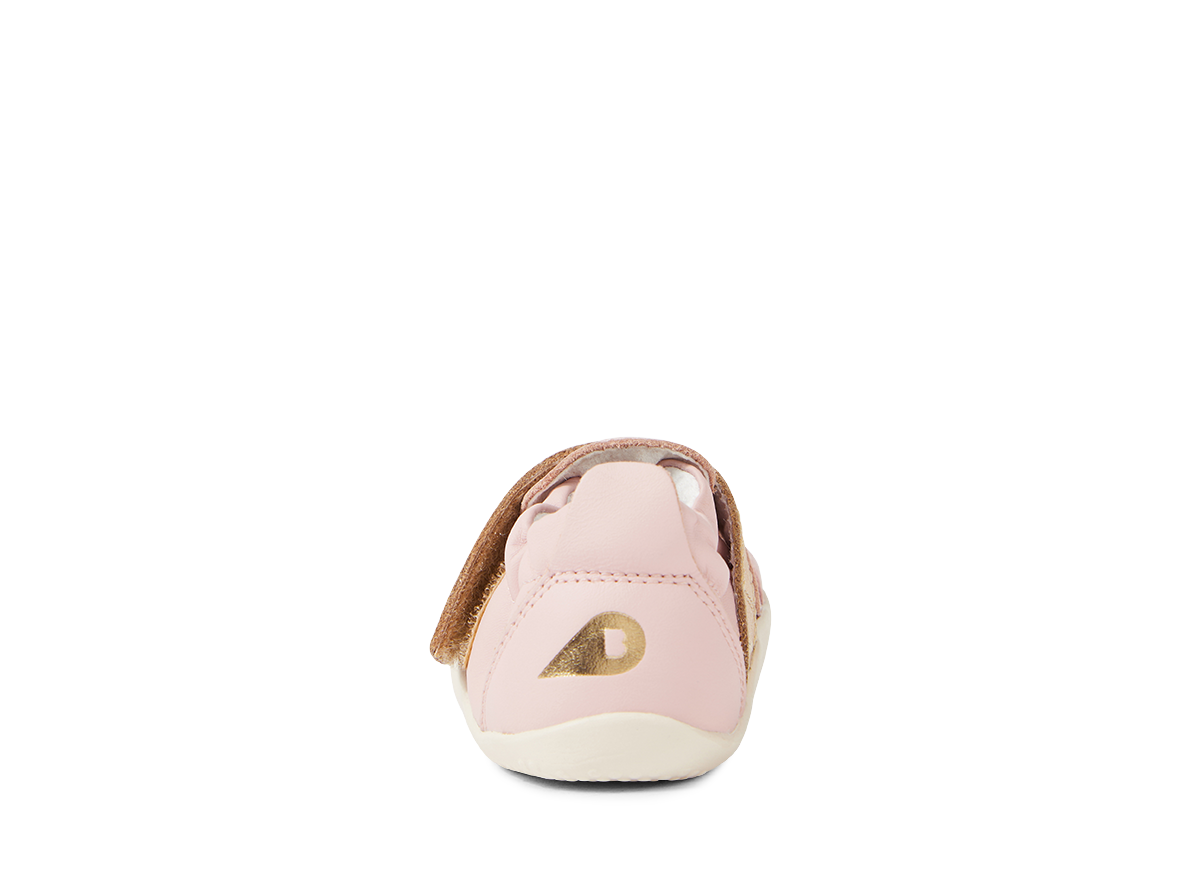
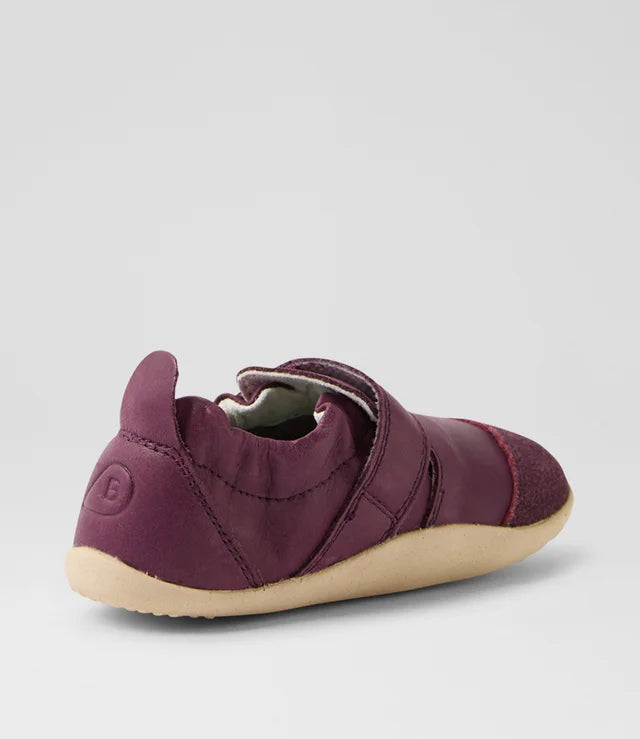
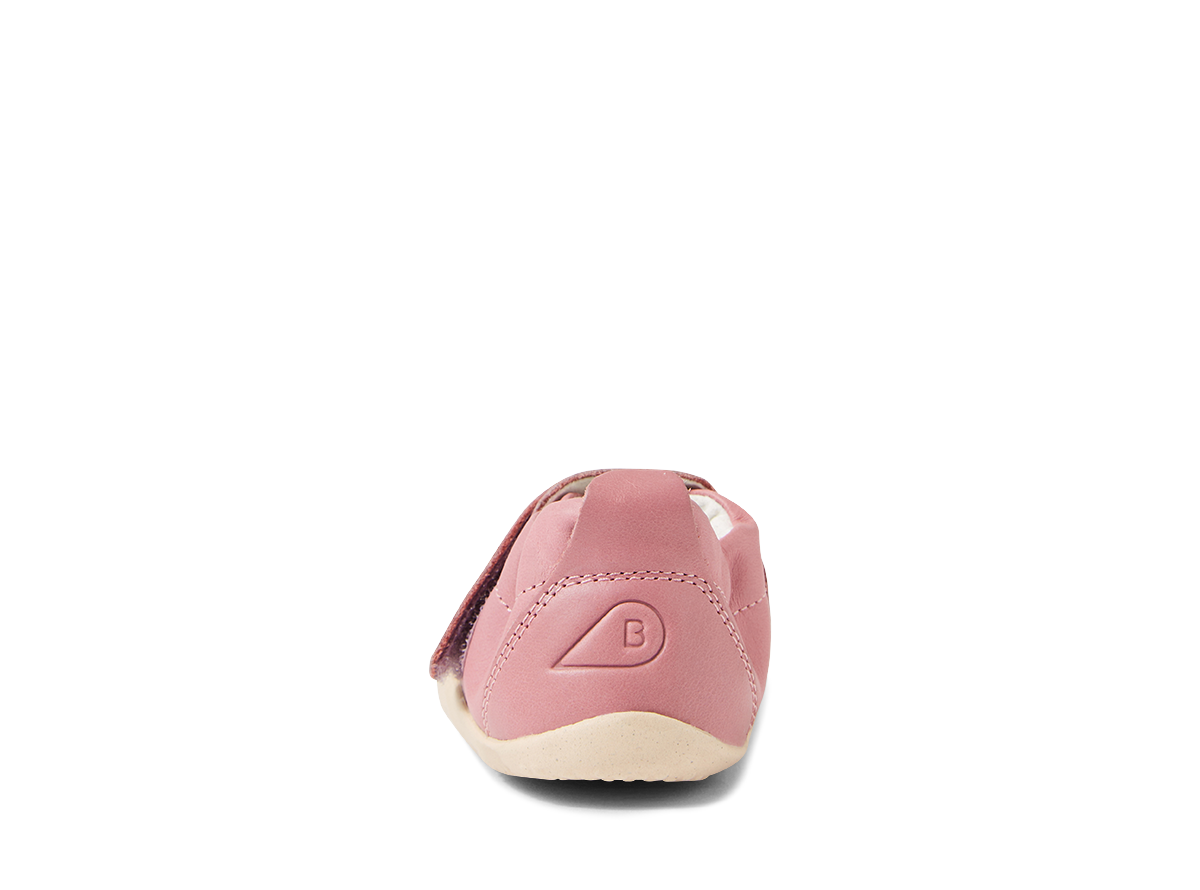
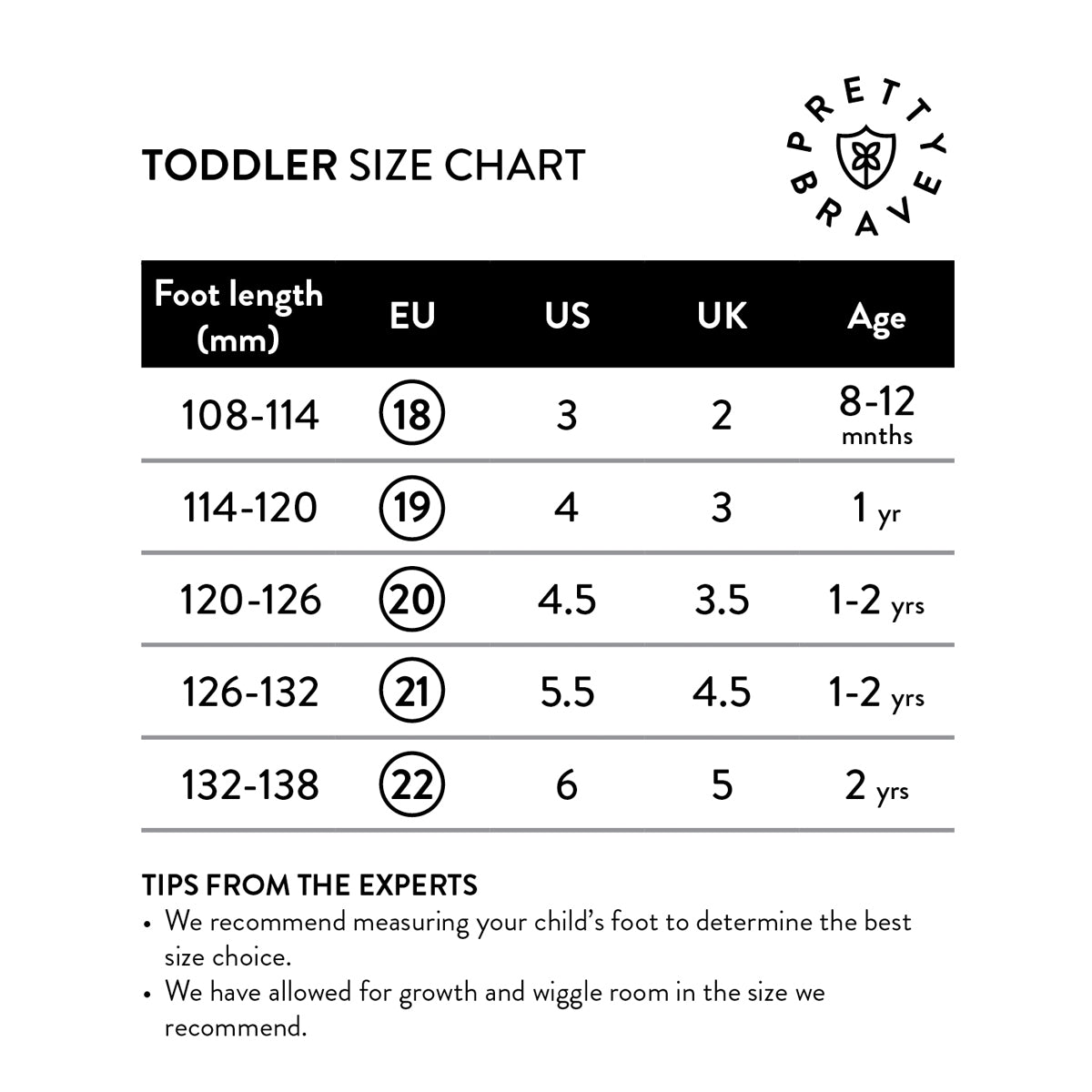
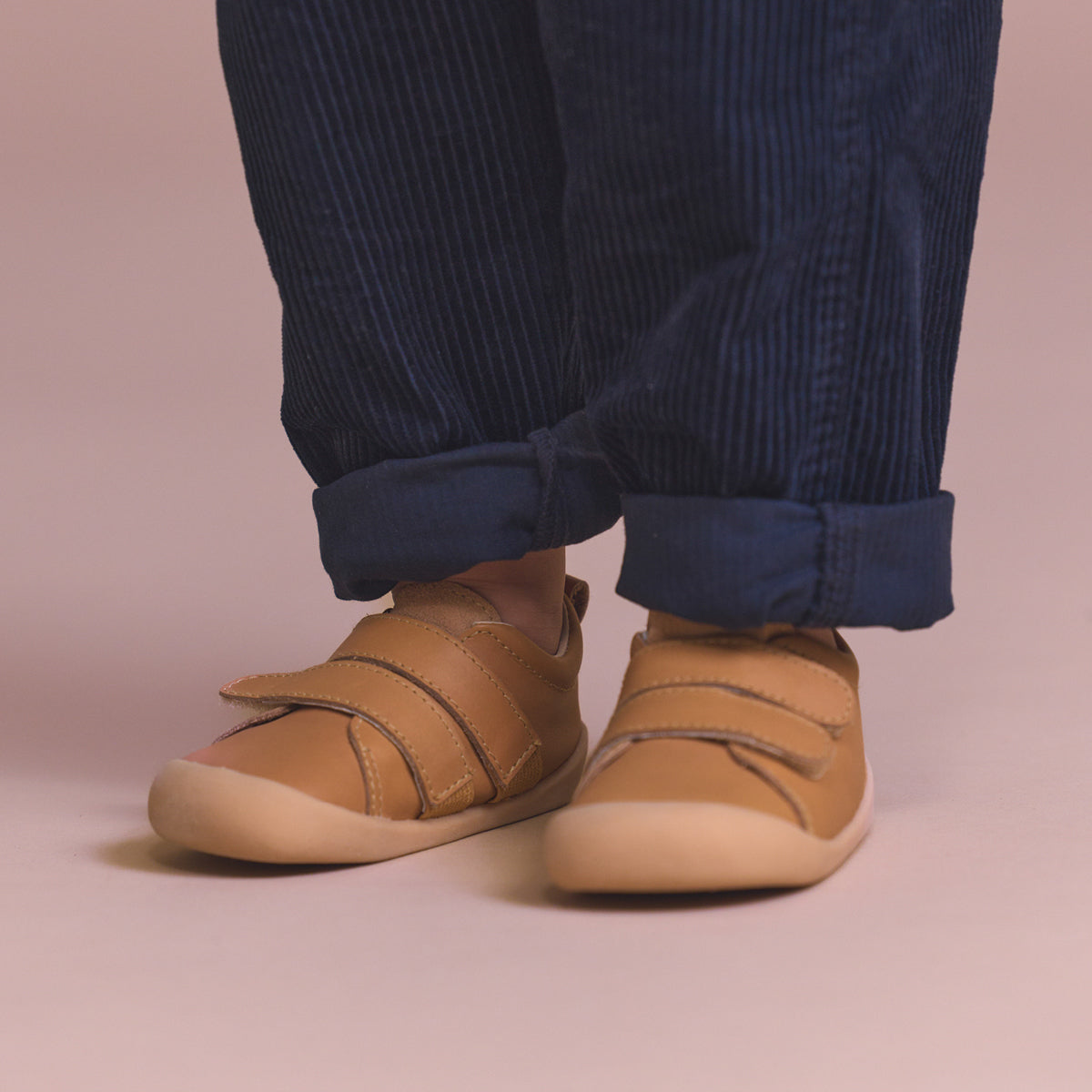
Cute shoes are great. Shoes that fit are better. When we're fitting a first shoe at Junior, the number one thing we look for is room to move. Little feet need space at the toe, a secure hold at the heel, and nothing pinching in between. Worth knowing: a toddler's nerve endings aren't fully developed yet, which means they often can't feel — or tell you — when a shoe is too tight. That makes getting the fit right from the start even more important. The cutest shoe in the shop is the wrong shoe if it doesn't fit.
2. The shape of the toe box matters more than you think
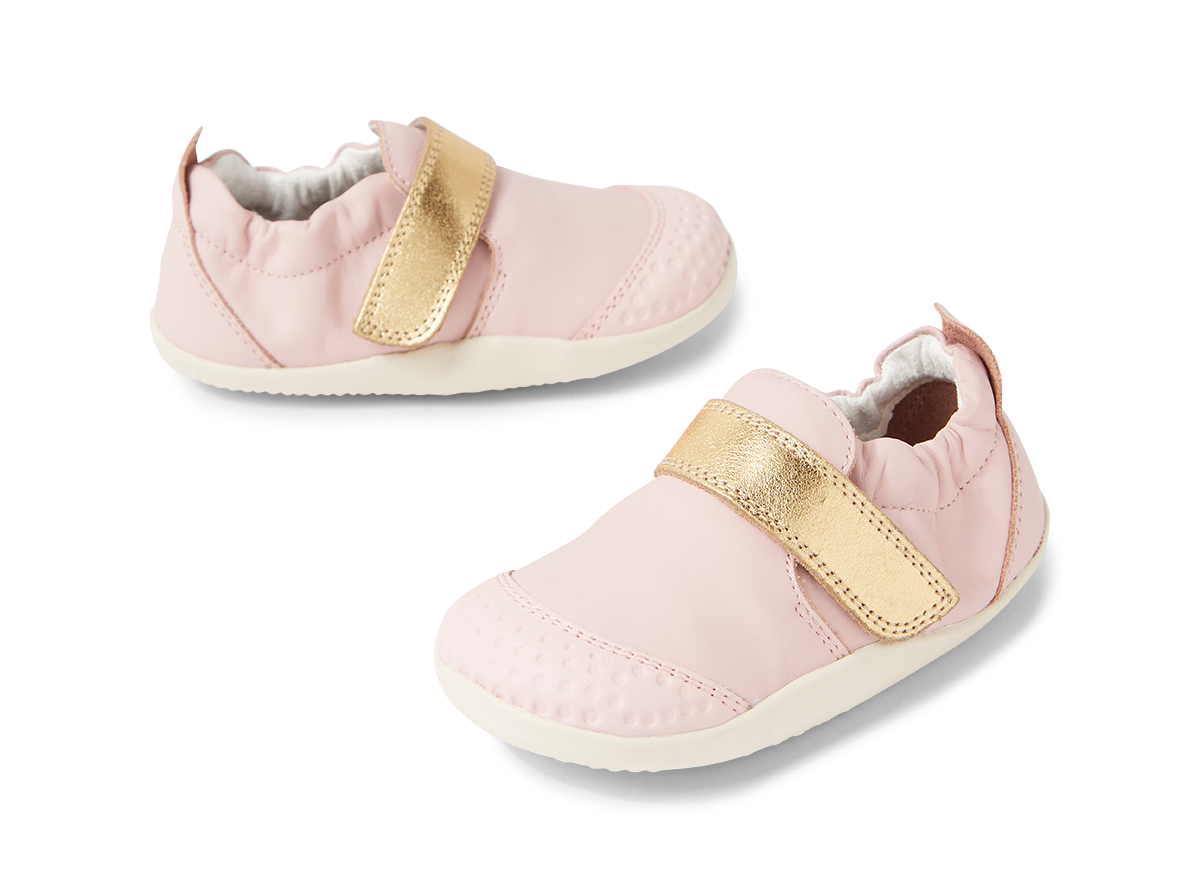
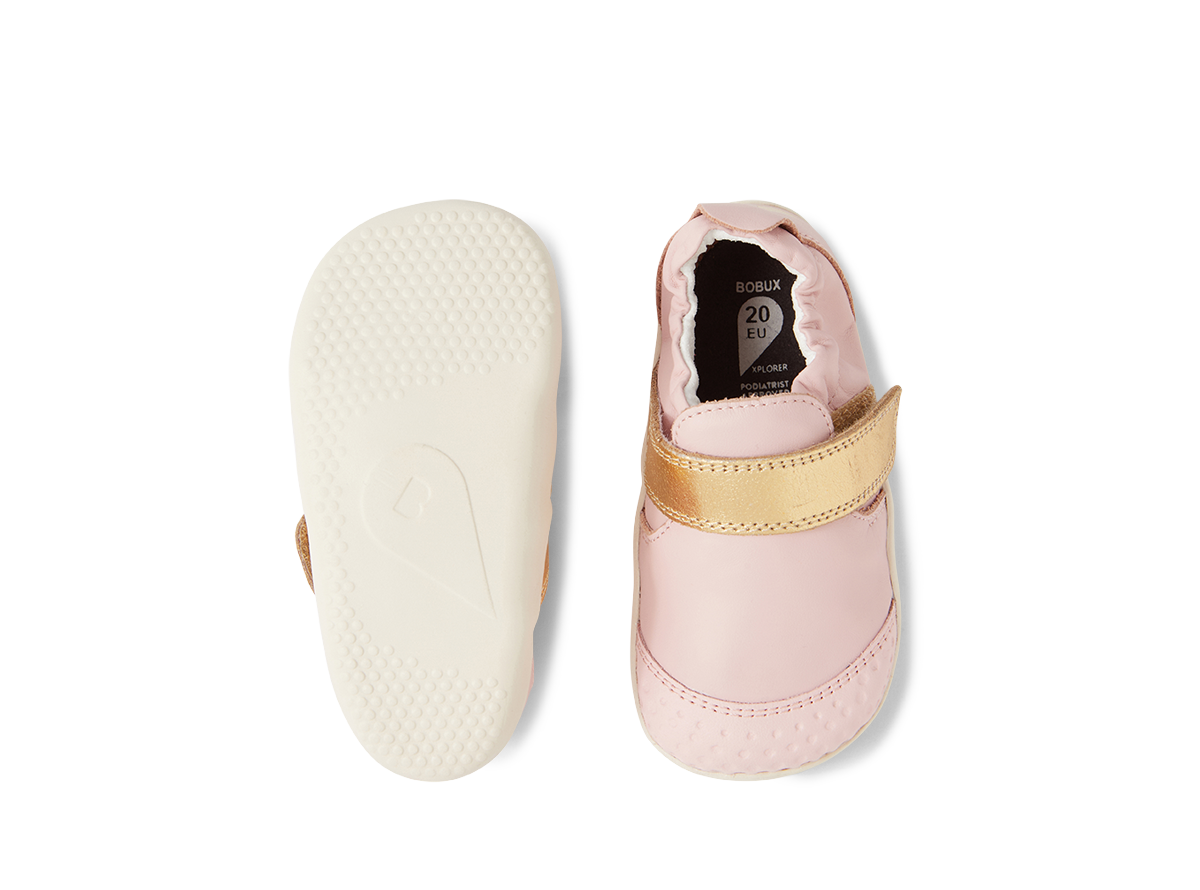
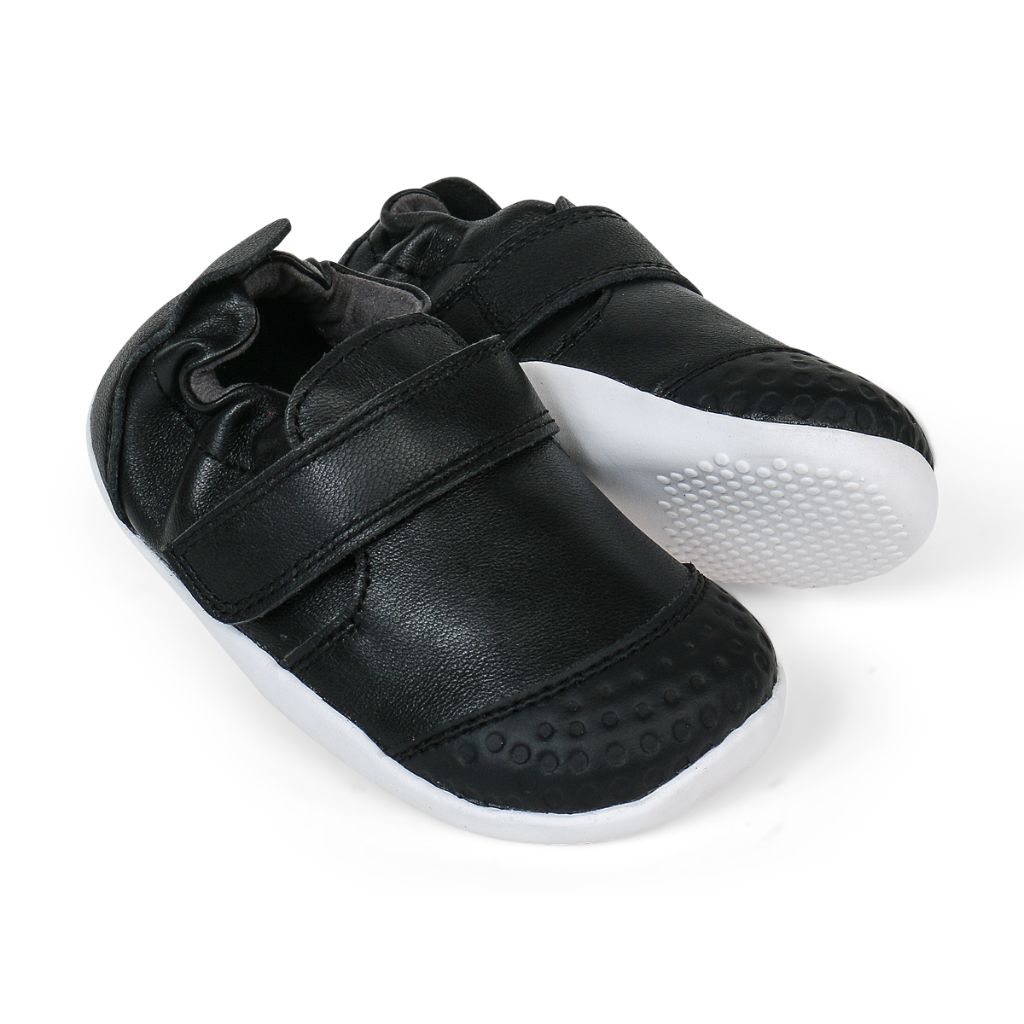
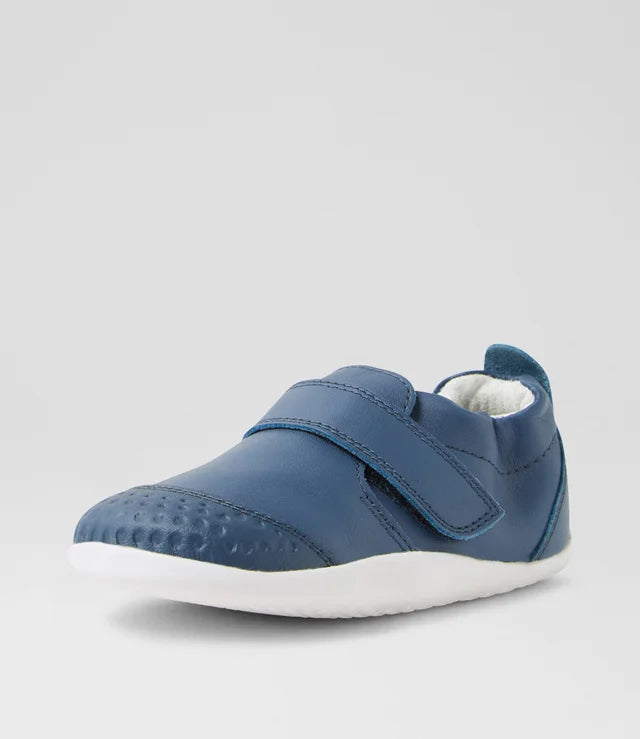
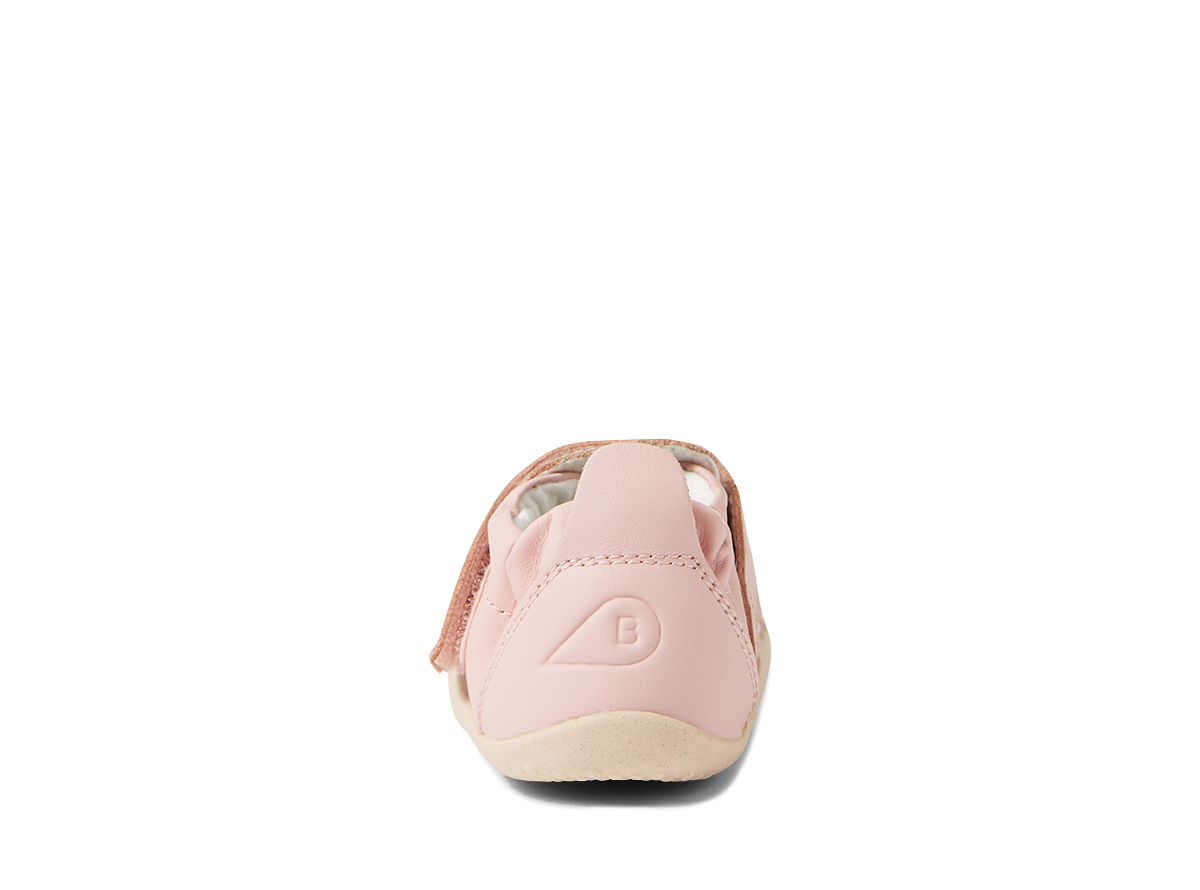
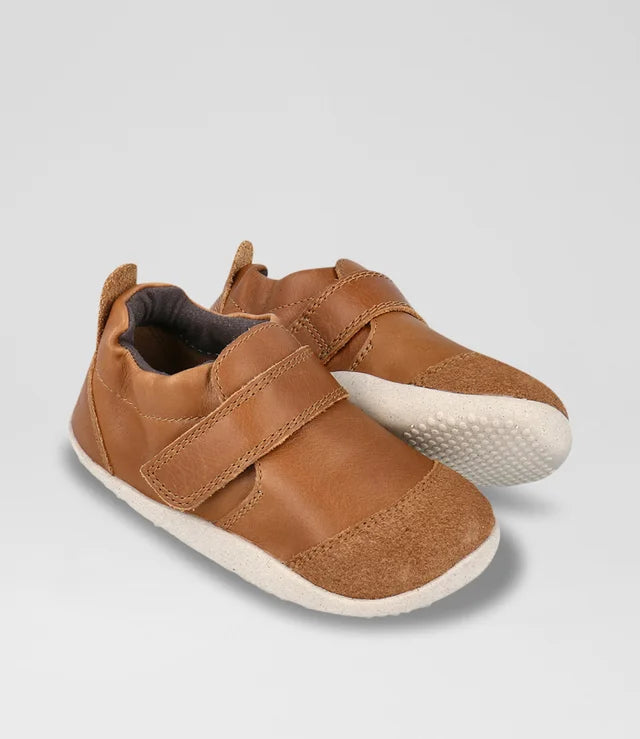
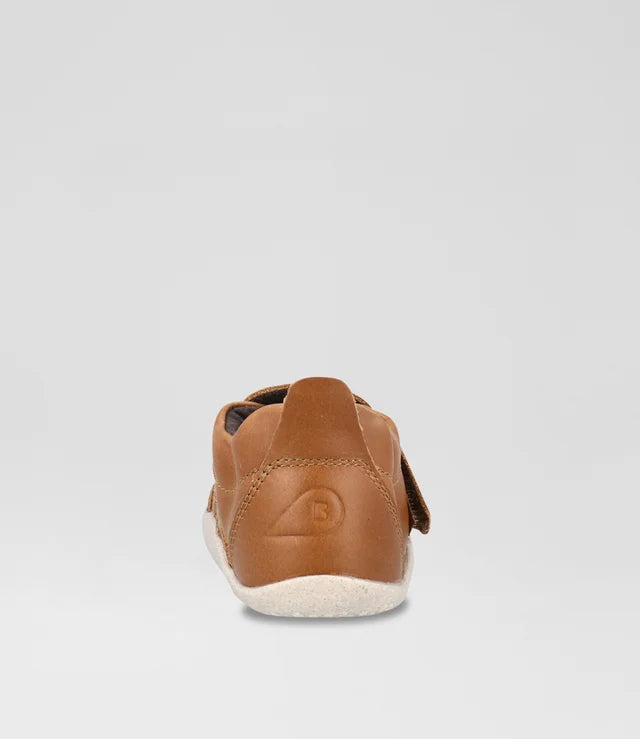
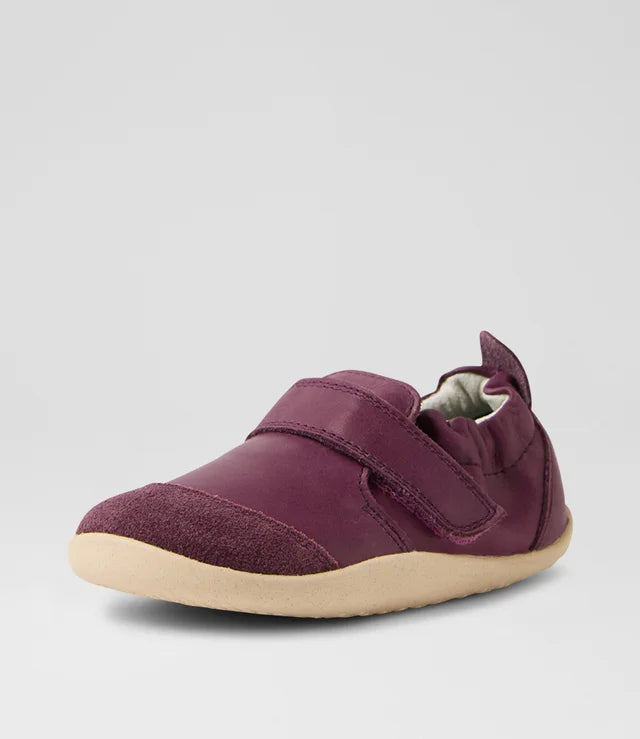
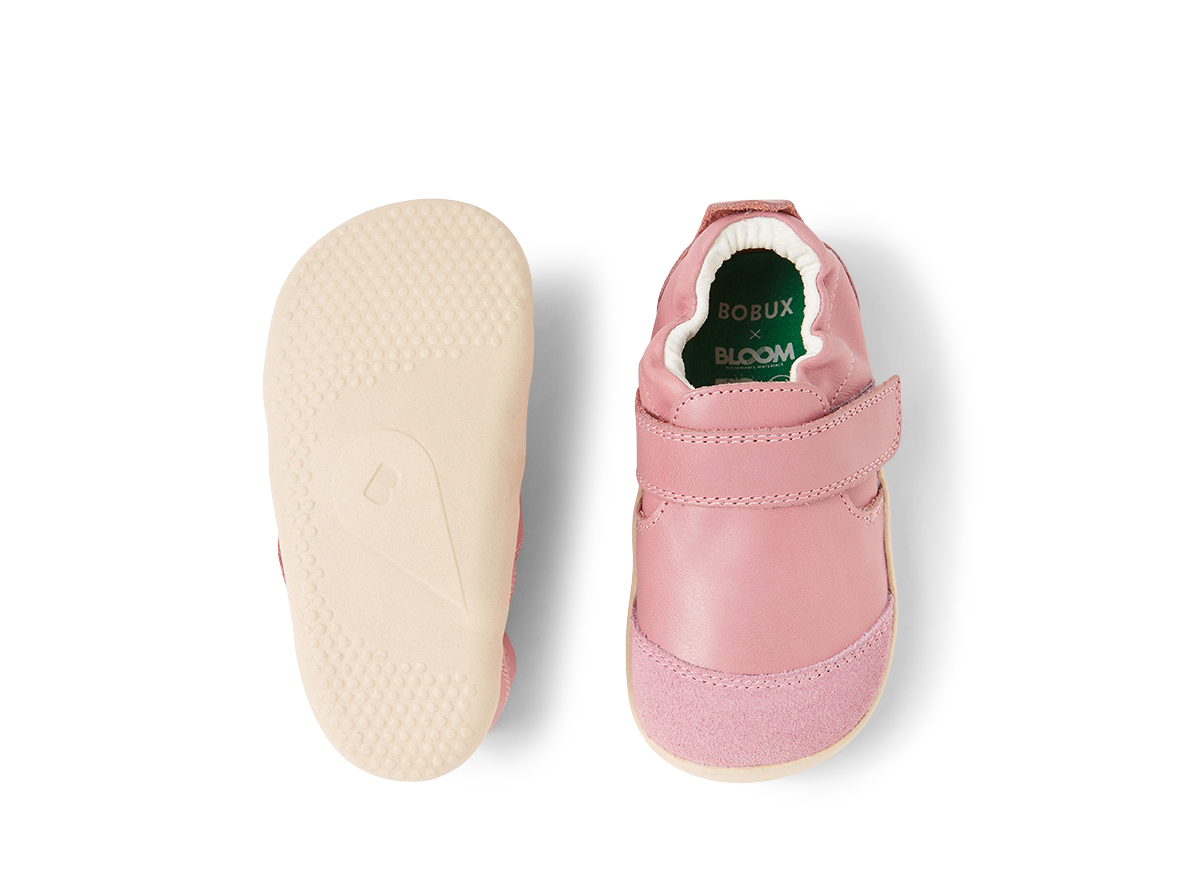
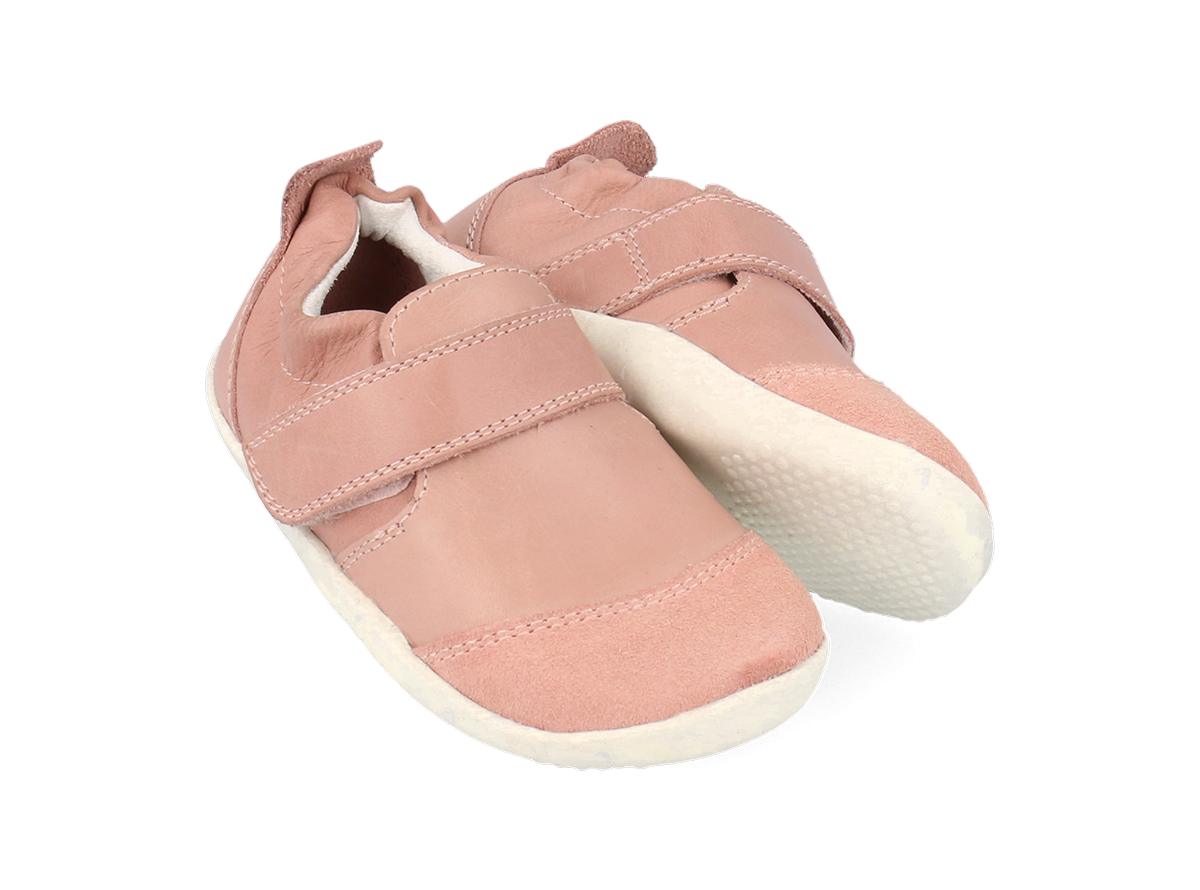
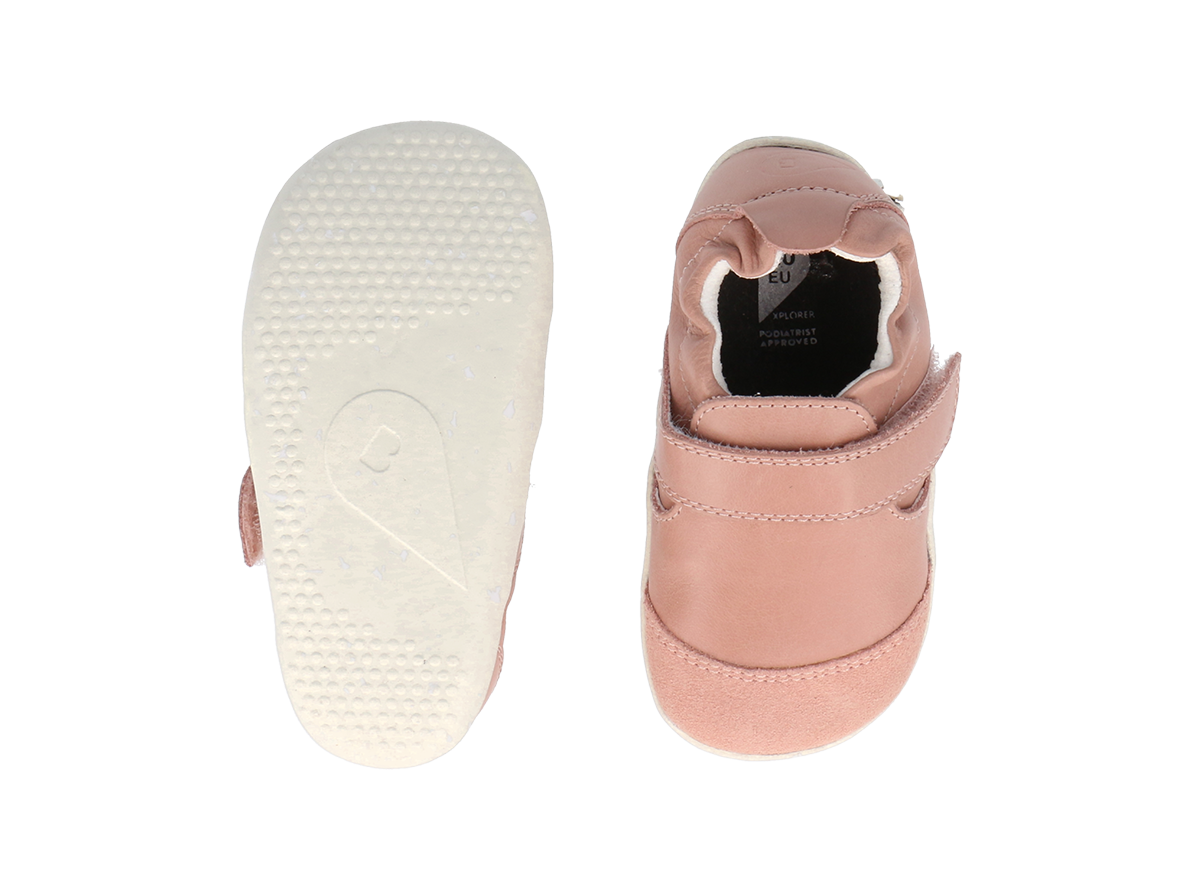
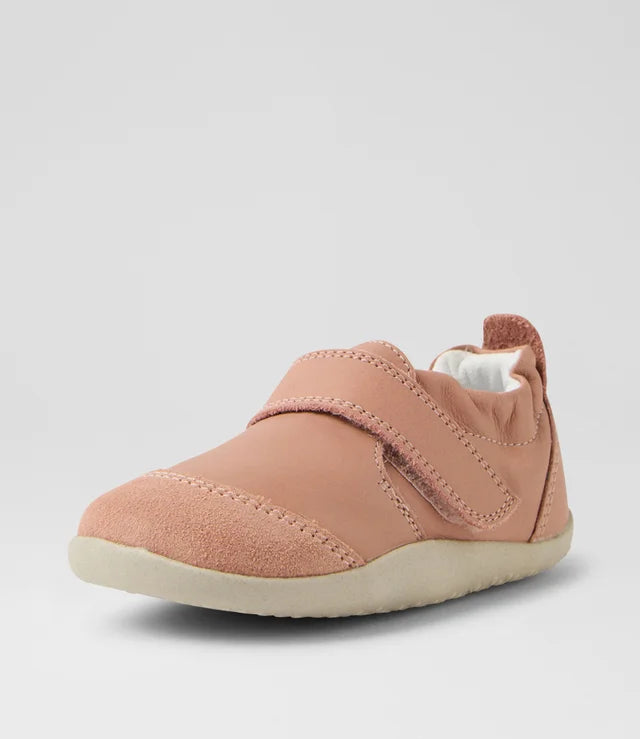
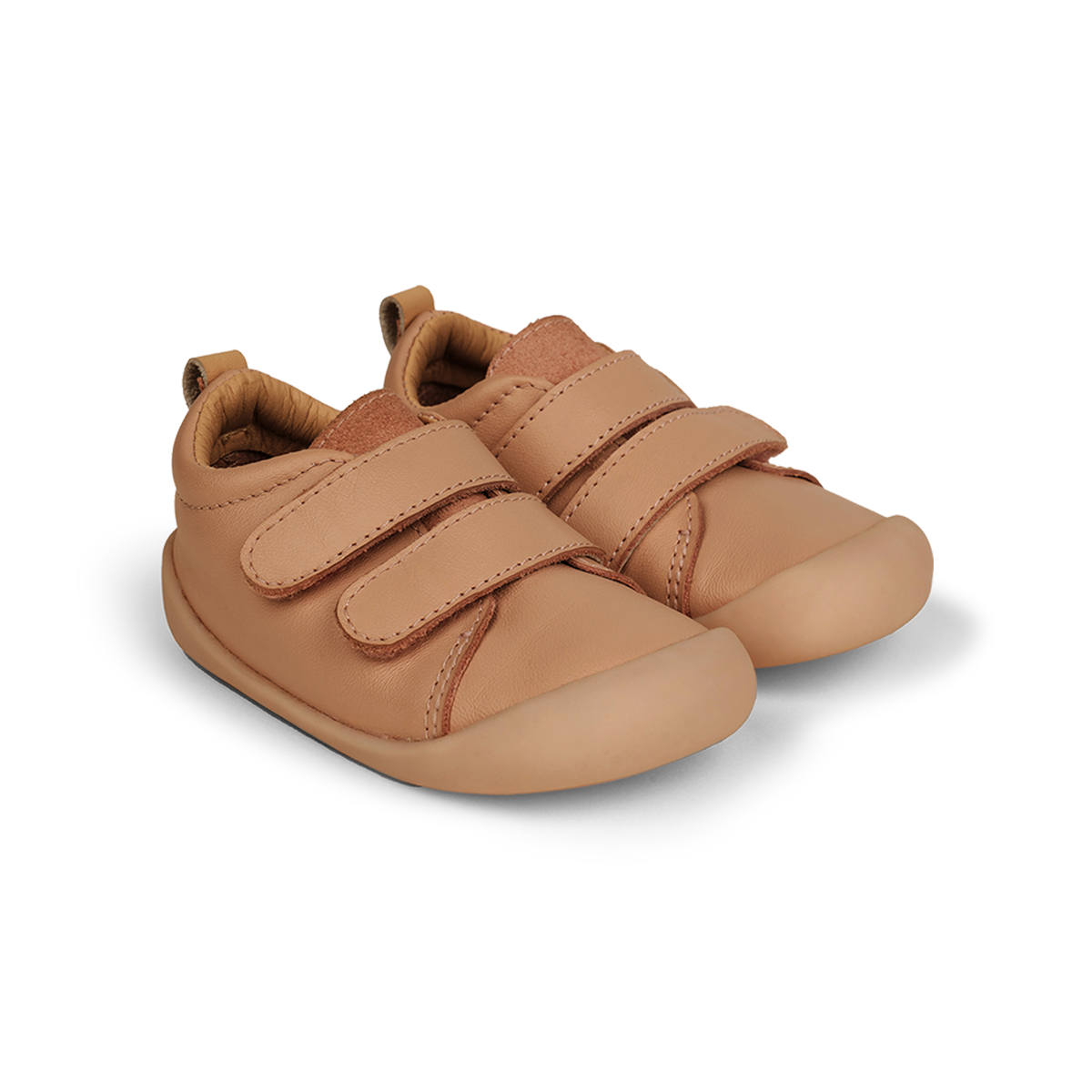
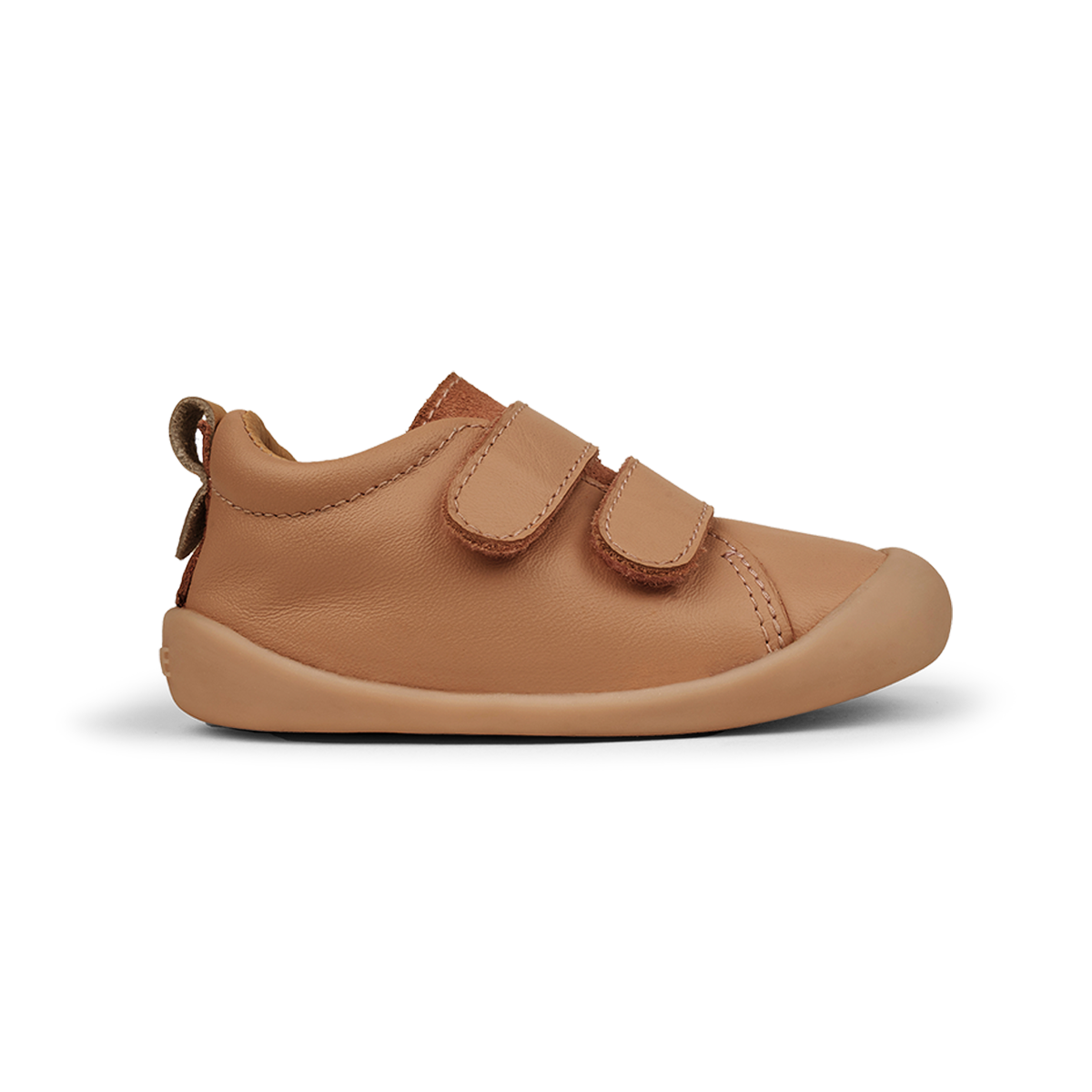
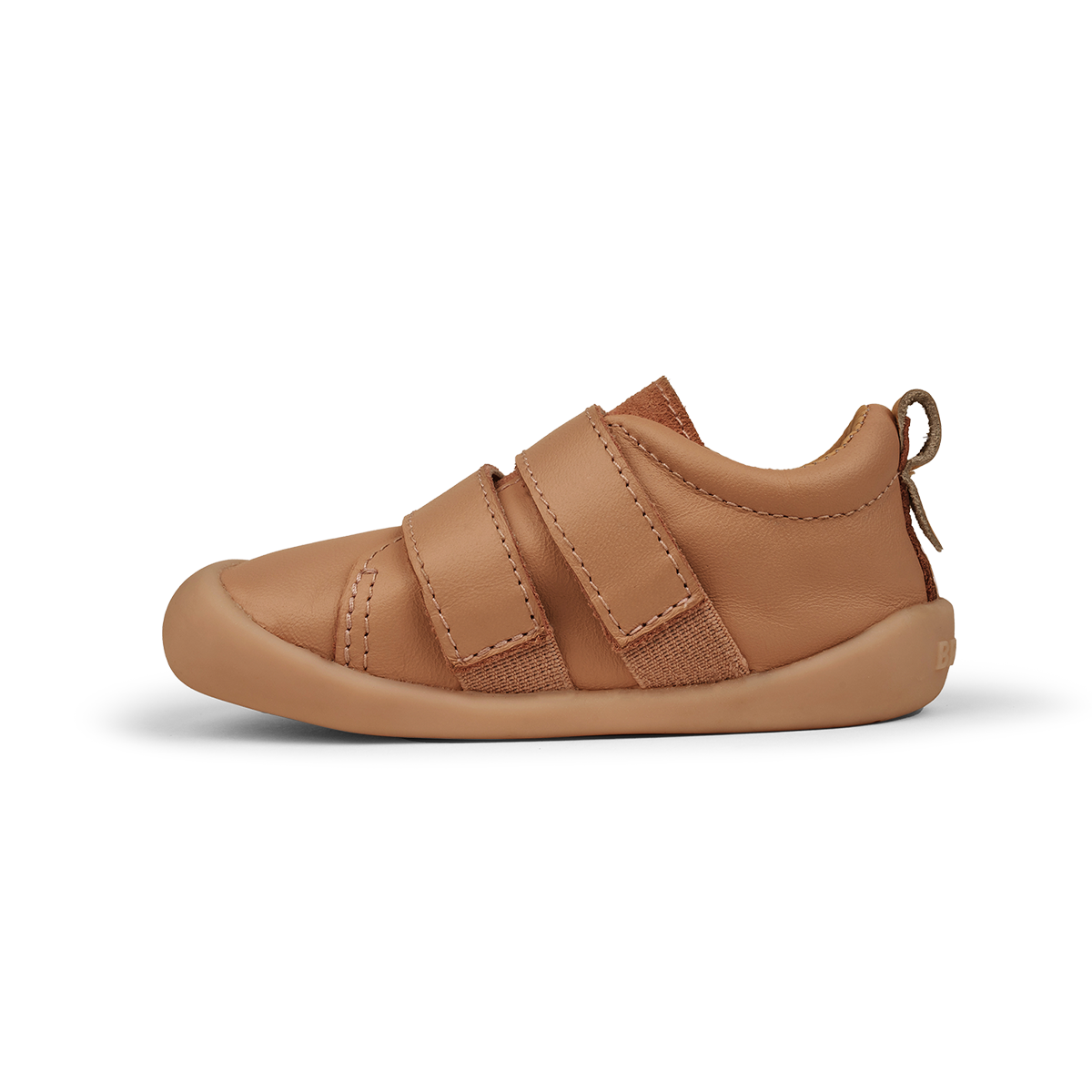
Those little toes are perfectly formed — and we want to keep them that way. A round, wide toe box lets your baby's foot spread naturally as they move and grow. Pointed or narrow toes can put ongoing pressure on the foot and contribute to toe problems over time, including issues like bunions and hammertoes. What to look for: a shoe that follows the natural shape of the foot. Not the other way around.
3. Easy on, easy off makes a real difference
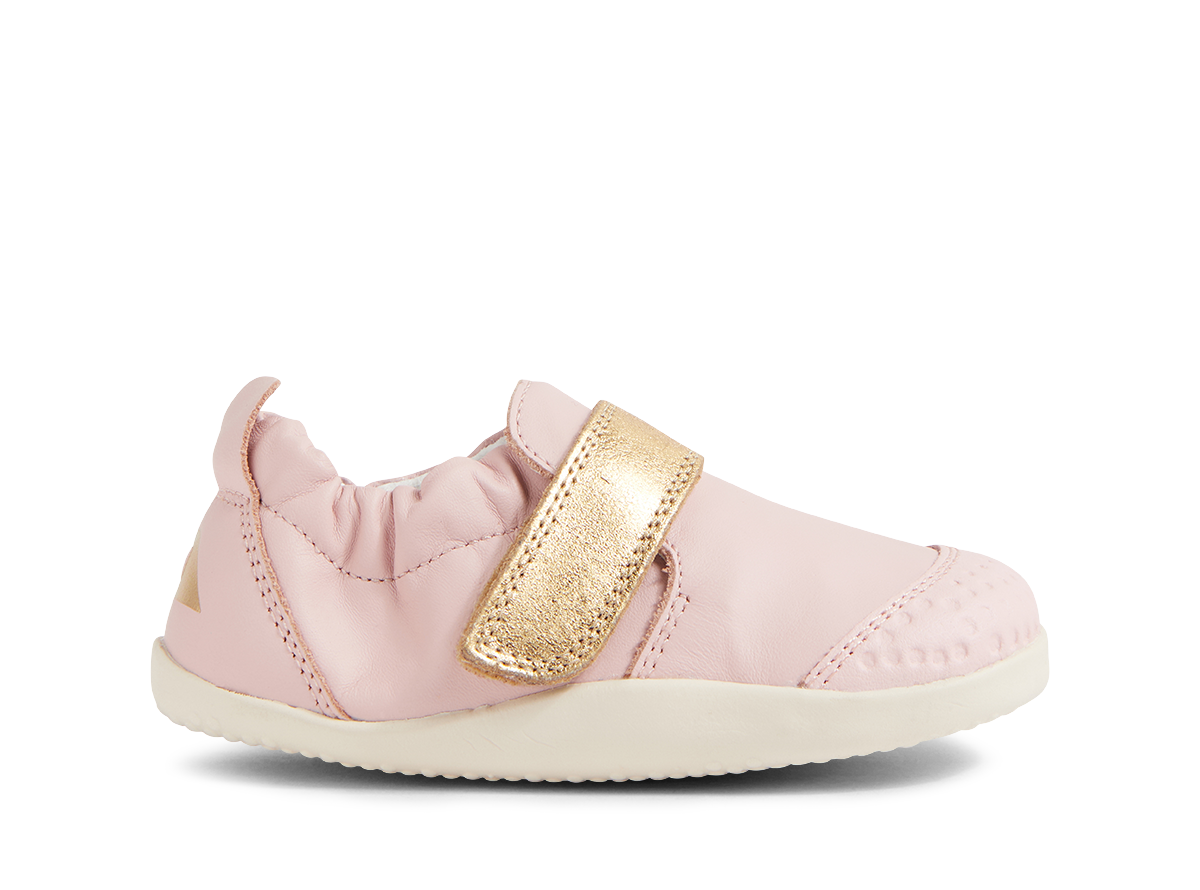
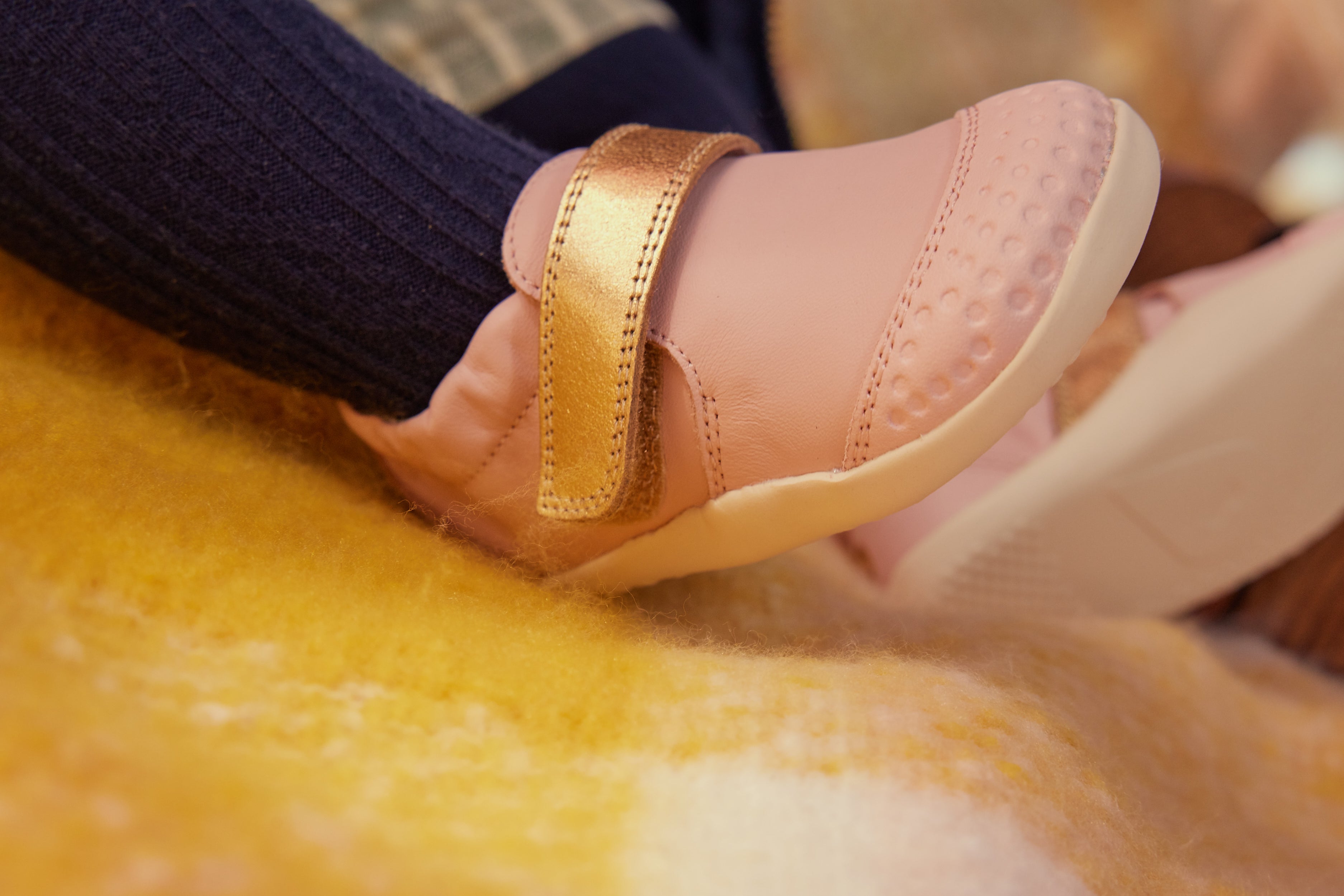
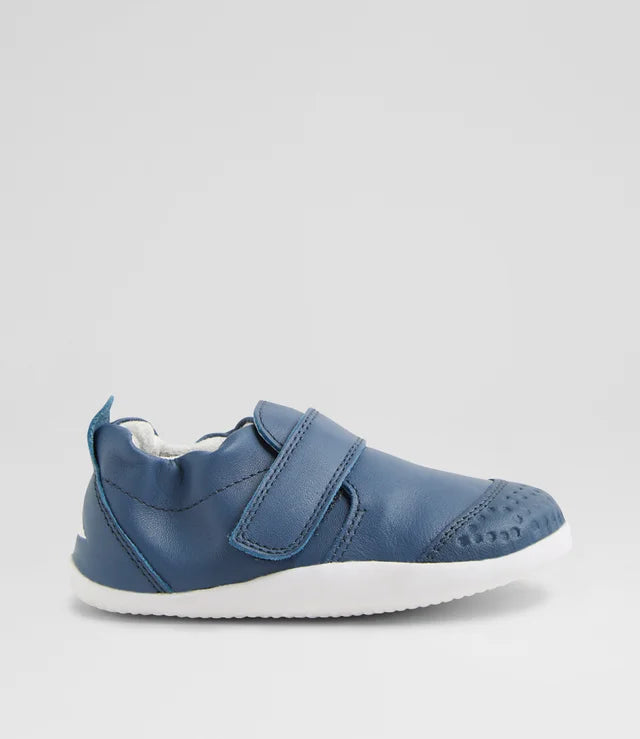
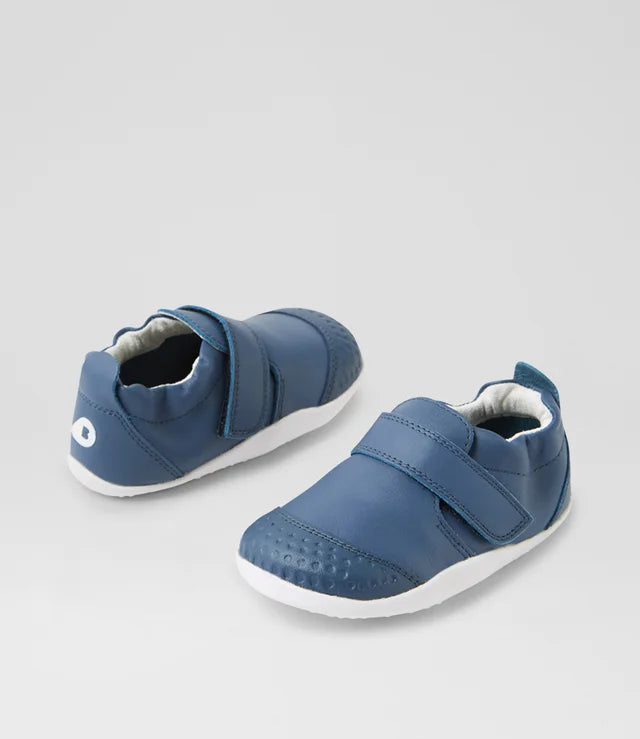
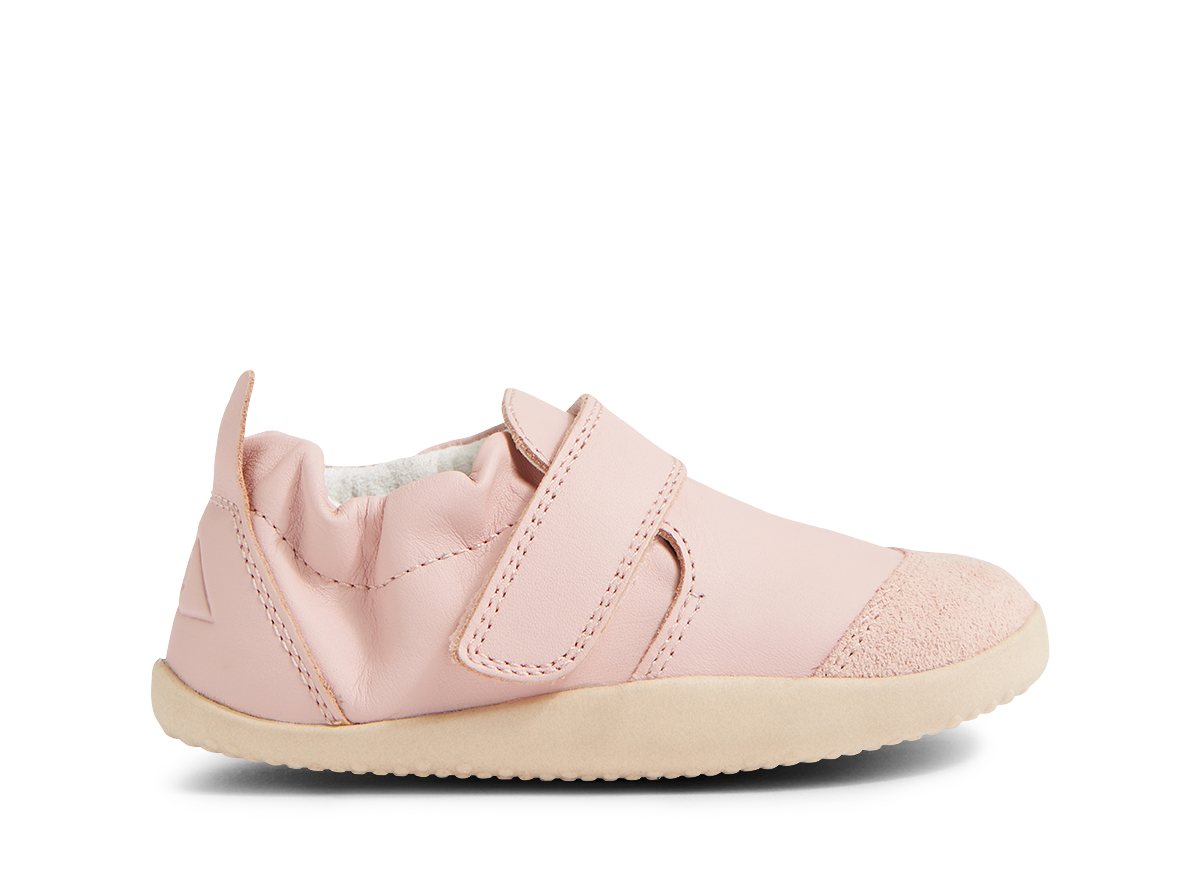
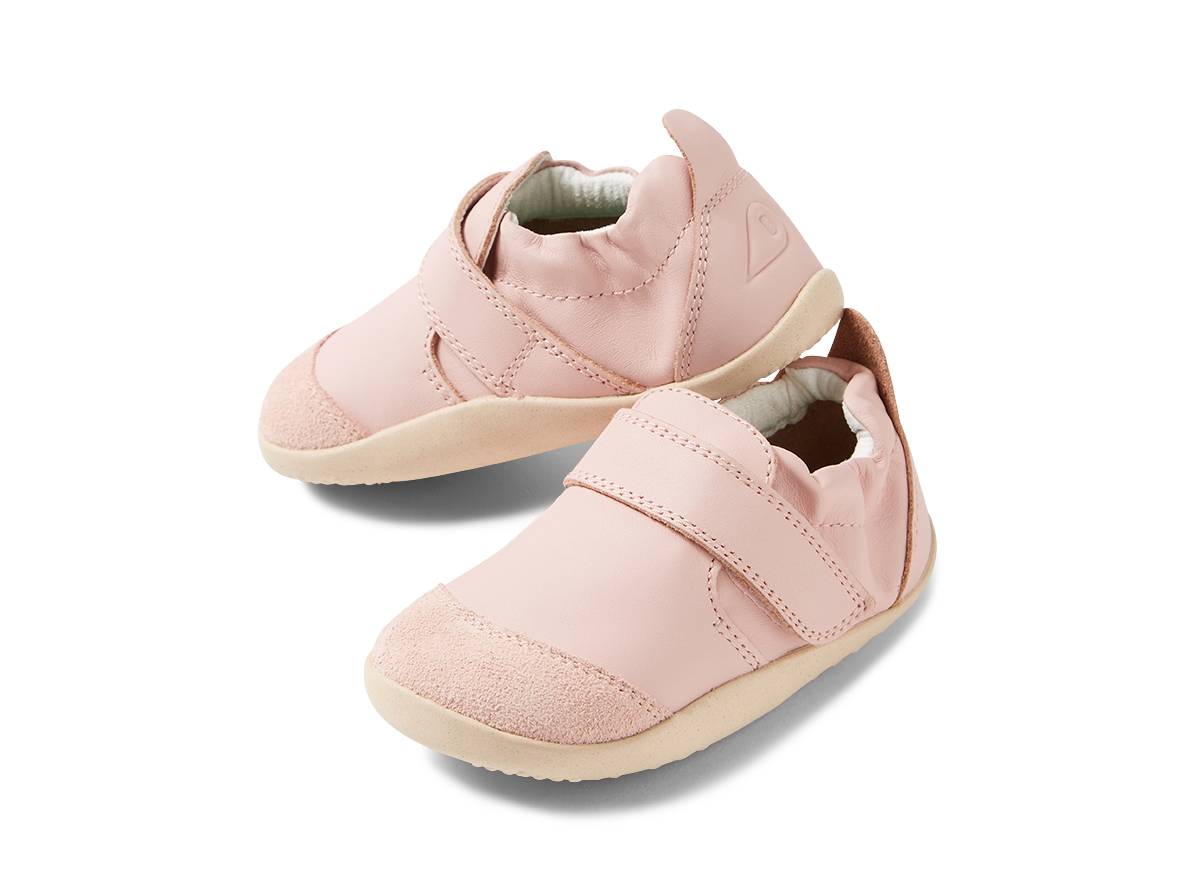
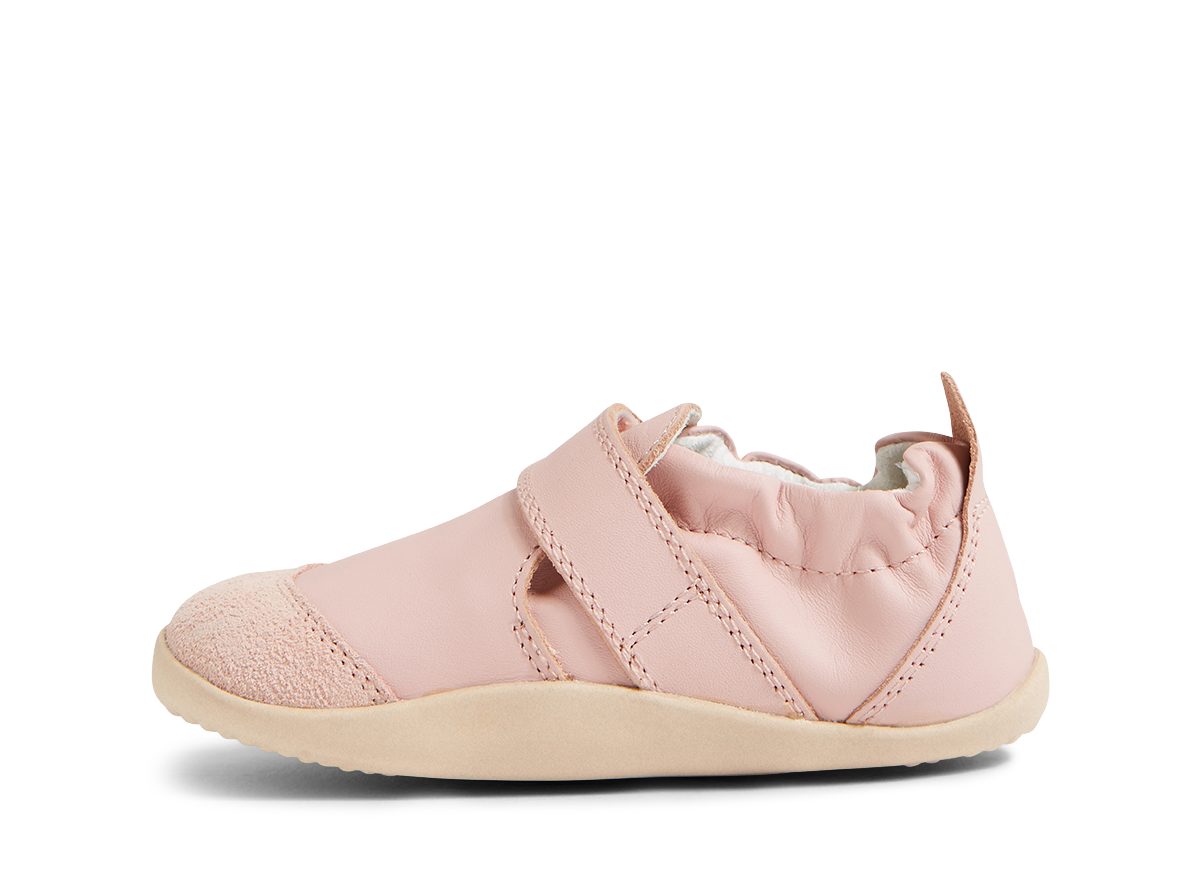
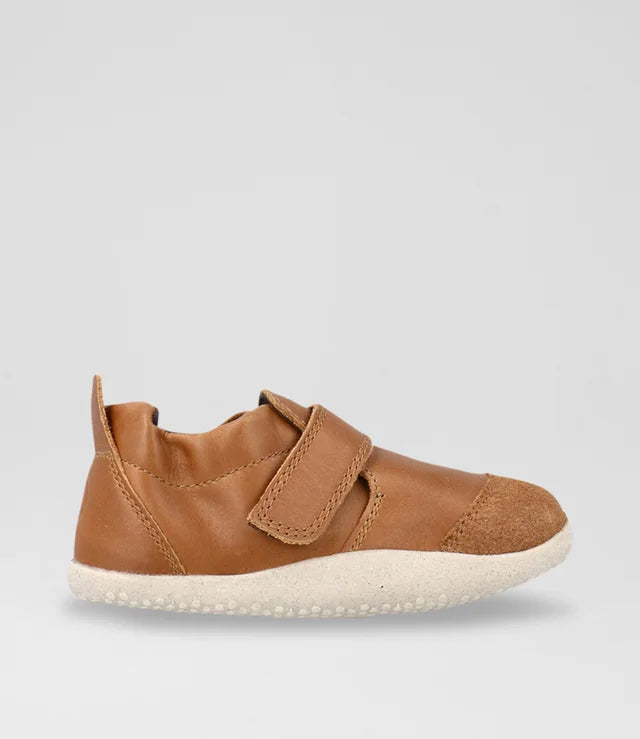
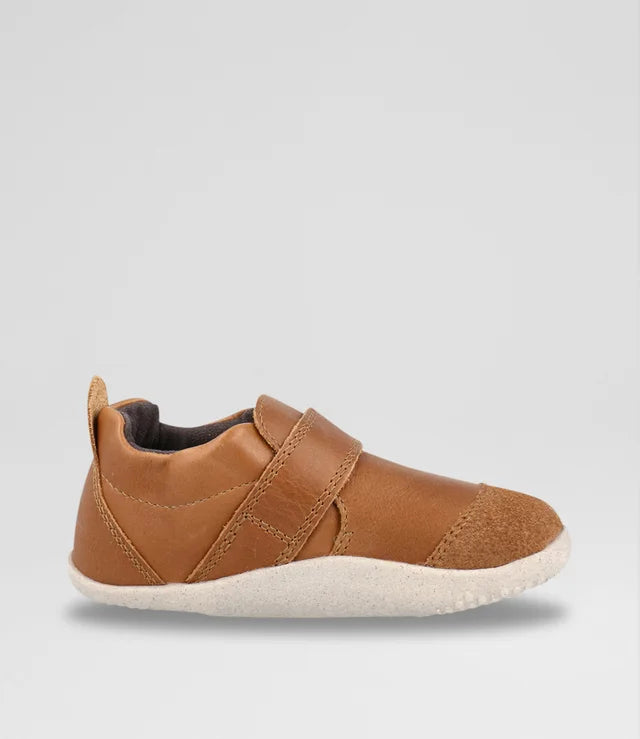
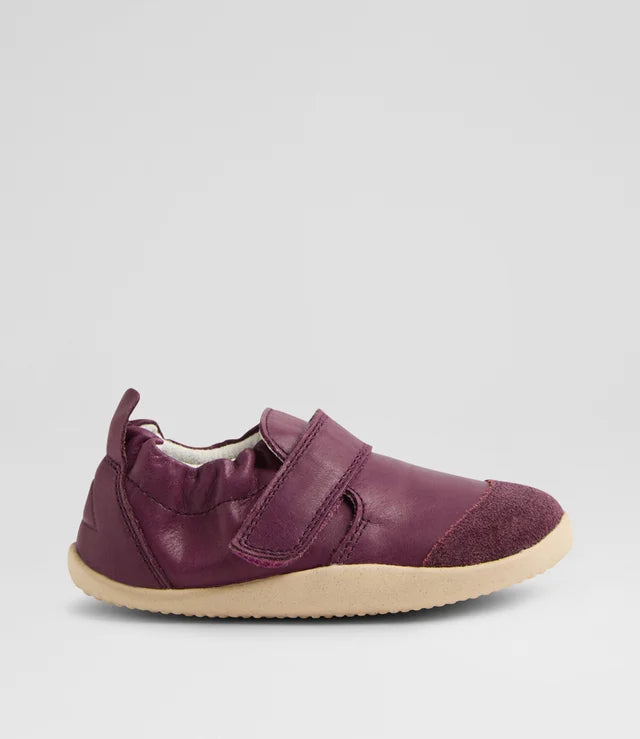
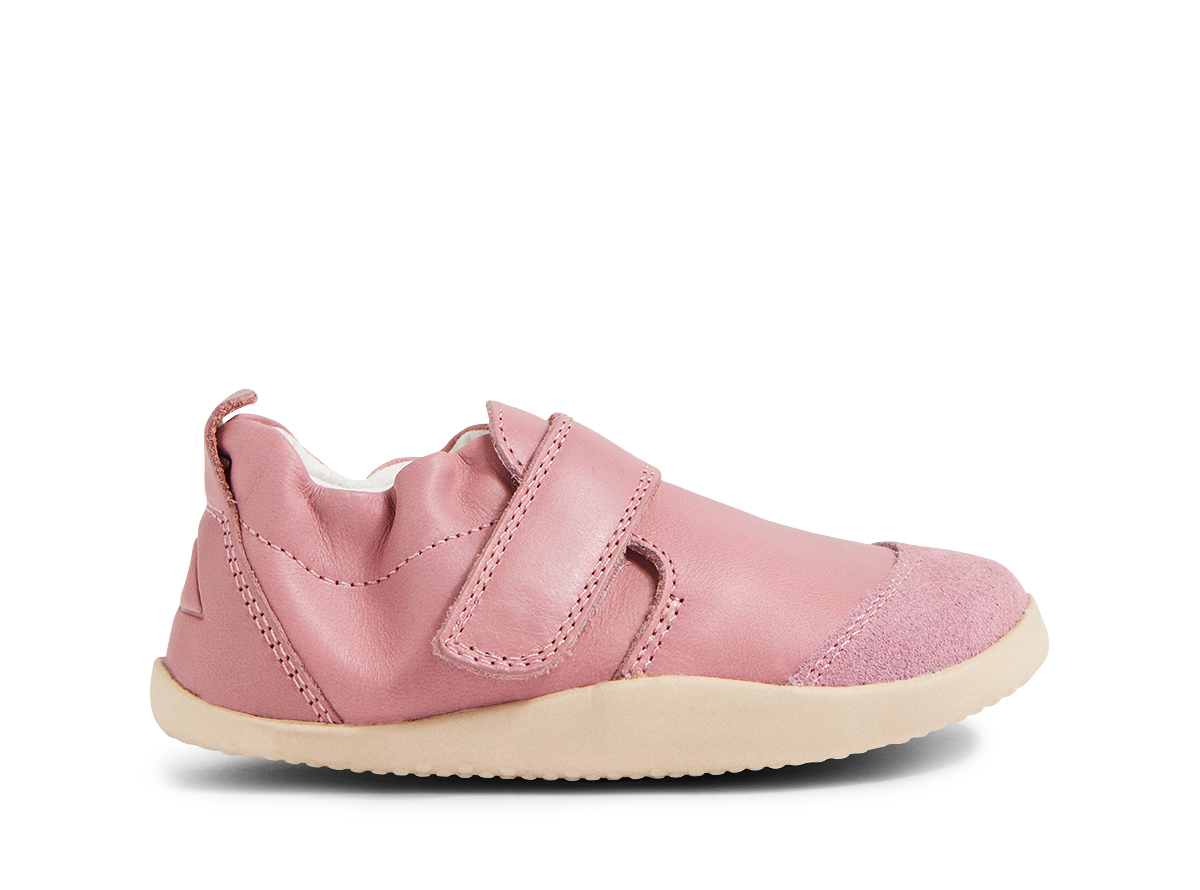
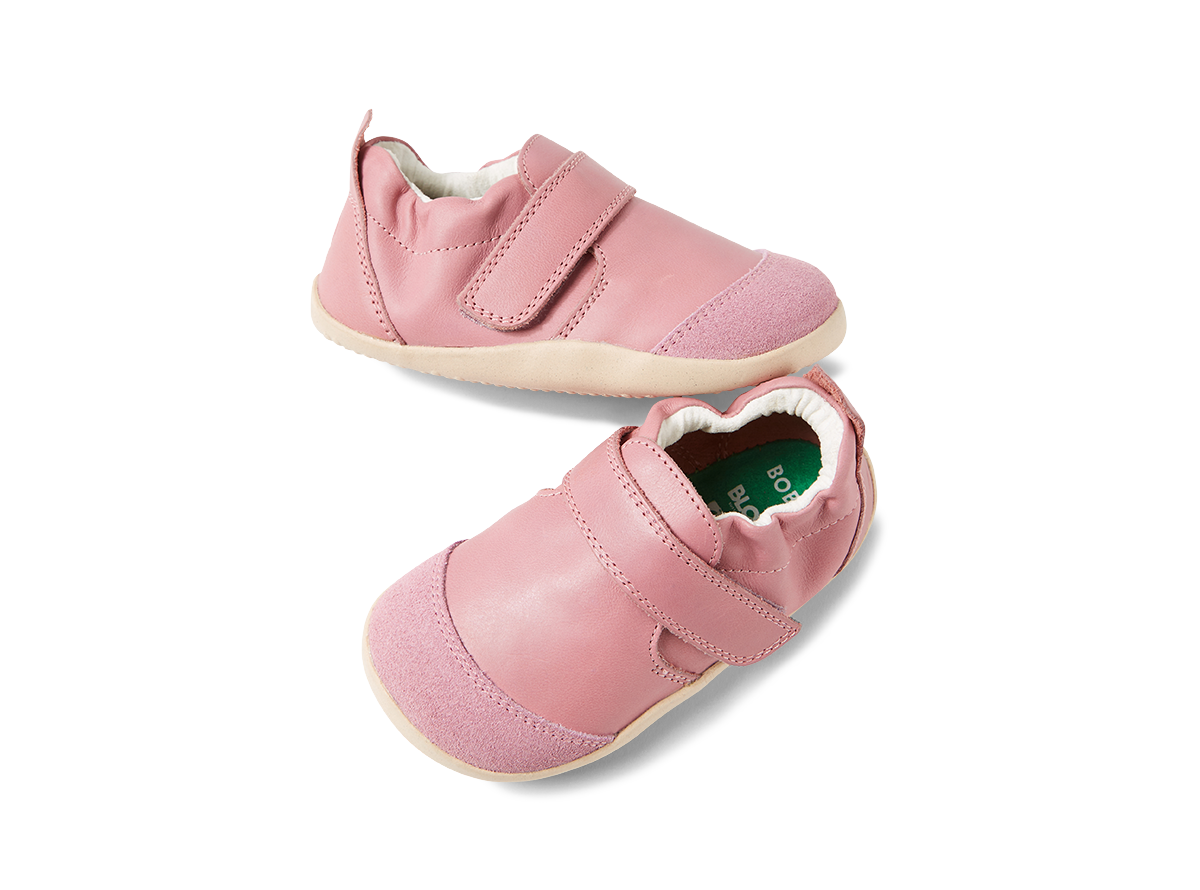
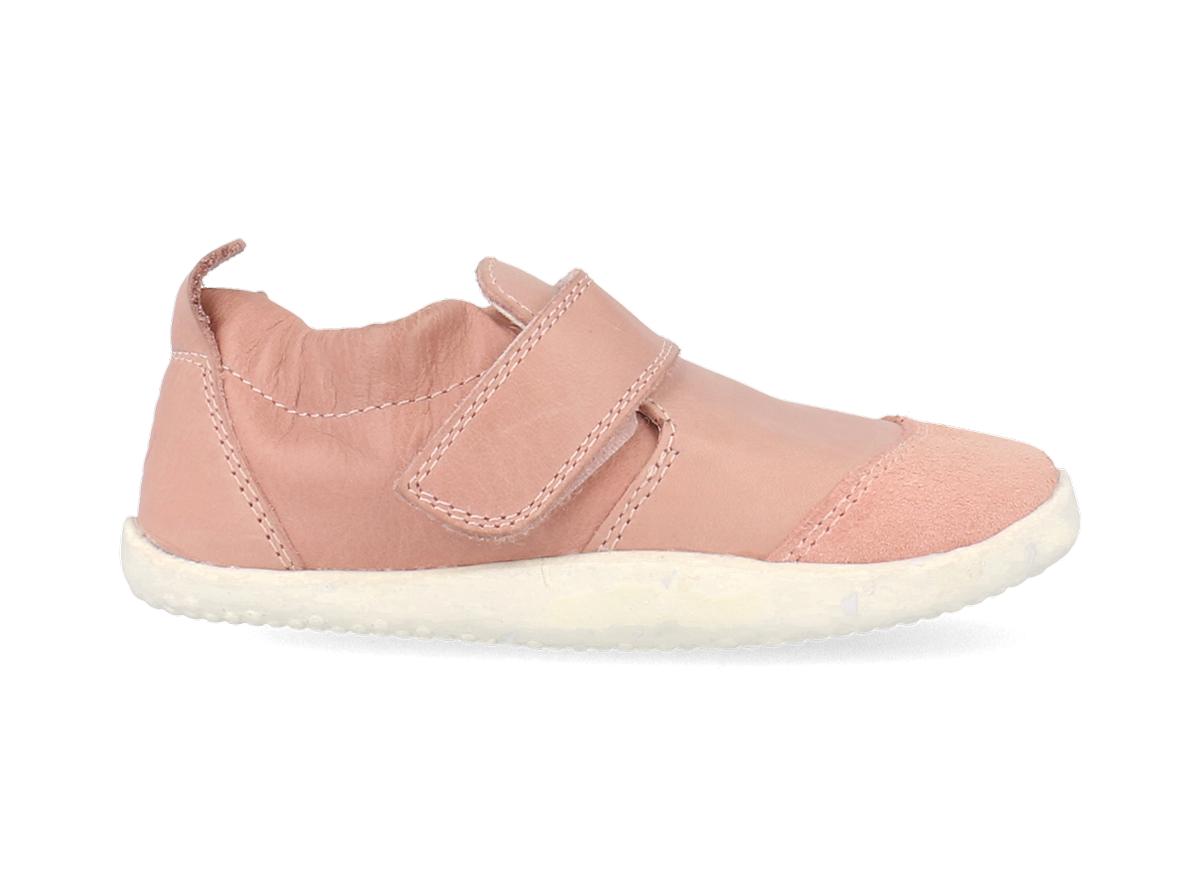
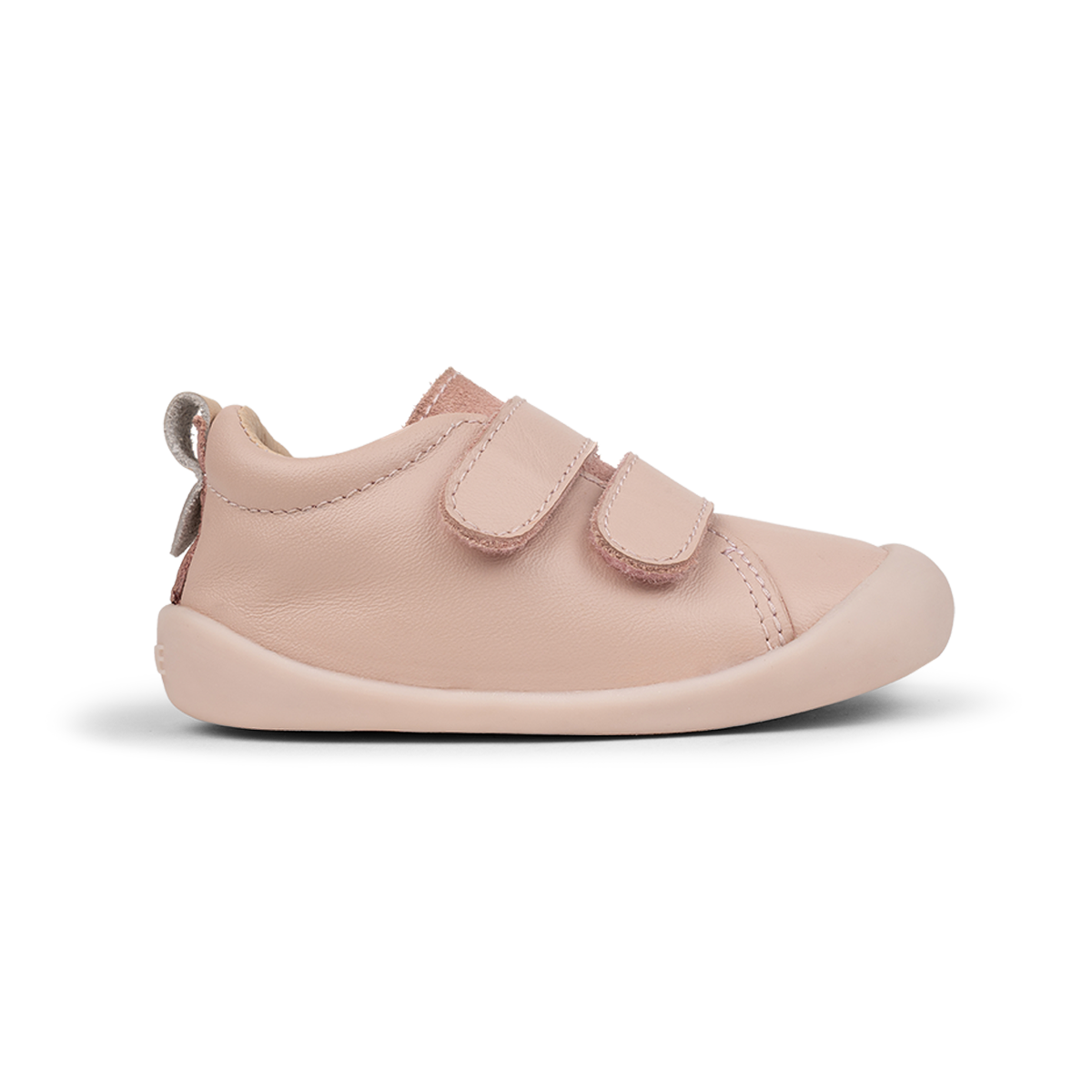
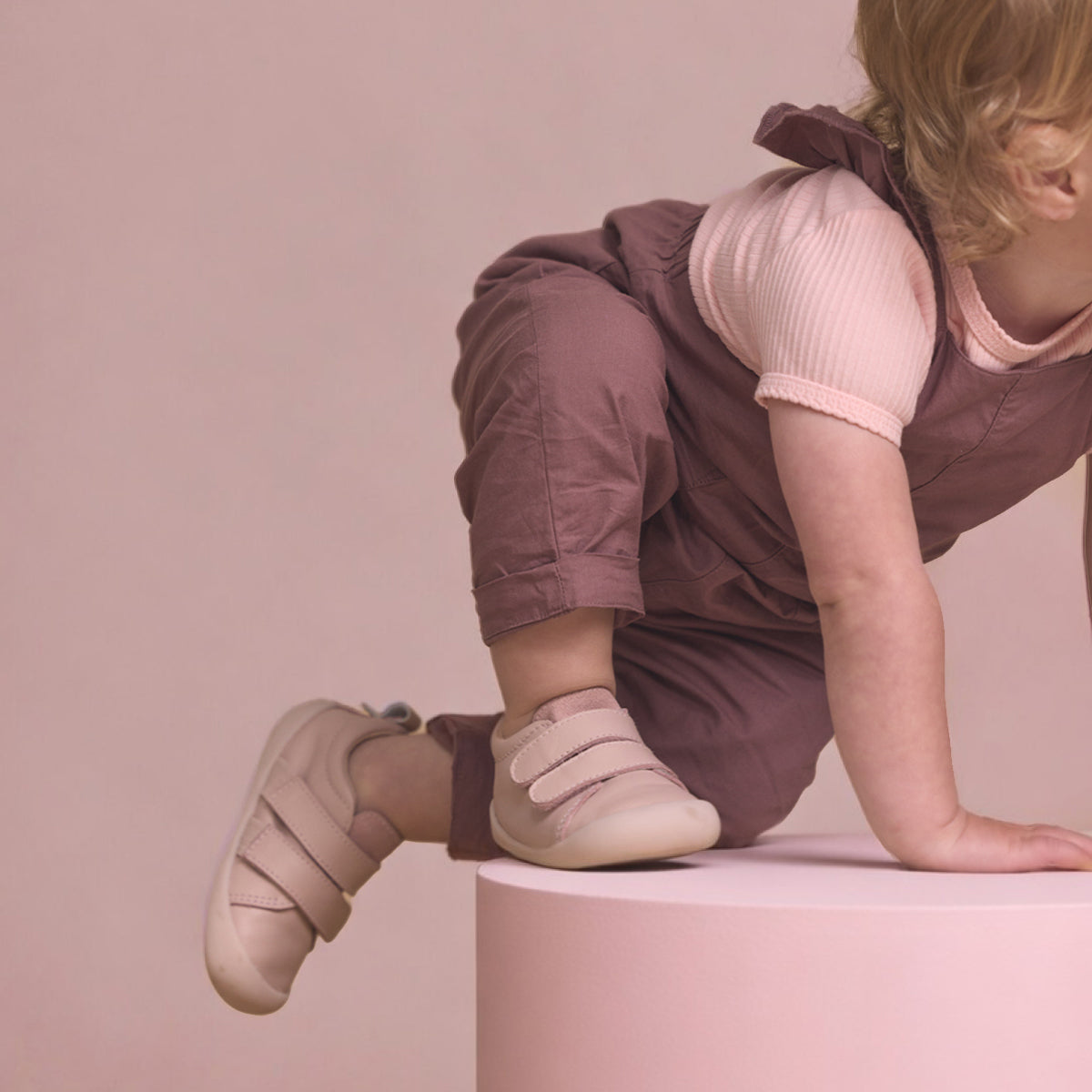
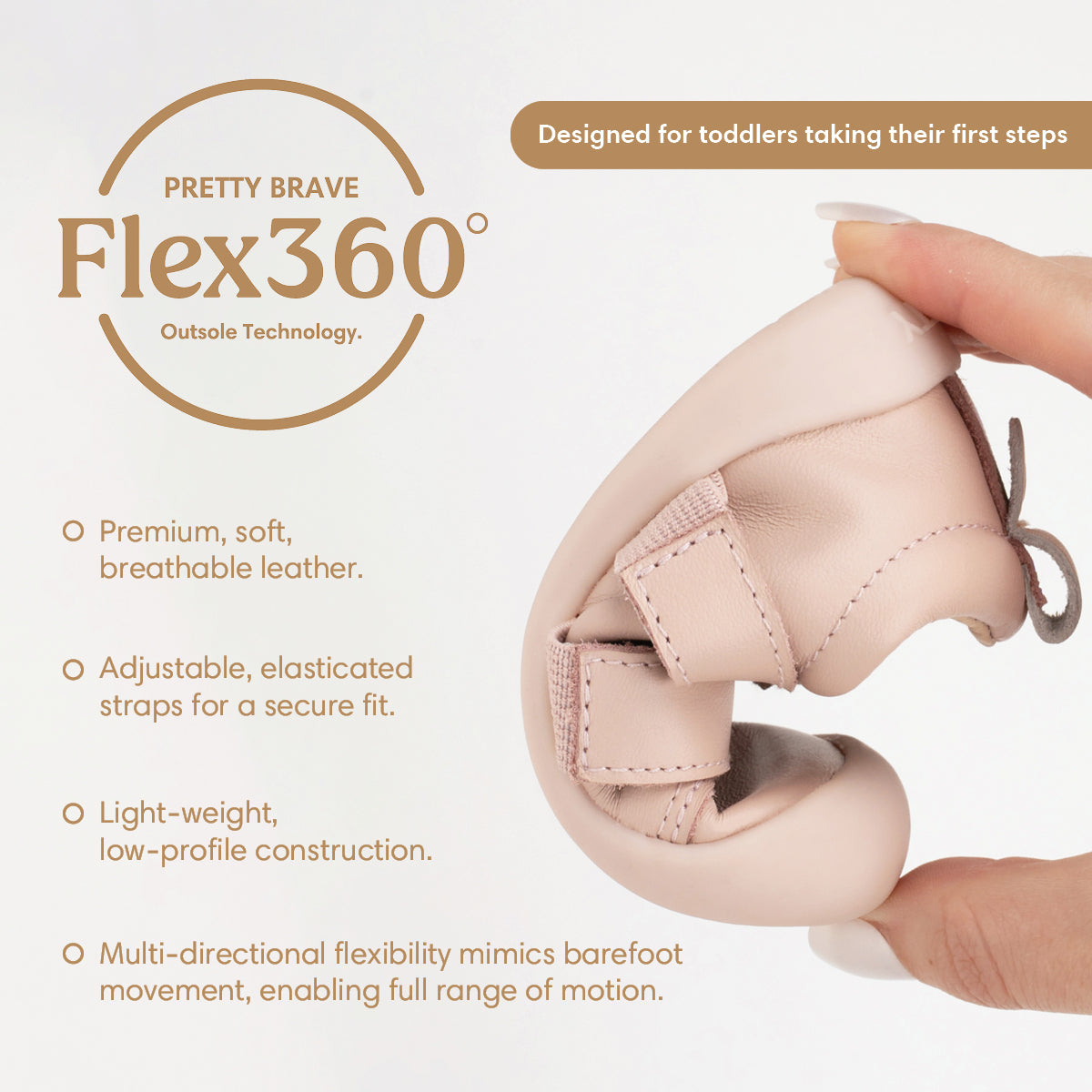
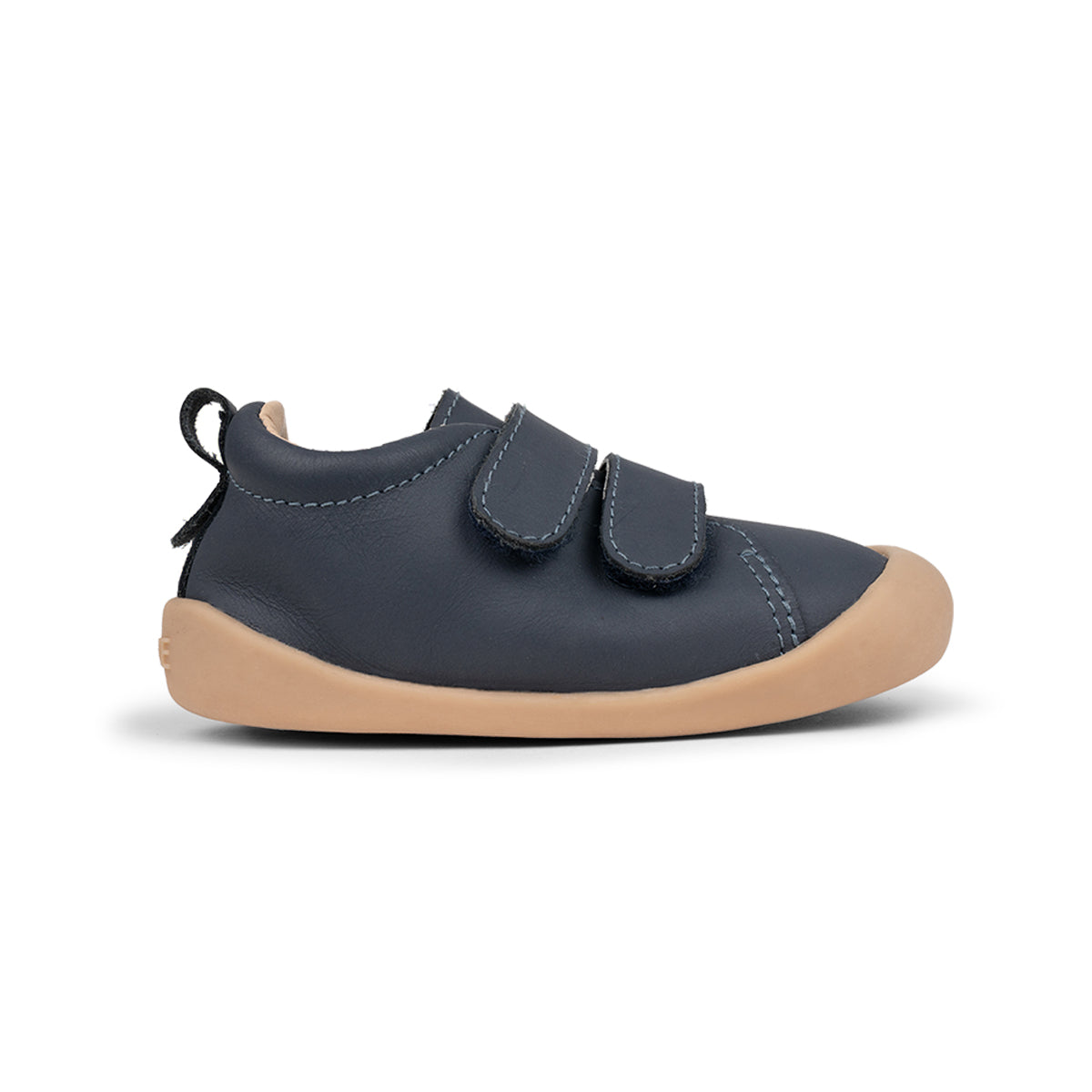
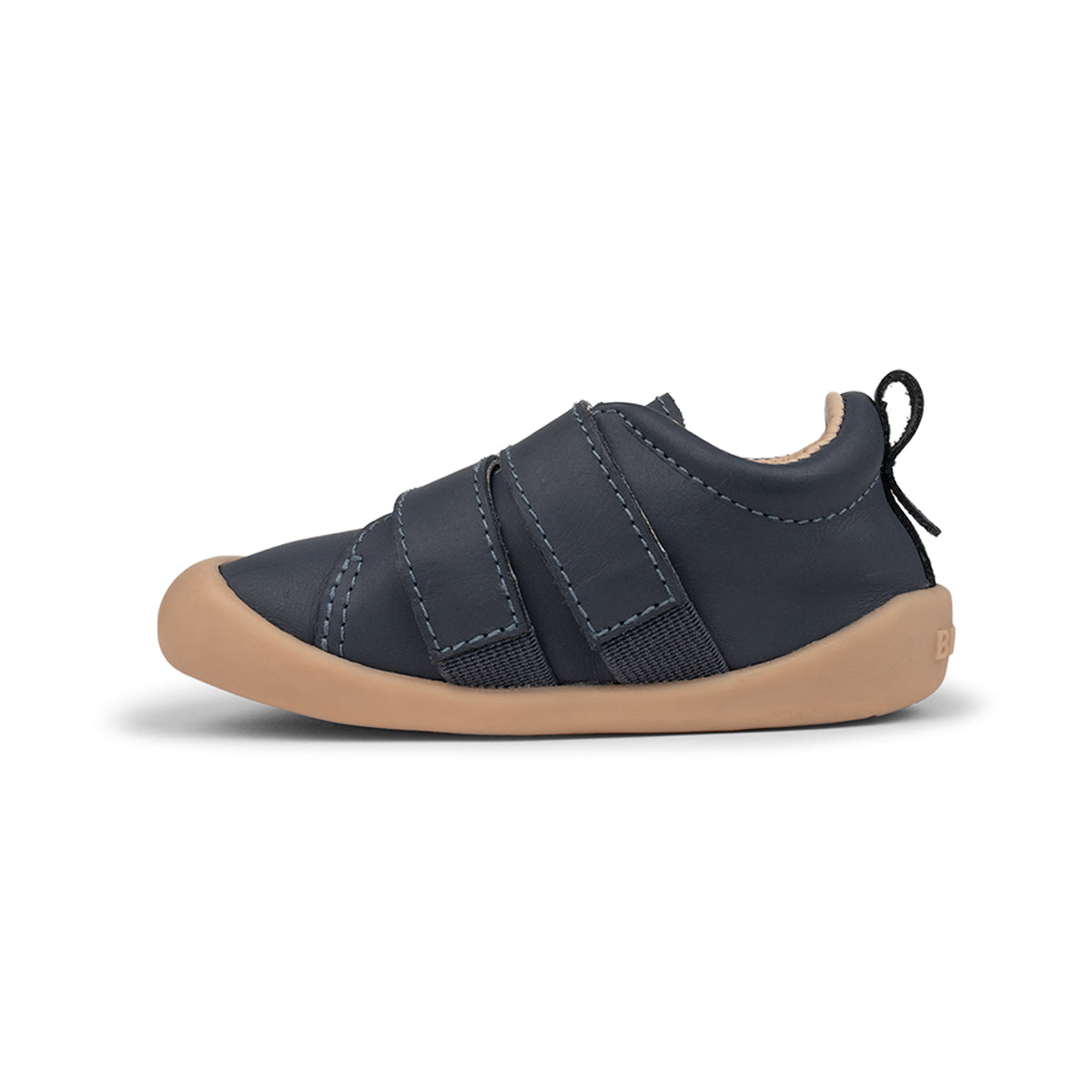
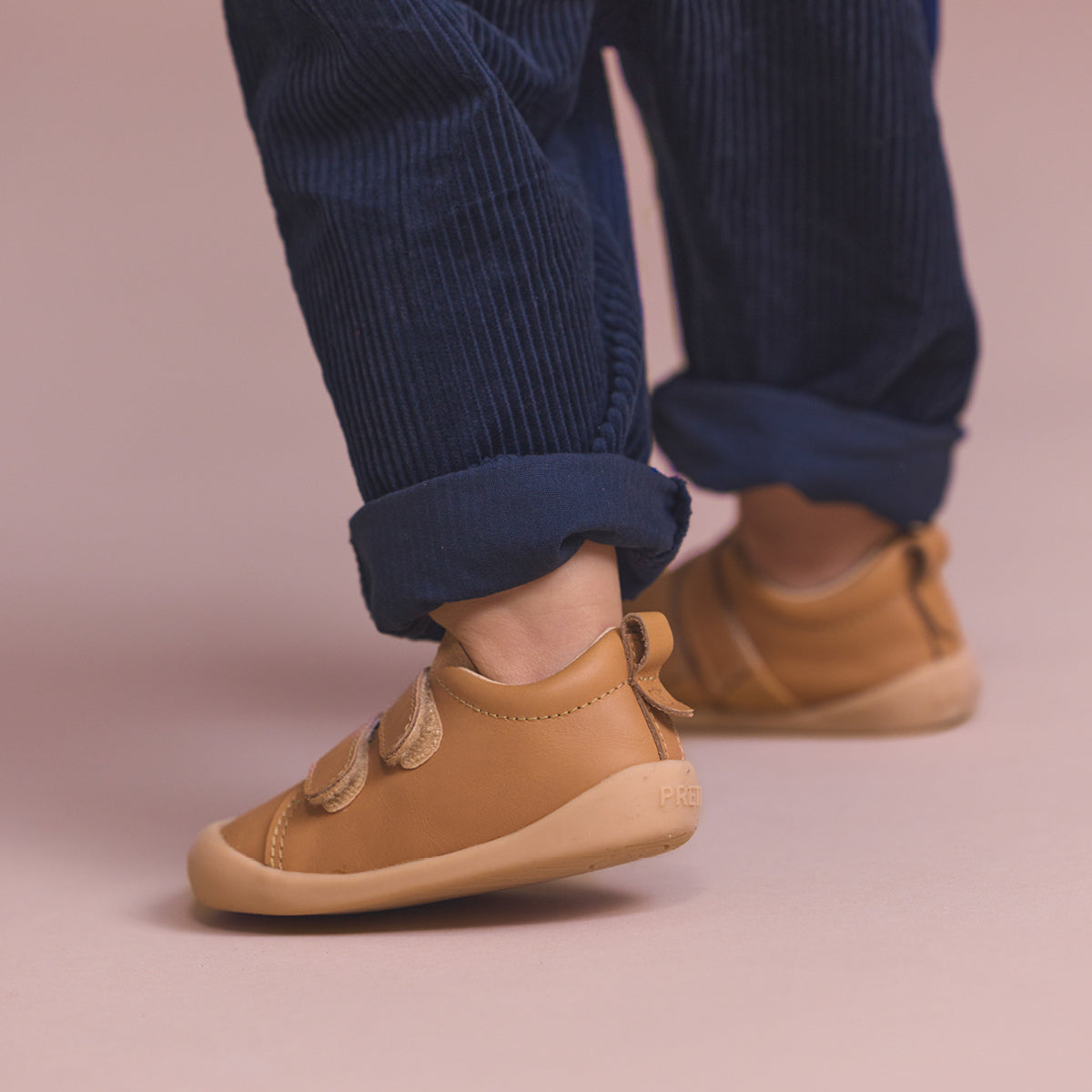
Getting out the door with a toddler is already an event. Shoes with easy fastenings — velcro or elastic — make mornings so much smoother. Less fussing at the door, fewer battles with tiny feet that won't cooperate. It sounds simple, but a shoe that goes on easily is a shoe that actually gets worn. One that doesn't? Gets left behind.
4. The sole does more work than you'd think
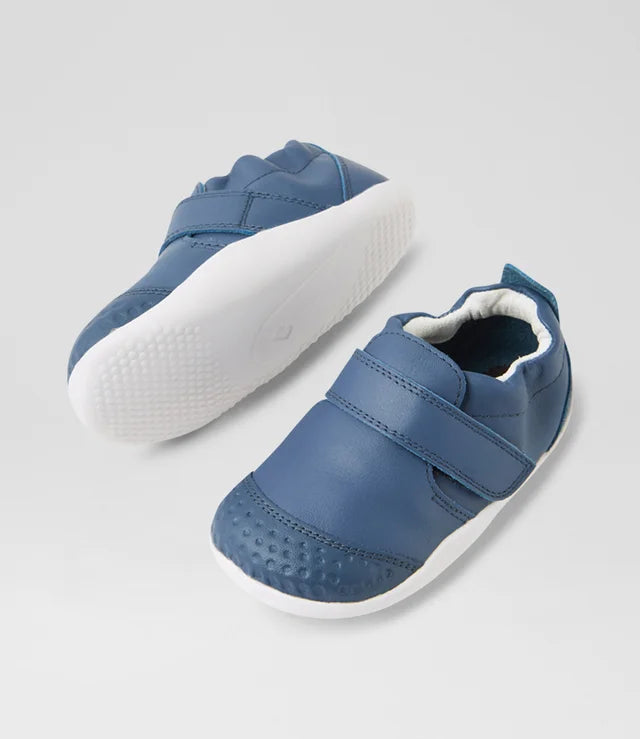
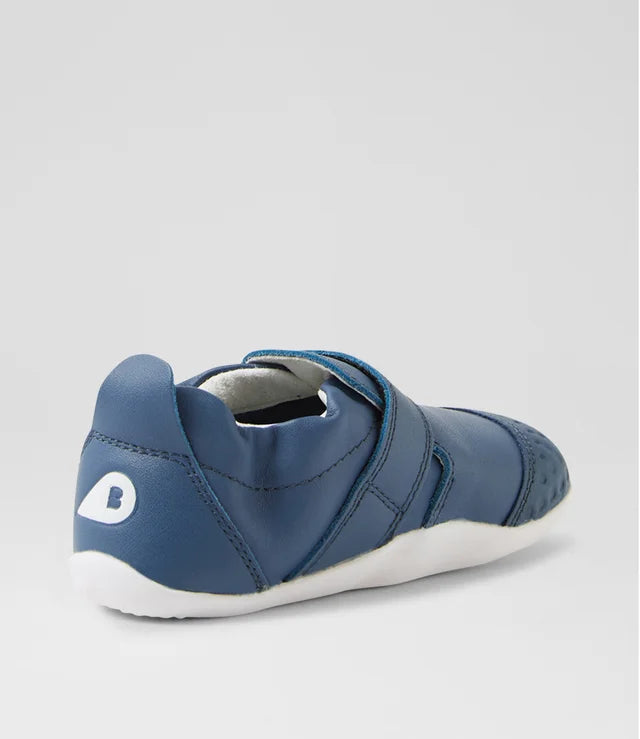
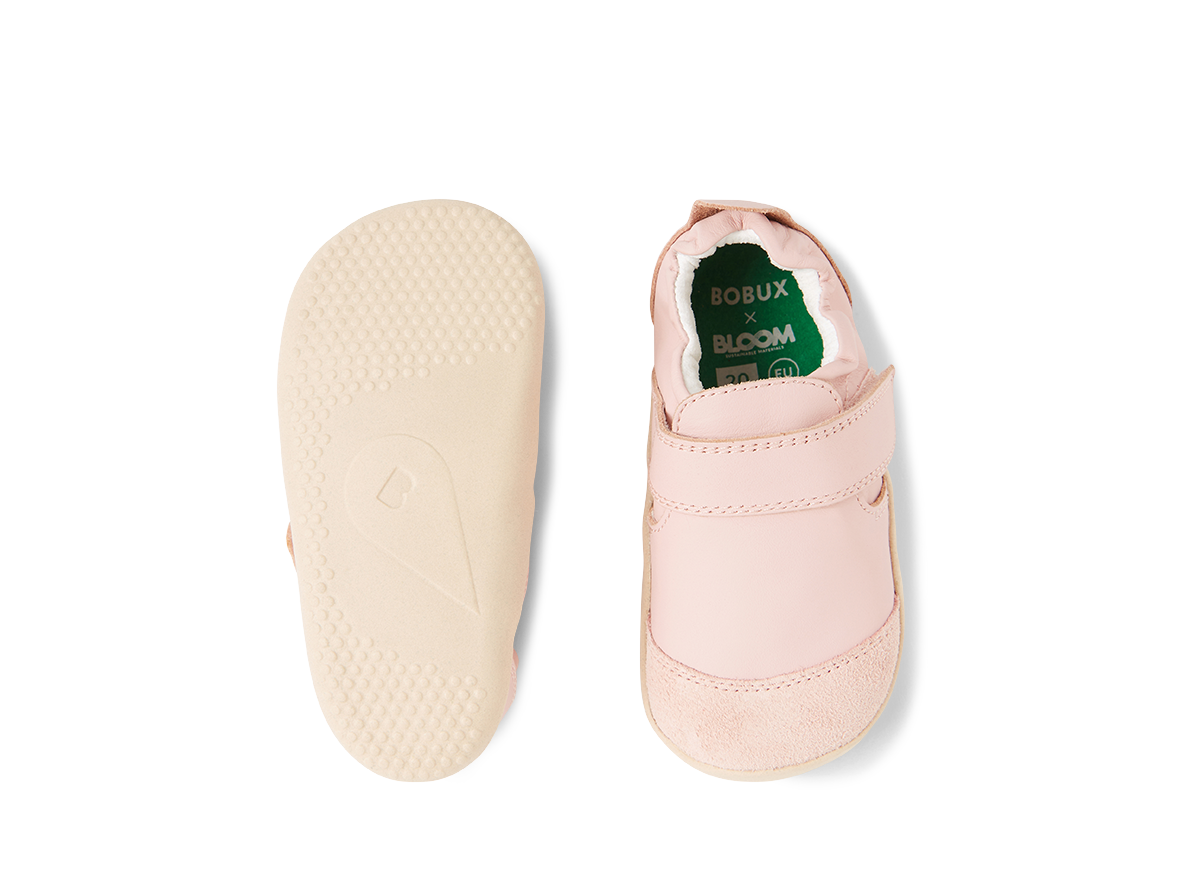
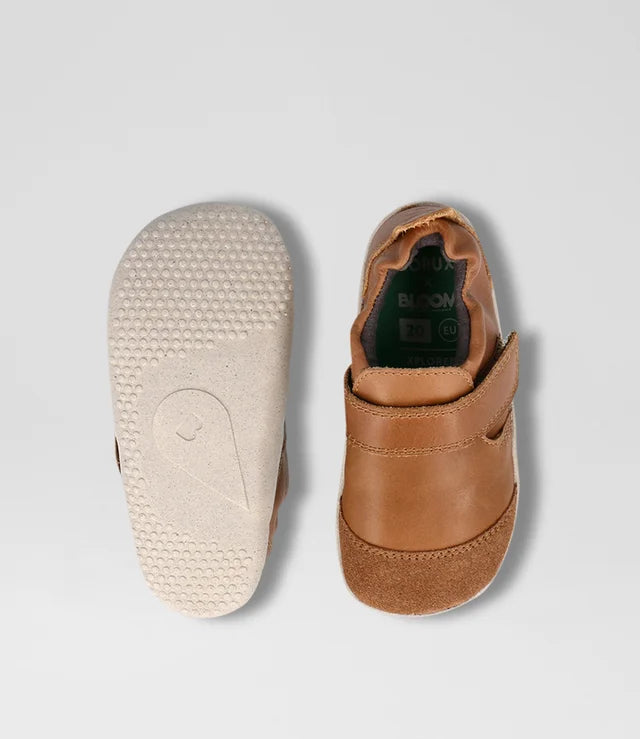
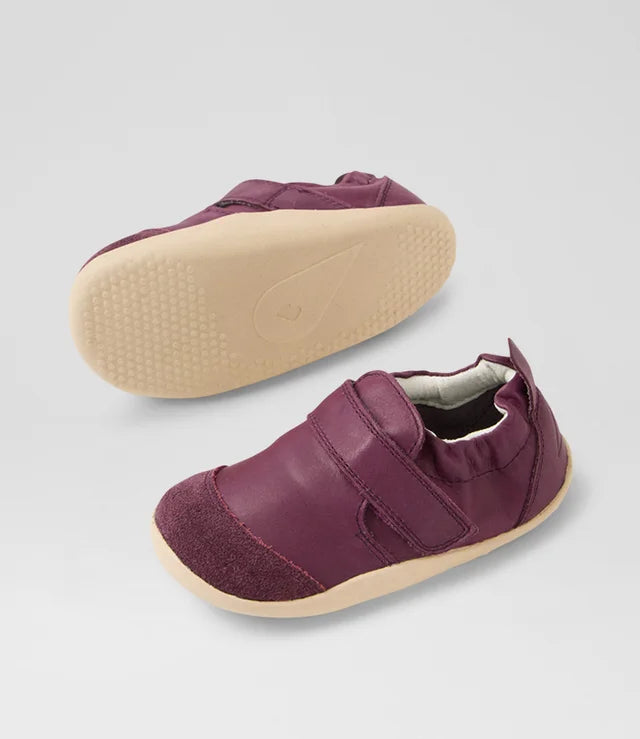
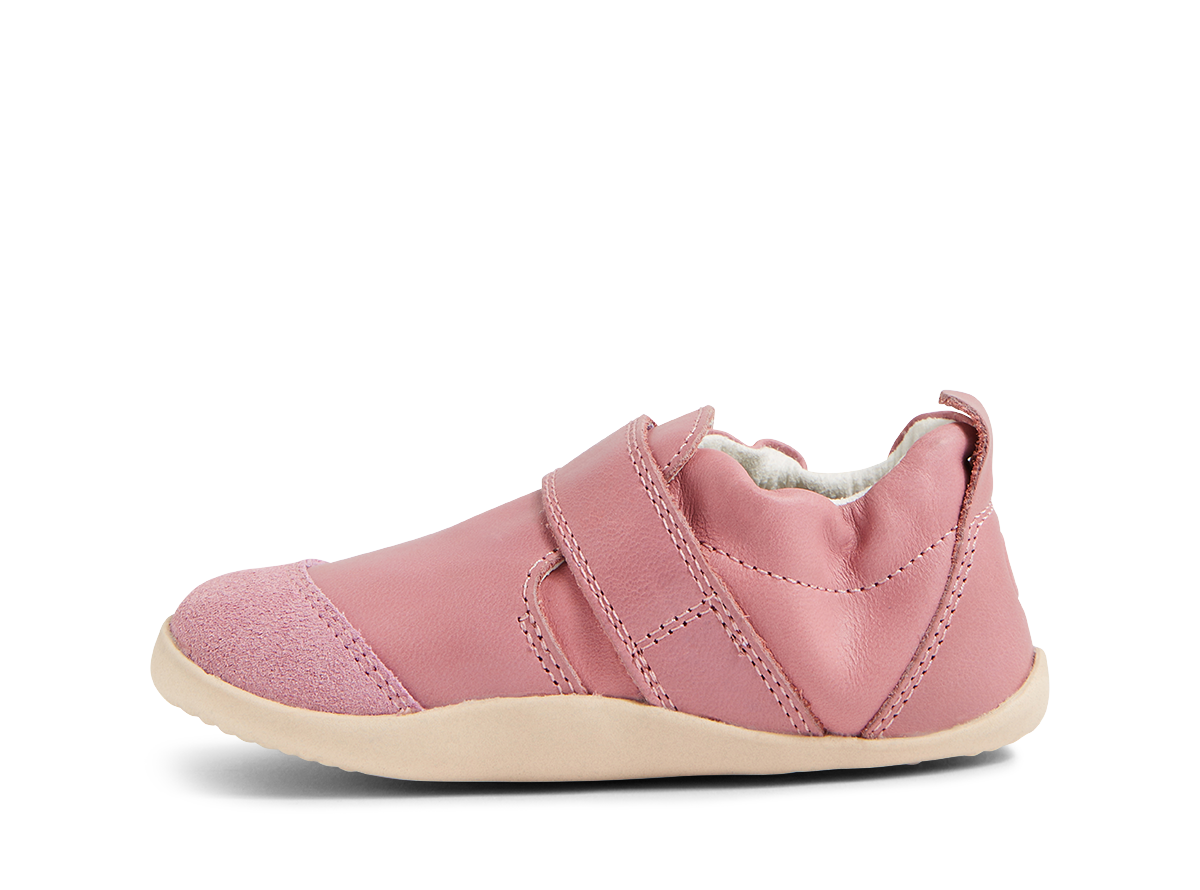
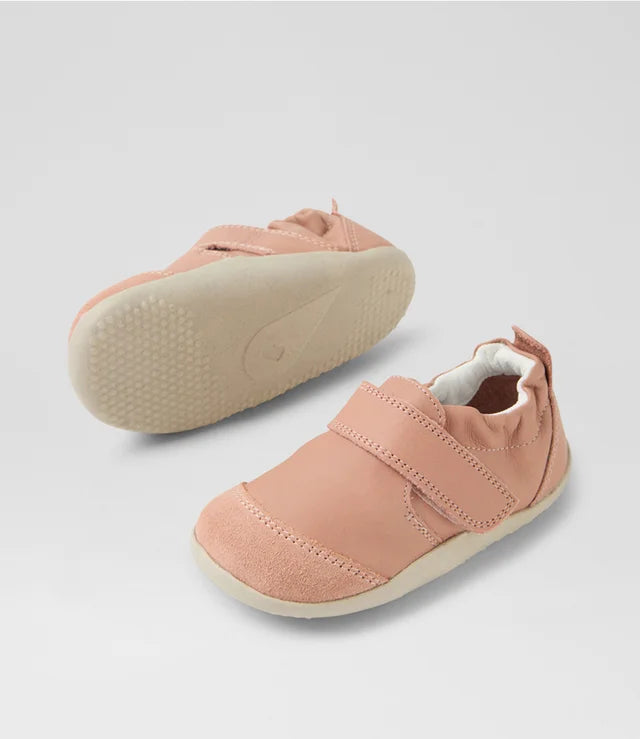
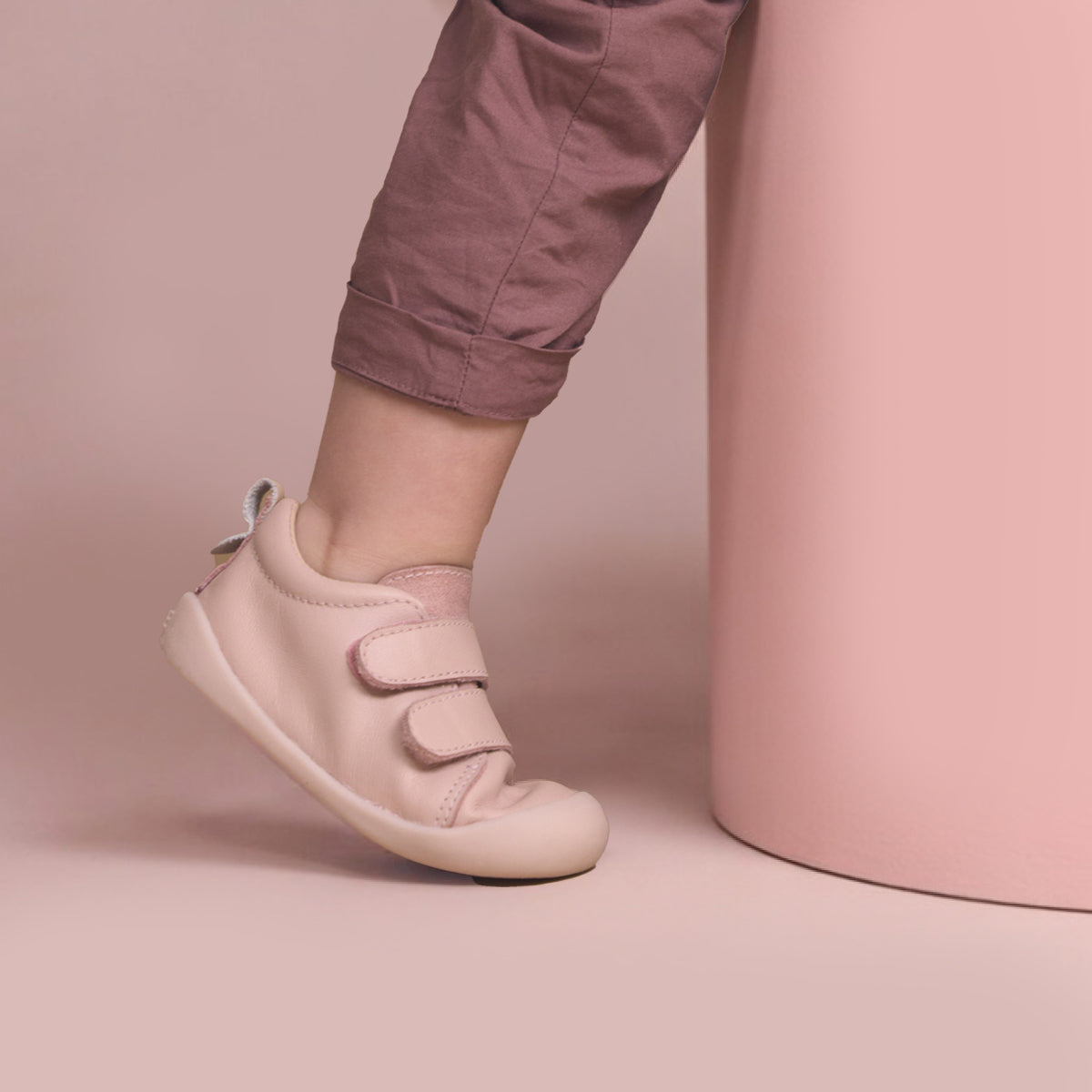
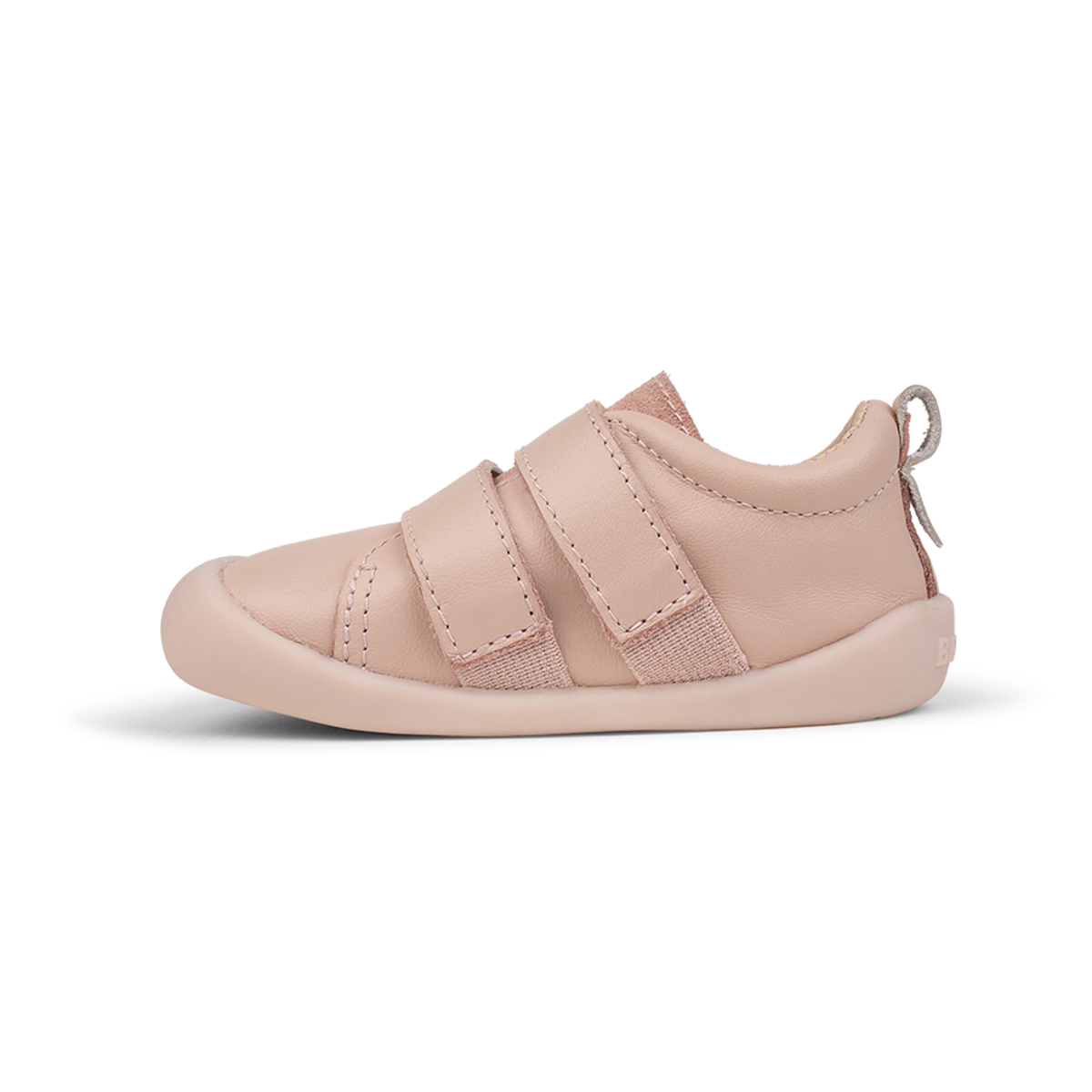
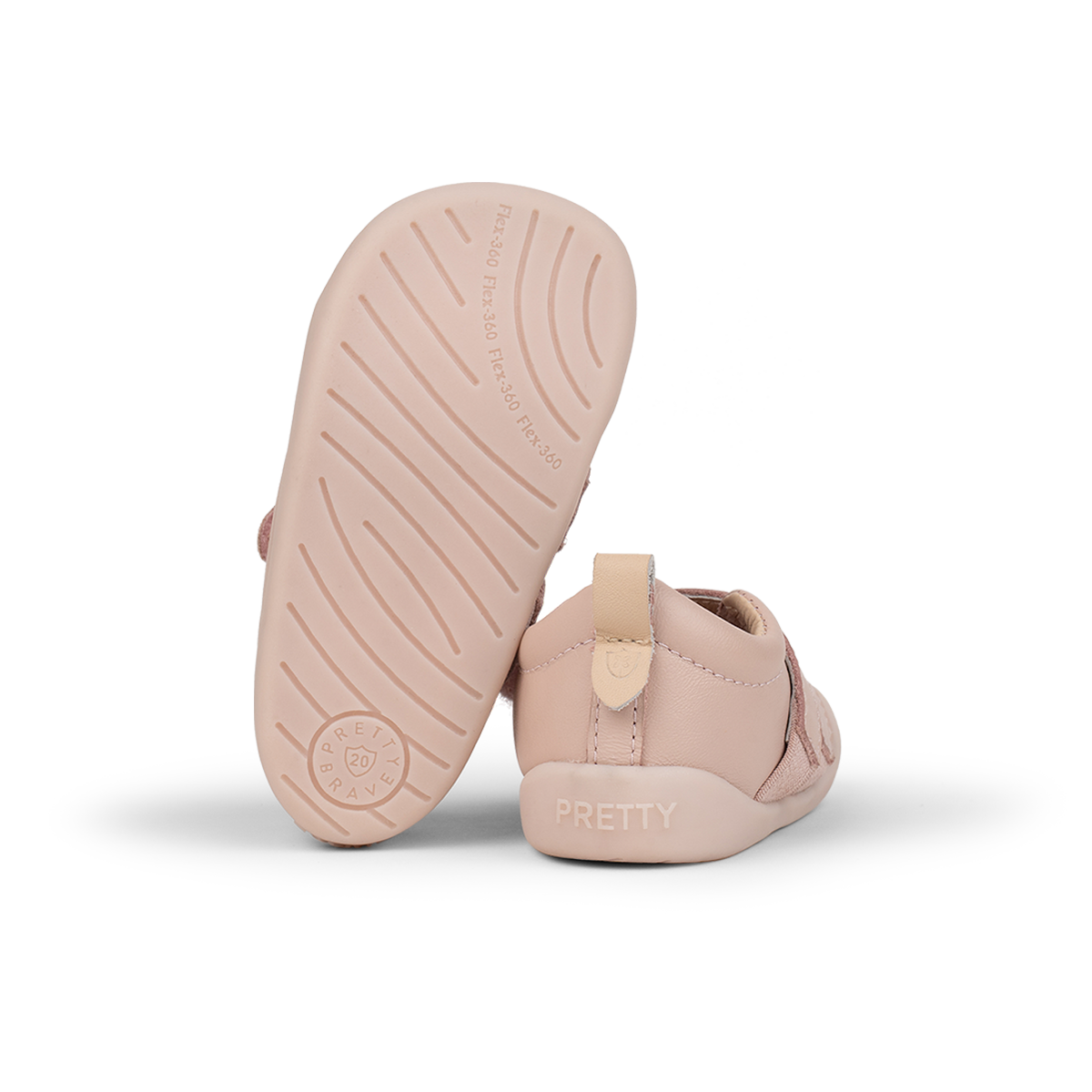
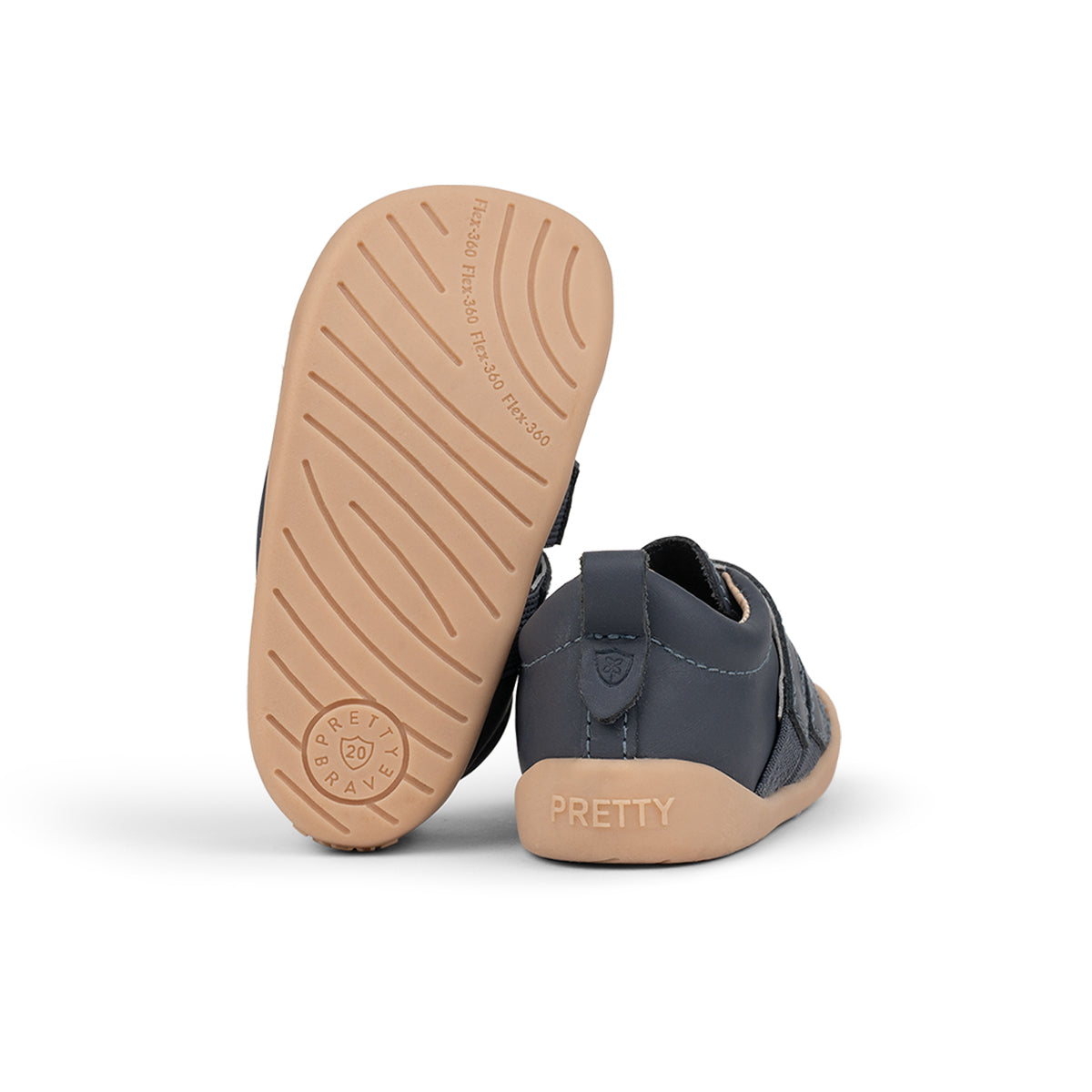
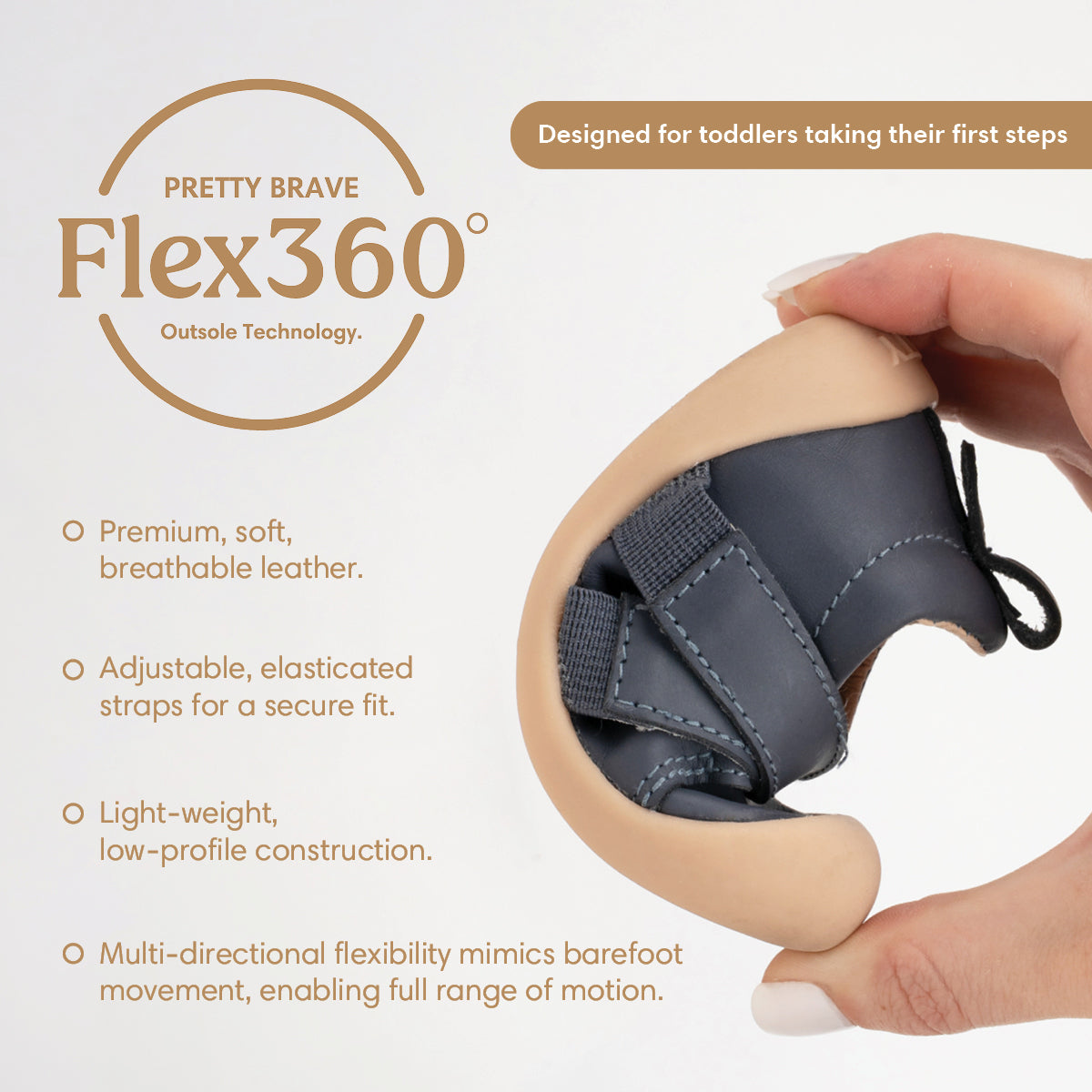
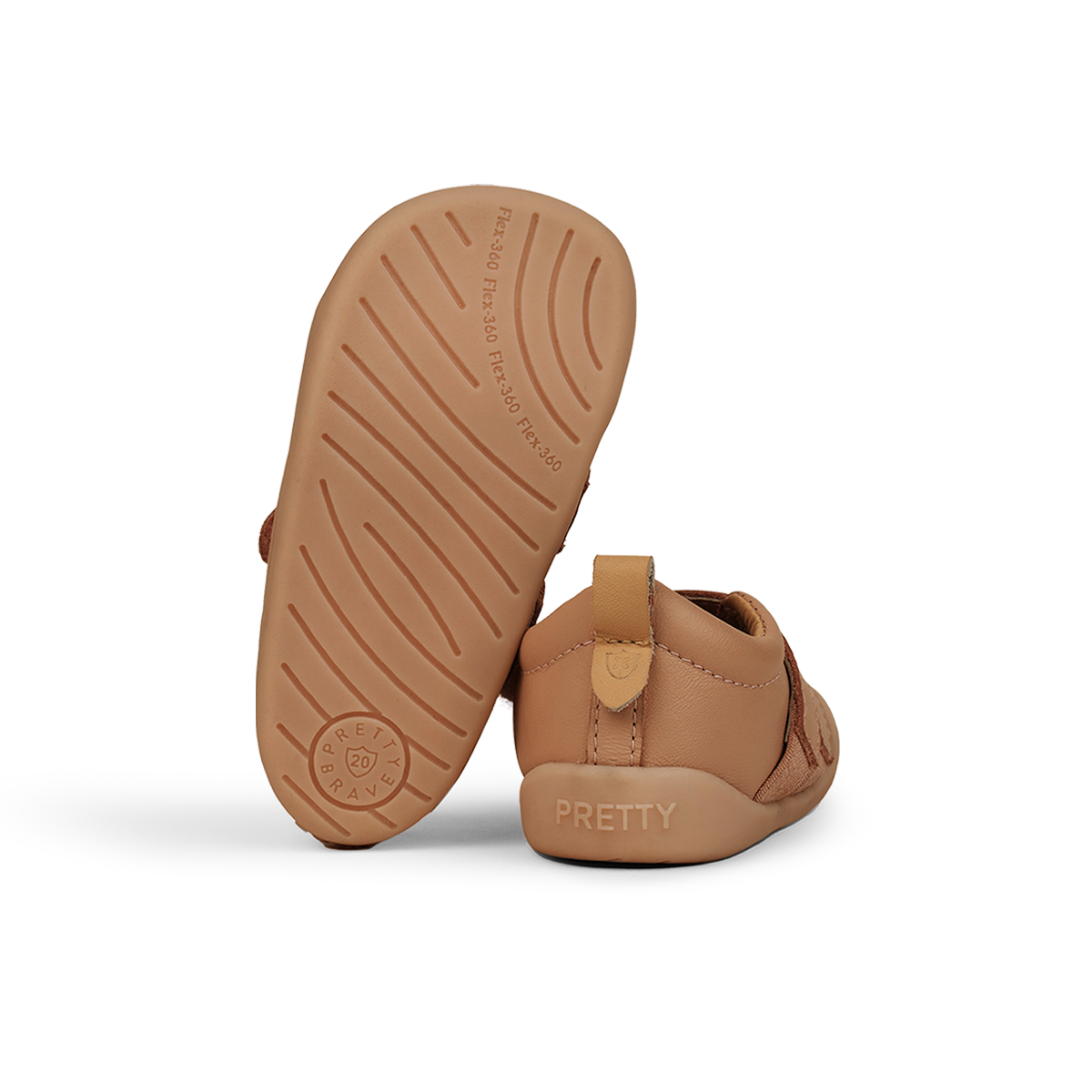
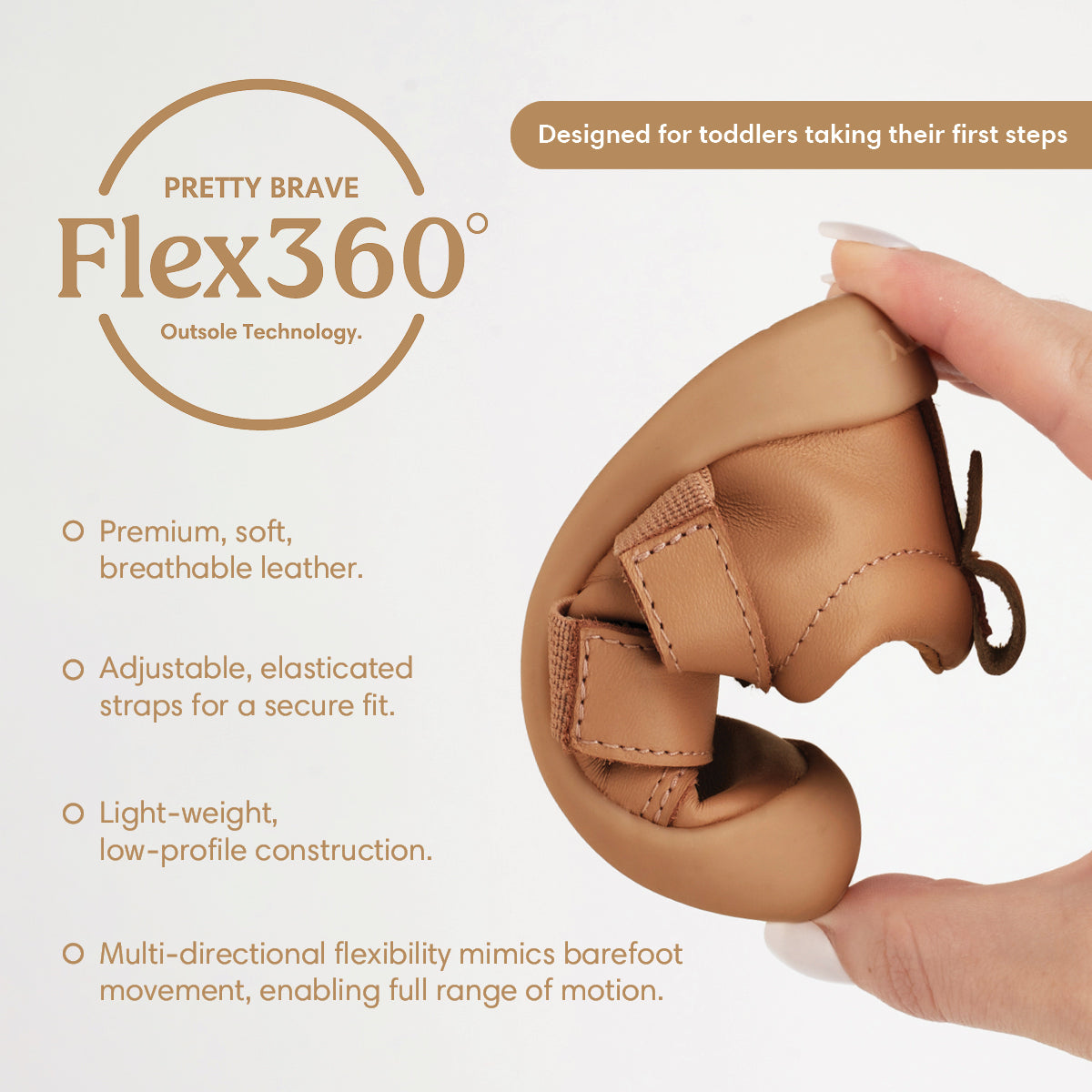
A stiff sole might look sturdy, but for new walkers it's actually working against them. First walker shoes are engineered to flex — lightweight and durable, with grippy textured soles that move with your baby's foot rather than against it. That flexibility matters because it allows the foot to feel the ground beneath every step. That sensory feedback is how little feet learn: it helps tiny muscles strengthen, builds balance, and gives new walkers the confidence to keep going. Stiff soles cut off that feedback at exactly the stage when little feet need it most. What to look for: a sole you can bend easily in your hands. If it doesn't flex, their foot can't either.
5. Don't underestimate a reinforced toe
The toe is the hardest-working part of a first shoe — and the first thing to wear out. Babies learning to walk drag, scuff, push off and pivot all day long. A reinforced toe means the shoe actually lasts the distance, without wearing through in the first few weeks. Built for how babies actually move. Not just how they look standing still.
We're here to help you get it right
If you're not sure where to start, come in and see us. We fit first shoes in both our Palmerston North and Napier stores, and we're always happy to take the time to get it right. Because those first steps are worth it.